
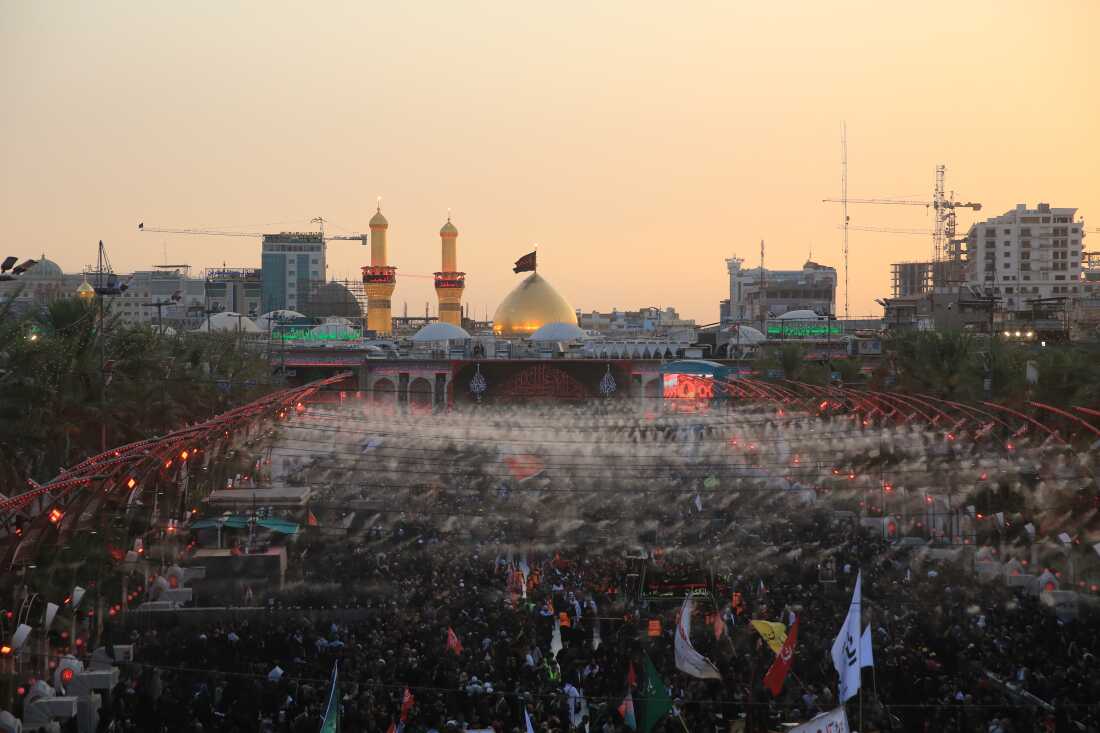
As the sun sets over Karbala, vast crowds of pilgrims gather between the two sacred shrines, their devotion visible during the Arbaeen commemoration. The dome and minarets of Imam Hussein’s shrine are illuminated, marking a poignant backdrop for the event that honors the story of his martyrdom 1,400 years ago.
Imam Hussein’s legend resonates deeply, symbolized by the containers of cold water offered to pilgrims. This act remembers the water denied to Hussein and his followers by a dominant army before their death. This year, many pilgrims, particularly from Iran, interpret recent political events as an echo of historic injustices against Shia Muslims. Official reports state over three million Iranian pilgrims participated in the ceremonies in Karbala.
“More people came to Arbaeen this year because they want to avenge Agha’s blood,” noted Maryam Ghanbari, who journeyed 200 miles from the Iranian border. It marked her ninth pilgrimage.
The event, significant for around 200 million Shia believers globally, marks the beheading of Imam Hussein in 680 during the Battle of Karbala. This battle was central to the division within Islam, with Shia followers rallying around Hussein, while Sunnis supported his adversary. Pilgrims participate in rituals within the Imam Hussein Shrine, where prayers echo amidst historical decorations.
This year’s event in Karbala is underpinned by the complex history between Iran and Iraq. The political landscape has shifted since the U.S. invasion in 2003, transforming Iran from an adversary into a strong influence on Iraqi politics. Recent conflicts further underscore the divided sentiments toward the United States and its allies.
Iraqi and Iranian pilgrims, such as young Ali Aadi Khairi, associate current global conflicts with a continued struggle against Shia ideals. His trek from the city of Kut to Karbala, symbolized by carrying a broken image of Imam Hussein, is a testament to enduring faith. They remember influential figures like Qassem Soleimani, killed in a U.S. airstrike, viewing their deaths as part of a larger narrative of resistance.
The ritualistic journey to Karbala begins weeks prior, with pilgrims traveling on foot, stopping at hospitality tents offering meals and rest. The city receives visitors on organized tours, accommodating them in local accommodations. The Imam Hussein Shrine itself becomes a hub of emotion, with pilgrims mourning and expressing grief beneath red-lit symbols of vengeance.
The Arbaeen pilgrimage is not only a religious ceremony but also a display of Shia unity and resilience. Pilgrims share experiences, recalling stories passed down through generations, reinforcing the community’s deep connection with Karbala’s history. The procession sees individuals joining in unified mourning, linking their lineage to Hussein and his legacy.
As Karbala’s streets fill with reverent gatherings, political undertones shape this year’s observance. Figures such as Naser Zadih laud the resistance movement, insisting that recent events have intensified their cause, despite economic hardships exacerbated by ongoing conflict.
In Karbala’s hotels, Iranian pilgrims express cautious support for their government amid tensions with the U.S. Some prefer silence, wary of speaking to foreign media; fear of repercussions back home looms large. These sentiments highlight the delicate balance between faith, political identity, and global diplomacy.
The spirit of Imam Hussein permeates the Arbaeen event, with young pilgrims like Mohammad Yasin Ahmadi paying homage by revisiting significant sites linked to their spiritual leaders, such as the burial of Ayatollah Khamenei. This year, the commemoration carries renewed significance for many, firmly tying religious devotion to contemporary events.