
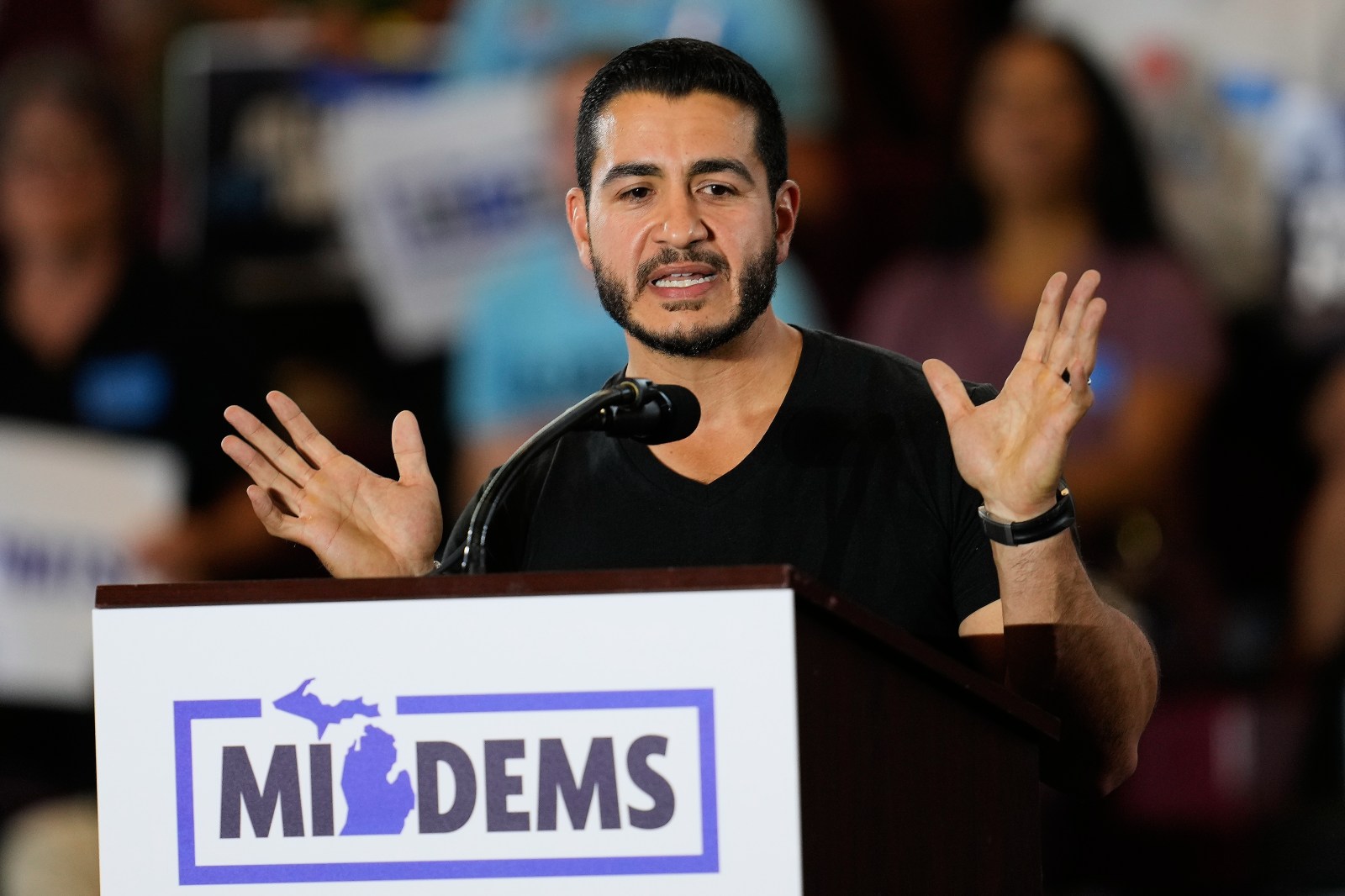
Abdul El-Sayed, the Democratic nominee for the Michigan Senate, issued an apology to Jewish Democrats following remarks he made after a synagogue attack in suburban Detroit in March. This apology surfaces amidst a tightly contested race against Republican Mike Rogers. Polls indicate a competitive scenario, with outcomes ranging from a narrow Democratic lead to a slight Republican edge.
The Michigan Senate race is pivotal for the Senate’s control post-2026 midterm elections. The Democrats are defending an open seat following Senator Gary Peters’s retirement. El-Sayed’s candidacy has attracted national attention, primarily due to his progressive ideas and outspoken views on Israeli policies.
The backlash regarding his comments after the synagogue attack has highlighted concerns among Jewish Democrats and moderates. These groups will be crucial in the general election, especially in a battleground state. El-Sayed addressed the situation after speaking to the Michigan Democratic Jewish Caucus, stating, “My comments might have been misconstrued to be justifying something I did not intend to justify.” He expressed regret and emphasized that causing hurt was not his intention.
Details of the Controversy
CNN reported El-Sayed’s apology for comments following the attack on Temple Israel in West Bloomfield Township, Michigan. In March, Ayman Ghazali, inspired by Hezbollah, targeted the synagogue. The FBI disclosed that Ghazali intended to “kill as many of them as I possibly can,” according to Special Agent Jennifer Runyan. Ghazali’s attack involved crashing a pickup truck into the synagogue, exchanging gunfire with a security guard, and eventually shooting himself.
El-Sayed faced criticism for saying “hurt people hurt people” in a video statement shortly after the attack. Jewish Democratic leaders and Michigan Attorney General Dana Nessel argued this language appeared to excuse the attacker rather than condemn the act.
Nessel noted in an interview that the statement seemed to make excuses for someone attempting to harm over 100 pre-K children. El-Sayed, when addressing Jewish Democrats, admitted his mistake, acknowledging he should have stopped after condemning the attack. While he aimed to provide context, he recognized that timing was inappropriate and acknowledged the Jewish community’s pain.
“We condemned that terrorist attack. We condemned it outright. What I was trying to do is offer context for why it happened, but it wasn’t the time for context. And you don’t ever want to trample somebody’s pain,” El-Sayed stated.
Jewish Democrats present at the meeting acknowledged El-Sayed’s apology as sincere. Daniel Rivkin, a University of Michigan communications staffer, remarked on the sincerity of El-Sayed’s apology.
Poll Results Amid the Controversy
Despite the controversy, polling indicates El-Sayed remains competitive in the election, possibly holding a slight lead. The New York Times’ tracker shows a close race, with surveys indicating the candidates are separated by a small margin.
A RealClearPolling average shows El-Sayed leading Rogers by 1.8 percentage points, with El-Sayed at 46.3 percent and Rogers at 44.5 percent. An EPIC-MRA survey from late August positioned El-Sayed at 47 percent and Rogers at 43 percent, within a margin of error of 4 percentage points. Meanwhile, a Fabrizio/Anzalone poll reported El-Sayed was ahead by one point, with a margin of error of 3.3 percentage points.
In contrast, a Fox News poll suggested Rogers held an advantage of 51 percent to 47 percent, with a margin of error of 3 percentage points. While El-Sayed has strong support from progressives and younger voters, Republicans argue his stances on Israel might deter moderate and suburban voters essential for a November victory.