
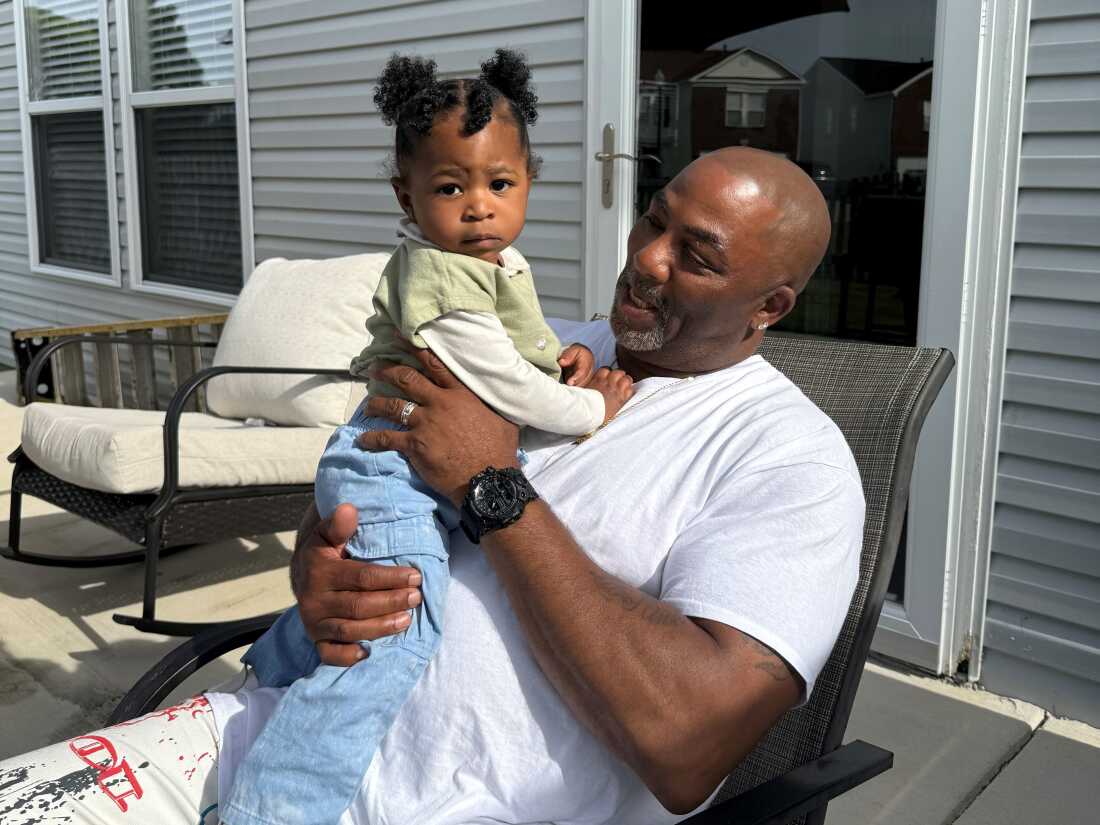
Anthony Bailey, 61, is seen holding one of his grandchildren in a photograph from May 2025. Two years prior, a judge freed him after he had spent 27 years in federal prison, offering him a renewed opportunity at life. Bailey embraced this chance, working long shifts as a city bus driver in Indianapolis and bonding with family over barbecues and card games. His life took a sudden turn with a recent Supreme Court ruling and subsequent action by the Justice Department, threatening his return to prison in a few weeks.
“I’m hoping and praying that everything turns out fine and I can get my life back,” Bailey expressed. “I’m a better person now—a hardworking and productive citizen.” His case is one among many impacted by the Supreme Court’s decision in late May. The ruling limits how prisoners can use the compassionate release program, initially for extraordinary or compelling circumstances like severe illness or old age. The majority stated that those serving much longer sentences than current standards do not automatically qualify.
Retired federal Judge John Gleeson criticized the ruling. “These sentences are indefensibly long and must be corrected,” he argued. Gleeson initiated a pro bono program aiding over 100 incarcerated individuals in seeking early release. Most of these are Black men whose cases involved a gun used alongside other crimes, resulting in severe mandatory penalties that resulted in lengthy prison terms without shots being fired.

Bailey’s experience mirrors this. On September 3, 1997, Bailey and two other men committed a bank robbery and two carjackings. Prosecutors highlighted the seriousness of his crimes, endangering several people, including a school-age girl. “Something I deeply regret and will never repeat,” Bailey said. During his time at Terre Haute federal prison, Bailey worked as a barber and maintained a clean record, with only one minor infraction.
His lawyer, Maryam Kanna, advocates for Bailey, underscoring the discrepancy between his lengthy sentence and those convicted of federal murder. “He leads a stable, fulfilling life, making the notion of danger nonsensical,” Kanna claimed. The law’s changes post-1990s, which eased some penalties, do not apply retroactively to individuals like Bailey, as clarified by the Supreme Court.
Prosecutors may soon demand he complete his original sentence, extending his release to 2050 when he’d be nearly 86. Kelsie Clayton from the U.S. attorney office stated they would not comment outside official filings. Although Congress lessened some mandatory penalties that affected Bailey, those alterations aren’t retroactive, and the Supreme Court clarified these previous sentences as non-extraordinary or compelling for compassionate release.
Bailey stated his commitment to following the law, continuing to engage with his community and family. Receiving positive feedback from his probation officer, Bailey had expected an early release from probation. However, the current uncertainty leaves him unsure of his whereabouts by September.
Meanwhile, Bailey enjoys his time attending family gatherings, teaching his 4-year-old grandson practical skills, and treating him to McDonald’s fries. “He’s observant, always watching, and eagerly helping,” Bailey remarked.