
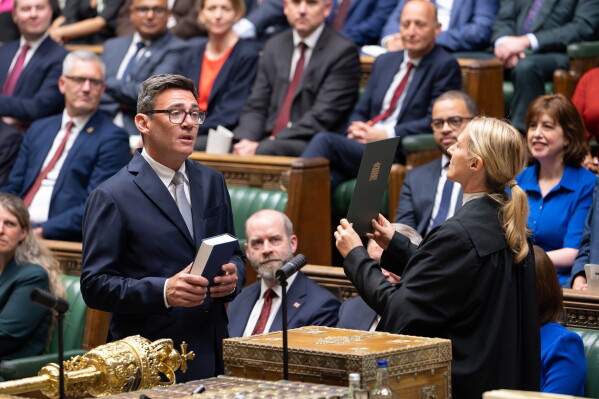
Newly elected British lawmaker Andy Burnham met with outgoing Prime Minister Keir Starmer, signaling the start of a leadership contest where Burnham currently stands as the main candidate.
Starmer’s resignation announcement on Monday paved the way for Burnham, who won a recent special election for a parliamentary seat and aims to lead the Labour Party and the UK. Burnham’s campaign was strengthened by the endorsement of former Health Secretary Wes Streeting, previously seen as a primary contender.
Neither Burnham nor Starmer disclosed details of their meeting on Tuesday. Burnham engaged with Labour lawmakers to rally support. In the current parliamentary system, the governing party can change leaders, and thus the Prime Minister, without a general election. The next general election deadline is 2029. Labour leadership nominations open on July 9 and close a week later. If Burnham faces no competition, he could become Prime Minister by July 17. Contested leadership would see a new leader by September 1.
Starmer emphasized his desire for a smooth transition, expressing willingness to support his successor. As his term ends, Starmer continues his duties but is restricted from major policy changes.
The European Union announced a delay in the U.K.-EU summit due to Britain’s political situation. Despite this, the government plans to release a defense investment plan before a NATO summit in Turkey in July, which Starmer plans to attend.
Burnham, once a popular mayor, aims to apply his successful local policies nationally. Known for his charisma, he could connect with the public more effectively than Starmer. However, Burnham’s specific policies remain unclear and untested, with many in the Labour Party advocating for a leadership debate to scrutinize his plans. Burnham is expected to outline his economic policies soon.
Al Carns, a former Armed Forces Minister, and others consider potential leadership runs. Candidates need support from at least 81 Labour lawmakers. Some argue a leadership contest could spotlight internal divisions and prolong uncertainty.
Starmer, the sixth Prime Minister in a decade to resign, recognized Labour’s declining confidence in his leadership for future elections. While Starmer led a significant electoral victory in 2024, his time in office was marked by unmet economic goals and declining public services. Controversies, such as appointing Peter Mandelson as ambassador, further tarnished his administration.
The Labour Party is losing ground among liberal voters to the Green Party and faces competition from Reform UK, which leads in many opinion polls.