
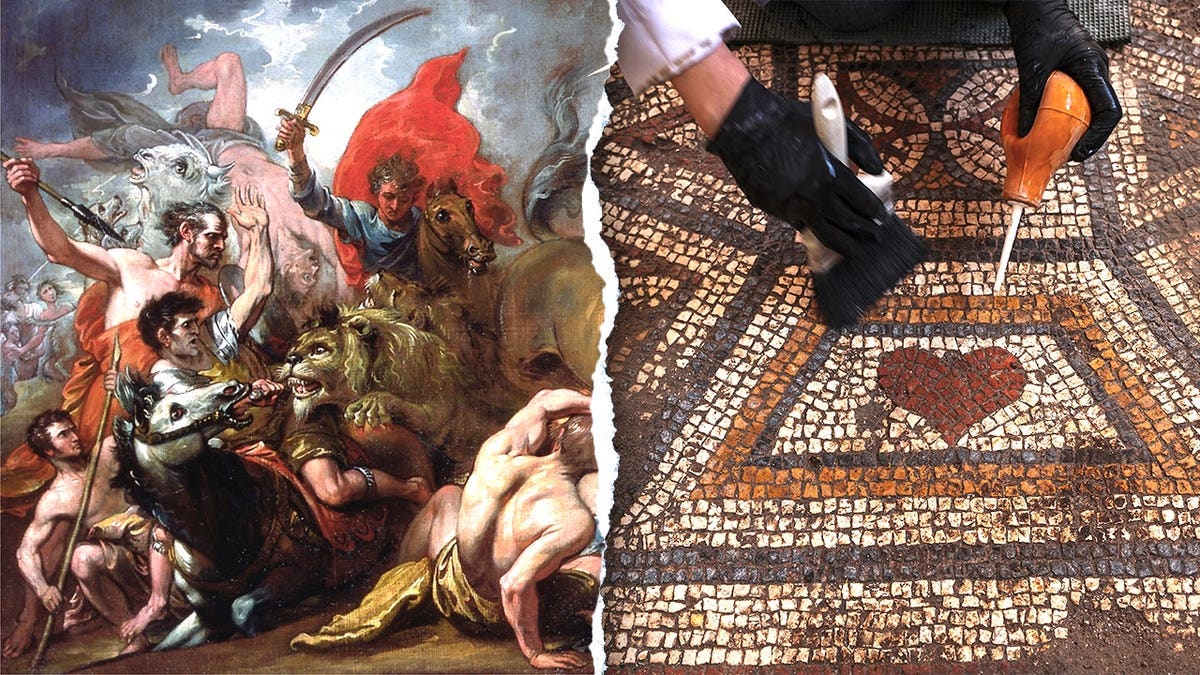
The recent uncovering of an ancient mosaic has drawn significant attention to the city of Smyrna, known as one of the seven churches referenced in the Book of Revelation. This archaeological find took place in İzmir, Türkiye, as detailed by Anadolu Agency.
Smyrna is part of Asia Minor’s seven churches that Jesus addresses in the Book of Revelation. These include Ephesus, Pergamum, Thyatira, Sardis, Philadelphia, and Laodicea. The mosaic was discovered during infrastructure work at the site and dates back to between the fourth and sixth centuries A.D., measuring approximately 16.4 by 8.2 feet.

Photos reveal the intricate geometric and floral designs of the mosaic as archaeologists meticulously cleared away the dirt. Akın Ersoy, the excavation director, stated that traces of walls defining the space were found alongside the mosaic, suggesting adaptive reuse during the 19th-century Ottoman period to preserve the artwork.
“We believe that a structure was built over the mosaic during the Ottoman period, avoiding damage to the floor,” said Ersoy.
The mosaic’s most prominent feature is a heart-shaped ivy leaf, created with red tesserae, indicative of loyalty more than love, contrary to modern interpretations. According to Ersoy, the symbolic use of the heart emerged prominently during the Renaissance.
The site also revealed various artifacts, including bags, cooking pots, and earthenware vessels from the late Ottoman Empire and early Turkish Republic, indicating the space’s reuse centuries after the mosaic was placed.
Recent months have seen several discoveries related to cities from the Book of Revelation. Archaeologists found a Roman council hall in Laodicea with connections to early Christian practices, while in Ephesus, a Roman-era marble bathtub and ancient artifacts have been unearthed.