
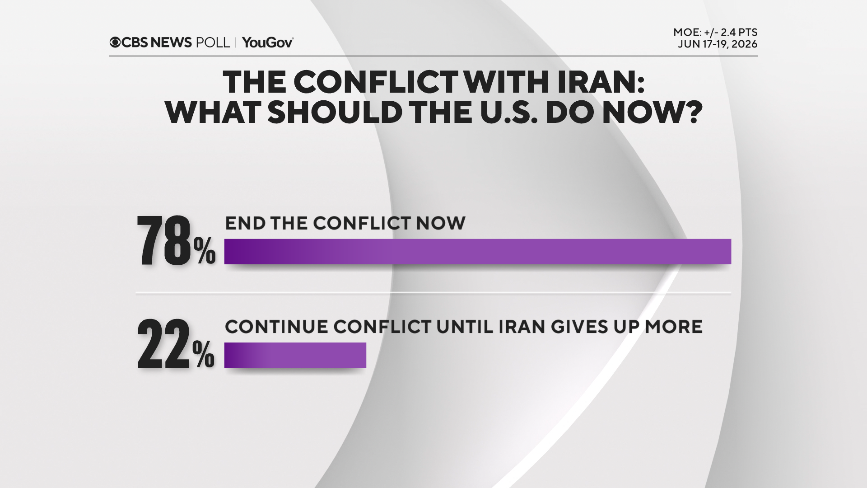
Many Americans express a strong desire for the Iran conflict to end, driven largely by the impact of high gas prices. They hope for relief with the end of war. However, the end comes with mixed views regarding U.S. success in achieving its strategic and economic objectives. A significant portion of the population doubts that Iran’s nuclear ambitions have been permanently curbed or that it will cease threatening its neighbors.
Some within the president’s own Republican party remain skeptical. Many are unconvinced the Trump administration has met its goals and believe the administration is simply focusing on ending the war. As a result, a limited number of Americans feel confident that the U.S. benefits from the new agreement.
Evaluation of the Iran Situation
Most Americans foresee Iran continuing to pose threats to its regional neighbors. There is widespread skepticism regarding the conflict’s worth, as few see substantial advancement in U.S. economic or strategic interests.
Republican Divisions
Within the president’s political base, opinions vary. About 40% of Republicans favor continuing the conflict until Iran concedes more. This group largely opposes ending the conflict with the current Iranian regime intact. They are also divided over whether the U.S. has effectively halted Iran’s nuclear program or curbed its regional threats.
Timing of the Agreement
Many Americans believe the administration did not fully anticipate global economic reactions. Public opinion suggests skepticism over whether the administration achieved its intended goals or is merely prioritizing an end to the conflict. Nonetheless, the possibility of declining gas prices seems to have stabilized the president’s approval ratings somewhat, particularly among non-college-educated Whites who are hopeful for lower prices.
As gas prices soared in recent months, the president’s ratings dipped. A slight recovery has been noted with the potential end of the conflict, although approval levels have not returned to pre-war figures.
Future Considerations
The desire to end the war is partly driven by expectations for lower gas prices. However, there is general uncertainty about Iran’s position. Roughly a third feel Iran is weaker, while another third sees no change since the conflict began.
Gas prices are not the sole concern for Americans. Iran’s nuclear program remains a significant issue, tied to the perception of static Iranian leadership. Half of the population believes ending the conflict while the current regime remains is unacceptable. This group tends to see Iran as a continued threat.
The overall sentiment is one of unresolved challenges and unmet objectives, leading many to conclude the conflict has exacerbated issues rather than resolved them.
This CBS News/YouGov survey involved 2,519 U.S. adults from June 17-19, 2026, using nationally representative sampling based on demographics and voting patterns. The margin of error for the survey is ±2.4 points.