
By Updated on: July 15, 2026 / 10:39 AM EDT / CBS News Add CBS News on Google Kyiv — Ukraine’s Parliament accepted Yulia Svyrydenko’s resignation as prime minister on Tuesday, following President Volodymyr Zelenskyy’s decision to revamp the country’s leadership. Many observers are surprised by this decision, as the outgoing cabinet has been credited with Ukraine’s recent successes against Russia’s full-scale invasion. Zelenskyy has stated that the changes aim to prepare Ukraine for another challenging winter and strengthen ties with key foreign partners. Lawmakers assert that the reshuffle also reflects broader political calculations within Kyiv.
“Ukraine is changing its political strategy. Each priority area of foreign policy will be assigned to a specific person with substantial experience capable of implementing agreements made at the leaders’ level and fulfilling the expectations of the Ukrainian people,” Zelenskyy wrote on X. “The same applies to our domestic work. Preparing for winter is a crucial priority, and Ukraine must be ready for every threat that may arise.”
The initial changes highlight Zelenskyy’s commitment to these priorities. Last winter was Ukraine’s toughest since Russia launched its invasion in February 2022. Russian attacks severely impacted the country’s energy grid, causing extensive power and heating outages. Officials have warned that necessary steps have not been taken to prevent similar issues this winter.
“The issue was the Svyrydenko cabinet’s insufficient preparation for winter,” said Oleg Dunda, a member of Ukraine’s Parliament. “The resilience plans were unsatisfactory. The choice was either to strengthen this area in time or let the cabinet take full responsibility.”
Serhiy Koretskyi, the CEO of Ukraine’s state energy company Navtozgaz, is anticipated to replace Svyrydenko as prime minister and may address these shortcomings effectively. “He is a genuine technocrat,” noted Yuriy Sak, an adviser to Ukraine’s Ministry of Strategic Industries. “Strengthening the energy sector and efficiency is imperative with winter approaching.”
Zelenskyy is expected to appoint Svyrydenko as Ukraine’s Ambassador to the United States. She is said to have strong connections with members of the Trump administration, notably Treasury Secretary Scott Bessent, due to their collaboration on the “critical minerals deal” last year. Ukraine’s current ambassador, Olha Stefanishyna, resigned this week.
Despite some personnel changes aligning with Ukrainian government priorities, others have perplexed lawmakers and officials. Rumors of Zelenskyy possibly replacing popular Minister of Defense Mikhailo Fedorov with Minister of Internal Affairs Ihor Klymenko have sparked significant opposition.
Fedorov, a 35-year-old tech entrepreneur, has close ties to Silicon Valley and became defense chief in January after leading tech reforms at Ukraine’s Ministry of Digital Transformation. He is credited with recent battlefield successes, including disrupting logistics to Crimea, occupied by Russia since 2014. Several officials have suggested Fedorov’s growing popularity might make him a potential political rival to Zelenskyy, and reports of friction between Fedorov and top generals, including Oleksandr Syrskyi, have surfaced.
A spokesman for Ukraine’s Ministry of Defense stated the observations reported were made before Zelenskyy’s announcement about the reshuffle, with no further comments provided.
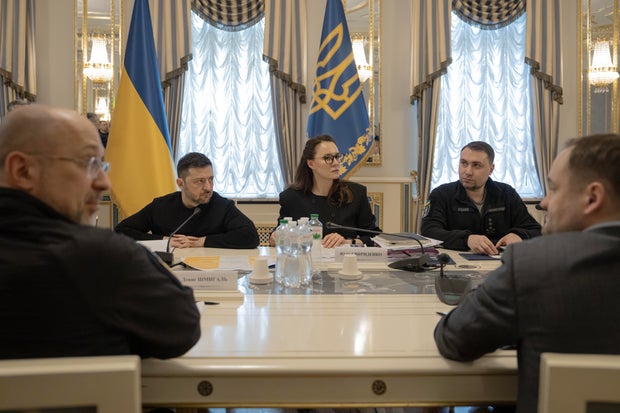
As of Wednesday afternoon, Zelenskyy had made no definitive decisions on additional governmental changes but met with Koretskyi, the likely new prime minister, and other key officials, including acting Prime Minister Denys Shmyhal, Minister of Internal Affairs Klymenko, and Fedorov.
“The transformation of all processes within Ukraine’s Defense Forces that can sustain the motivation of our warriors must continue, along with efforts to ensure combat brigades are properly staffed. We all understand the challenges,” Zelenskyy wrote on X after meeting with Fedorov. “It is vital that leadership in the defense sector delivers results.”