
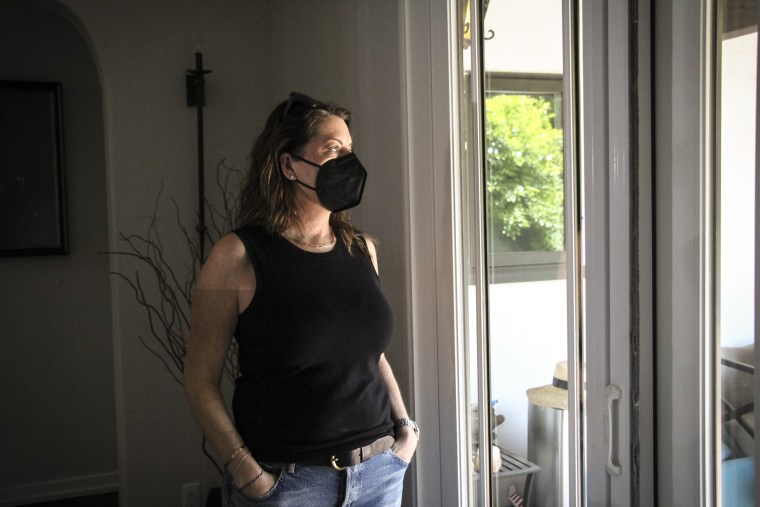
Altadena, California, faces a serious health crisis following the Eaton Fire. A mother resorts to chelation therapy for her son to eliminate lead from his blood. A geochemist refuses to enter homes without a respirator and full-body suit. Meanwhile, a cinematographer spends thousands on testing for heavy metals. Government clean-up programs overlook this task. These drastic steps highlight residents’ battle against the toxic compounds plaguing their families and properties.
The devastation stems from the unique nature of the urban fire, in which thousands of homes and cars fueled the flames. This released heavy metals into the smoke. Despite the removal of debris and remediation efforts, harmful lead levels persist. Jennifer Rochlin, an artist and single mother, discovered lead through a $75 Amazon test, leading her insurance to authorize further testing.
Many Altadena residents remain displaced, with nearly two-thirds either losing homes or suffering smoke damage. Temporary housing strains both insurers and the affected individuals. Uncertainty surrounding safety drives independent research by academics and advocacy groups. Interviews with Altadena residents, scientists, workers, politicians, and insurance representatives reveal systemic inadequacies. The response systems, such as insurance and remediation companies, were not designed for this disaster.
This was an urban conflagration, and the contamination we were dealing with was unlike anything you would have normally seen. — Dawn Fanning, Managing Director of Eaton Fire Residents United
California lacks indoor contamination standards for substances found in Altadena. This complicates decisions for homeowners and insurers regarding safe re-entry. Inconsistent testing methods further hinder progress. FEMA and the U.S. Army Corps didn’t require soil testing on burnt properties, leaving residents unaware of any remaining dangers.
Two whistleblowers from the cleanup expressed concerns over soil contamination. They described the efforts as rushed, noting more debris than usual remained post-cleanup. One stated that typical thorough methods were not applied this time. Contaminants still linger.
An Army Corps spokesperson explained that FEMA set the cleanup scope—including structural ash and debris removal—without soil testing. This limitation contributes to ongoing community risks.
Hidden Threats in the Dirt
Altadena, wedged against the San Gabriel Mountains, experiences a blending of wilderness and city life. The Eaton Fire destroyed 9,400 homes in January 2025. It released lithium from electric vehicle batteries, arsenic from old lumber, and asbestos from attic insulation into the air. Winds hitting 90 mph spread the blaze.
Alireza Namayandeh, a National Science Foundation postdoctoral fellow at Stanford University, studied the fire’s smoke. He collected samples in Pasadena, noting the majority were nanoparticles. These tiny particles, one-1,000th the width of a human hair, readily enter lungs, the bloodstream, and the brain, posing significant health risks.