
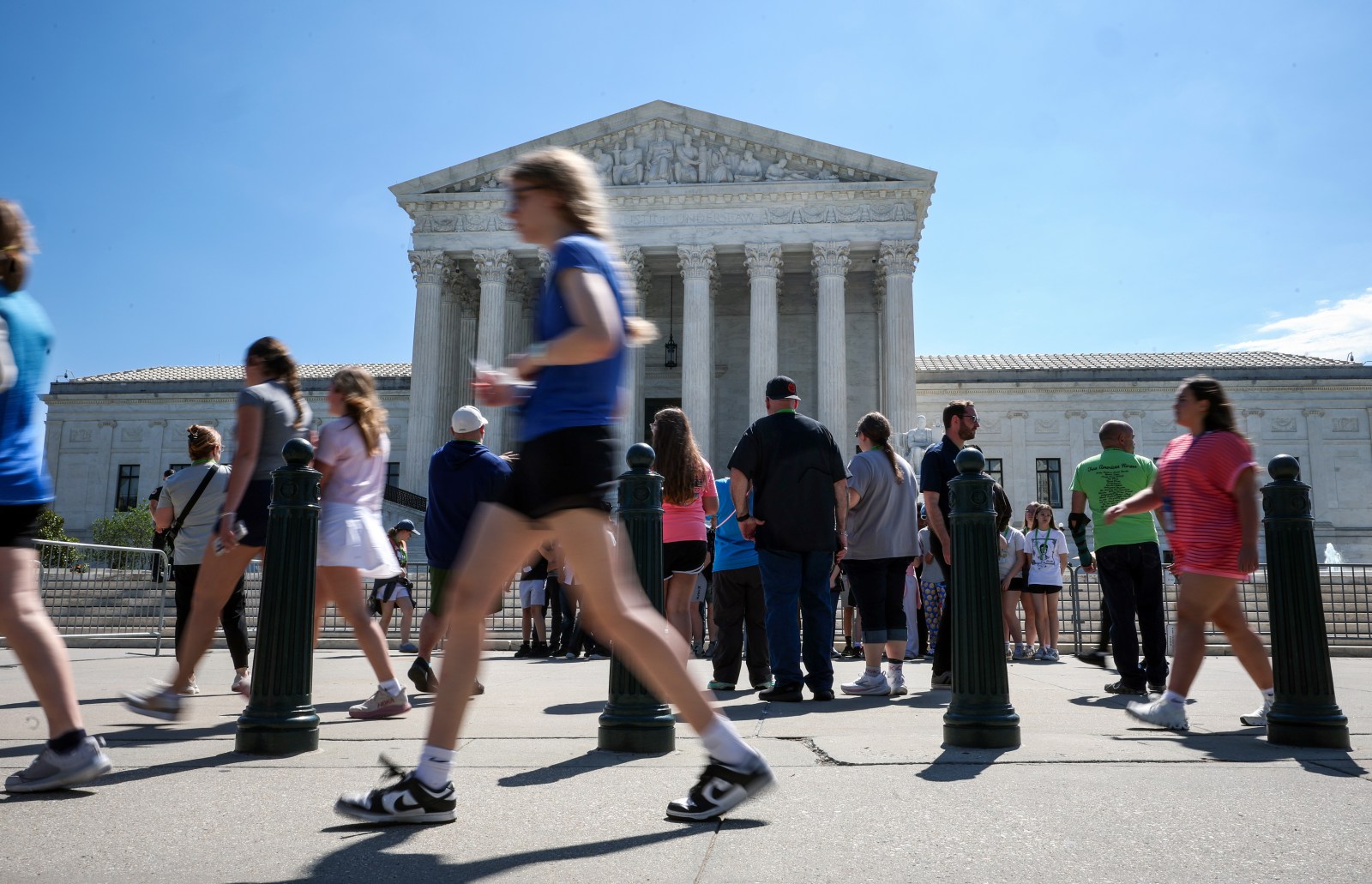
Alabama’s Appeal to the Supreme Court
Alabama’s attempt to have its redistricting case heard by the U.S. Supreme Court encountered a setback. On Wednesday, Justice Clarence Thomas declined to issue an immediate stay on a lower court’s decision to block Alabama’s congressional map redrawing. Known for his skepticism towards the Voting Rights Act provisions often applied in similar situations, Thomas denied immediate relief to Republican Alabama officials. He requested those opposing the change to provide justification for using the current map. This legal obstacle occurs against the backdrop of broader Republican efforts to introduce new maps in various states before the 2026 midterms. These elections are vital for President Donald Trump’s party to maintain control of the House of Representatives.
Recent Developments and State Reactions
A federal panel of three judges placed a preliminary block on the map, initially developed in 2023, on Tuesday. Alabama swiftly challenged this at the Supreme Court, which has previously considered similar cases, such as those concerning Texas. State Attorney General Steve Marshall expressed disagreement with the panel’s decision, highlighting the conservative nature of Alabama’s electorate and representation. He stated, “The extent to which there is confusion about the maps which Alabama uses for congressional districts seems to be with the three-judge panel, not the voters.” The District Court instructed Alabama to revert to the court-ordered districts used in the 2024 elections. Attorneys representing Black voters argued that Alabama’s intended map discriminated against them intentionally. “Ultimately, we cannot see our way clear to requiring Alabamians to cast their votes in the 2026 elections under a districting plan tainted by intentional race-based discrimination,” the judges noted.
Previous Rulings and Ongoing Legal Disputes
This case has navigated through the legislature, district court, and Supreme Court several times since 2021. The Supreme Court affirmed the ban on Alabama’s new map under the Voting Rights Act in a 2023 ruling. An April ruling in Louisiana v. Callais, reinterpreting Section 2 of the Voting Rights Act, allowed the case to be challenged again. The Supreme Court sent it back to the District Court recently.
The Trump administration’s Solicitor General, D. John Sauer, criticized the district court’s injunction, accusing it of failing to separate race and politics meaningfully. Plans to hold primaries using the new map were already underway. “Federal district courts do not have the same license to interfere with election rules at the eleventh hour, particularly on such dubious merits theories,” Sauer asserted.
Justice Clarence Thomas’s Perspective
Justice Thomas has long held skeptical views on the Voting Rights Act’s application in redistricting cases. He contends that federal law should minimally impact how states create congressional maps. His constitutional philosophy emphasizes a “colorblind” Equal Protection Clause, rejecting race-based district requirements by courts. He consistently calls for rethinking or even abandoning the legal framework challenging electoral maps under Section 2 of the Voting Rights Act.
Thomas first articulated this view in a 1994 concurrence in Holder v. Hall. He argued that Section 2 concerns voting procedures, like ballot access, not district line drawing. He maintains that Section 2 is misinterpreted to address “vote dilution” linked to district layouts. He reiterated this in the 2023 Allen v. Milligan dissent, opposing Alabama’s congressional map challenge. In 2023, Thomas criticized the Court for requiring states to draw race-conscious district lines, challenging proportional representation demands under Section 2.
Thomas continued this critique in more recent disputes, including the Court’s April 2026 decision in Louisiana v. Callais. He argued that the Court should declare Section 2 irrelevant to districting. Thomas believes the Voting Rights Act encourages unconstitutional racial sorting, while supporters assert that Section 2 prevents minority voter suppression through district design.
Next Steps
Attorneys challenging Alabama’s new map must submit their arguments to the Supreme Court by 4 p.m. on June 1. The Court will decide whether to accept the state’s appeal afterward.