
In Beijing, Fei Zhaojun, a computer programmer, recently lost his job along with 160 coworkers. His boss had wondered if AI might soon replace human coders. Fei’s experience highlights a growing trend in China where AI is transforming the job market.
China’s embrace of AI is leading to job displacement across many sectors. Shujing He, an analyst in Beijing, notes that many in China, unlike elsewhere, view AI positively or neutrally. Individuals often leave traditional roles to explore AI-driven opportunities. Fei, previously skeptical of AI, has started making videos about everyday life during his break in employment.
Another example is Du Qinchun, a translator who now trains AI models for translation work. However, the pay in translation has decreased significantly. Chinese industrial fields have seen an increase in AI adoption from 9.6% in 2024 to 47.5% last year, according to IDC.
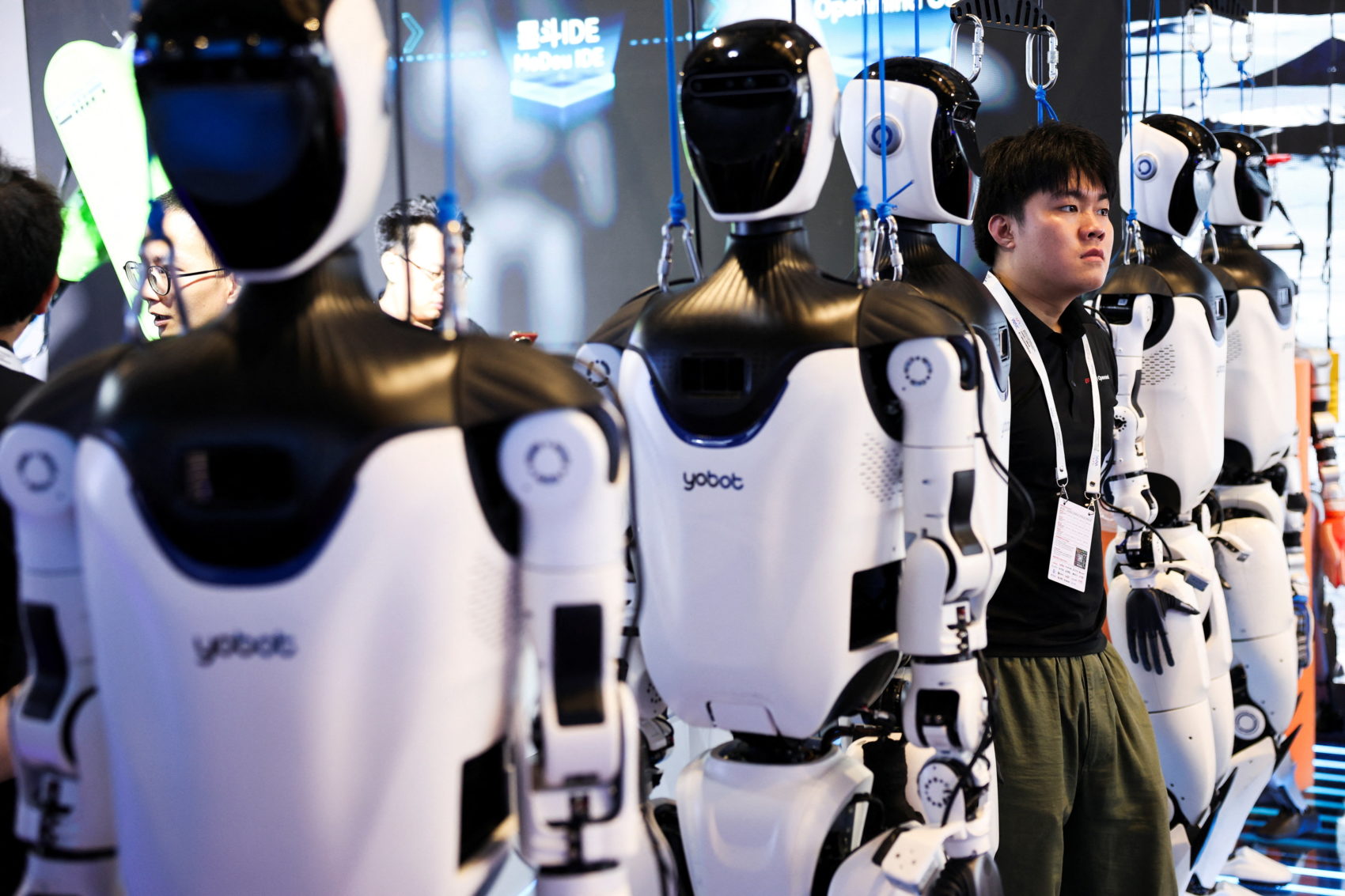
In postal centers, humanoid robots now sort parcels. They are taking on human tasks such as directing traffic and making coffee. Food delivery robots are spreading, threatening jobs of millions of delivery workers. Short video production for mobile phones is also decreasing as generative AI becomes more prevalent.
“AI tools now allow almost anyone to perform tasks once requiring specialized training,” said He from Plenum. This is especially true in software and multimedia. Workers in these roles face higher risks of job displacement.
The International Labor Organization reports that women in fields suited for automation face greater employment risk. As AI permeates industries under China’s “AI Plus” initiative, its economy might struggle. Consumer spending has slowed, with concerns about job security compounding housing market issues.
Eswar Prasad of Cornell University believes AI improves productivity but may disrupt employment. China’s urban unemployment averages about 5%, yet for ages 16 to 24, it’s much higher. The aging and shrinking population could mean fewer workers for retirees, with automation helping balance this shift.
Wang Zhicheng, previously a scriptwriter, turned to independent work creating children’s books post-layoff. AI helped in his previous job but left much to be desired in quality. Wang’s experience is echoed by Yang Zheng, a high school teacher, who sees AI as beneficial for student learning despite its current inaccuracies.
As AI adoption continues in China, workers adapt by finding new ways to integrate technology or change careers.