
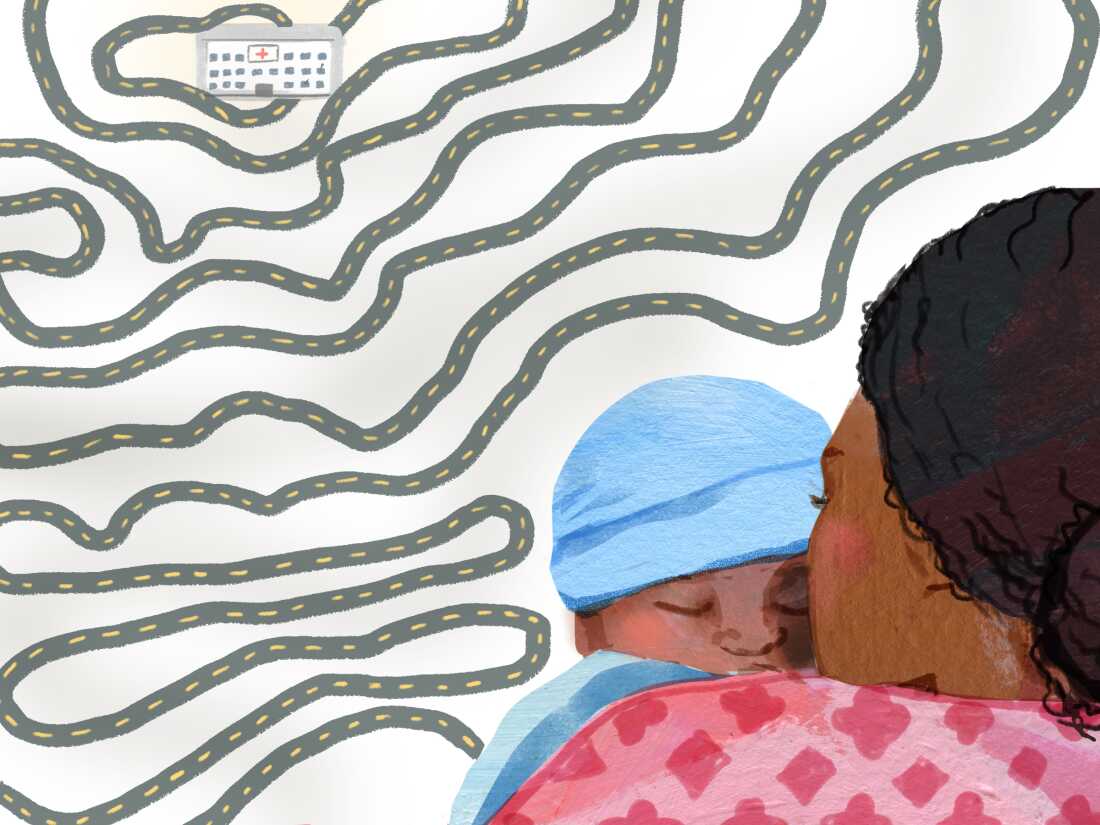
Nadia Gramby, a devoted midwife, travels across Alabama delivering babies and providing care for pregnant women. This is crucial as maternity deserts expand nationwide, highlighted in the March of Dimes’ latest report.
Her mornings start with cherished moments snuggling and talking to her baby girl, River Emmanuel. Despite being a mother of two, Gramby spends long hours caring for other mothers and babies, a vital service since over 52% of U.S. counties lack hospital-based labor services, according to the March of Dimes’ “Nowhere to Go” report. This 2026 report also reveals nearly 35% of counties are maternity care deserts without birthing facilities or obstetric clinicians.
Dr. Michael Warren, from the March of Dimes, emphasizes, “This goes beyond a mere inconvenience.” Women in these areas face increased risks during pregnancy, with over 20,000 U.S. babies dying before their first birthday and around 600 women not surviving pregnancy complications each year. The risks are higher for women of color, with Indigenous and Black women experiencing significantly higher maternal death rates compared to white women.
Miles for Moms
On any day, Gramby might drive across Alabama, aiding families in bringing new life. As a licensed and certified midwife in Chelsea, she finds joy in supporting her patients over long distances, assuring, “It is an amazing joy to see families who feel safe.” Recently, she covered 302 miles in a day to prenatal appointments in various towns.
Her practice, Crown of Glory Birth Services, started in 2018 to address the lack of care in maternity deserts. Gramby, one of about 1,200 Black midwives in the U.S., offers personalized care. She emphasizes understanding emotional, spiritual, and physical needs and providing home visits and holistic postpartum care. Research shows midwife deliveries result in lower cesarean rates and fewer complications.
“Nowhere to Go” and Expanding Access
The latest March of Dimes report highlights midwives’ crucial role in expanding access to care, released every two years to track challenges in obtaining maternity care. It shows maternity care deserts are prevalent, especially in the south and midwest. The report says, “Those counties are home to 2.4 million women of reproductive age,” affecting appointment access.
In 2024, many women did not receive prenatal care in the first trimester. The report notes Medicaid funding cuts and a workforce shortage exacerbate these challenges, with over 500 maternity wards closing between 2010 and 2022. These closures increase infant mortality rates and affect urban and rural areas. Dr. Warren stresses the danger: “We live in a country that is among the most dangerous developed countries in the world for giving birth.” He highlights the heightened risks for Black and brown mothers, stressing the need for improvement.
Gramby passionately works to counter these disparities, offering care to Black moms seeking caregivers who understand and respect their culture. She addresses unaddressed pain and disparities in healthcare access.
The March of Dimes sees midwives as essential to improving health outcomes over decades, despite slow progress. They currently attend about 12% of births in the U.S., but insurance and state restrictions remain challenges. Lawsuits have been filed in several states over restrictive practices, impacting midwifery care’s availability.
The March of Dimes advocates for policies enabling midwives to practice independently and pushing for expanded hospital privileges. Gramby emphasizes the importance of collaboration: “We have some work to do…I have tremendous hope for positive change.” She views compassionate maternity care as a fundamental right for every mother and baby.