
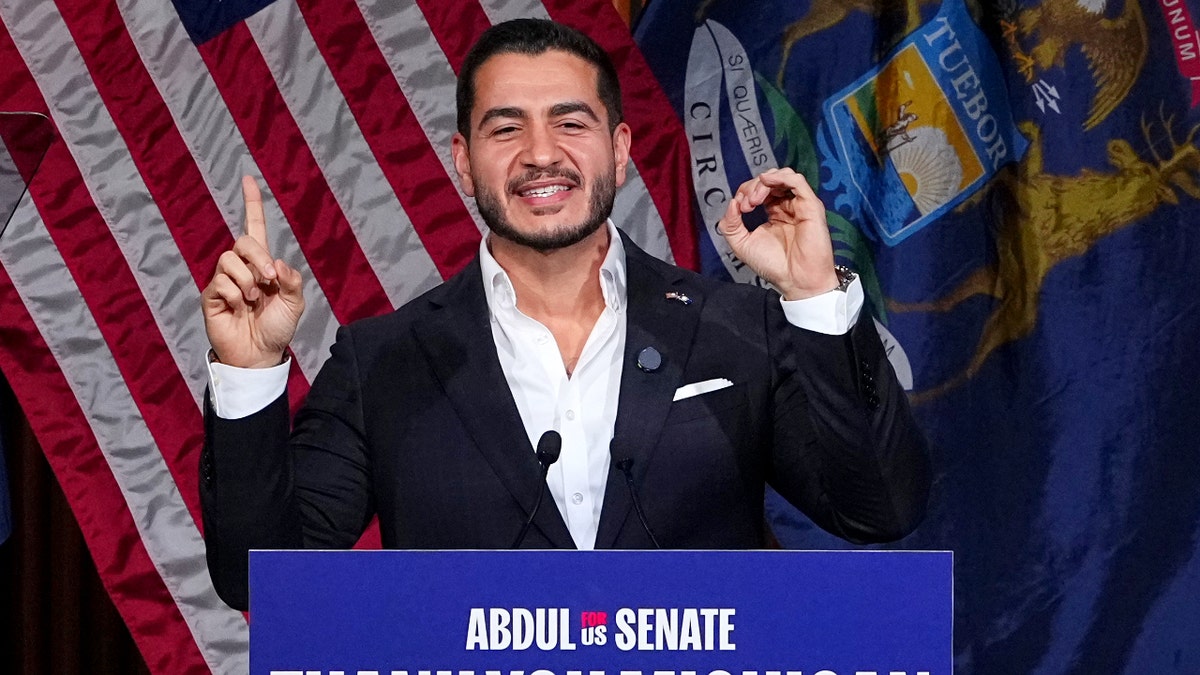
In Michigan, Senator-elect Abdul El-Sayed delivered a fiery victory speech after triumphing over Republican Mike Rogers. He boldly criticized the divisive nature of the election campaign, asserting it was one of the ugliest in recent history. El-Sayed accused his opponents of focusing on his name and faith, making a point that these are not the reasons behind economic struggles such as high gas prices and grocery costs.
During his speech in Detroit on Wednesday, November 4, 2026, El-Sayed condemned President Donald Trump’s increasingly harsh rhetoric, addressing parents’ difficulties in explaining Trump’s behavior to children. He expressed optimism that the outcome of the election showed that “the bad guys lost.” El-Sayed argued for an inclusive vision of America, contrary to what he perceives as his opponents’ narrower vision.
El-Sayed took a jab at Vice President JD Vance, hinting at the political irony that Vance would be required to swear him in come January. “Wolverine one, Buckeye zero,” he declared humorously.
The newly elected senator shifted his critique towards U.S. spending abroad, specifically concerning Israel and foreign aid. He voiced strong opposition to spending on “apartheid or genocidal war,” advocating instead for domestic investment.
El-Sayed’s speech included a parting remark to his defeated opponent, Rogers, wishing him well in retirement and expressing hope never to see “the likes” of him in the state again.
Throughout his campaign, El-Sayed faced significant scrutiny over his alleged ties to the Muslim Brotherhood and his rhetoric about Israel, alongside criticism from within his own party about associations with controversial figures such as Hasan Piker. Nonetheless, he managed to overcome these challenges, while Rogers struggled against numerous political setbacks affecting Republicans this cycle.
El-Sayed’s victory marks a significant setback for GOP efforts to counteract progressive trends in Democratic politics. Attempts to label him as a symbol of socialism failed to resonate with voters, emphasizing the evolving dynamics within Michigan’s political landscape.