
SAULT STE. MARIE, Mich. — In a toy store, Danielle Boyer found inspiration in Tickle Me Elmo. This inspiration led her to address the lack of educational toys teaching Anishinaabemowin, an endangered Native American language.
Anishinaabemowin includes Potawatomi, Odawa, and Ojibwe languages. In the U.S., fewer than 10,000 people speak it, while Canada has about 25,000 speakers. Some Native languages have only a few fluent speakers. Boyer’s family has experienced this loss; her grandmother remains one of the last fluent speakers of their dialect.
It is devastating to feel like your language could be lost.— Danielle Boyer
U.S. Indian boarding schools significantly contributed to language loss by discouraging Native tongues, often forcibly. Today, although some Native youth learn their languages in schools, Boyer notes they often lack investment.
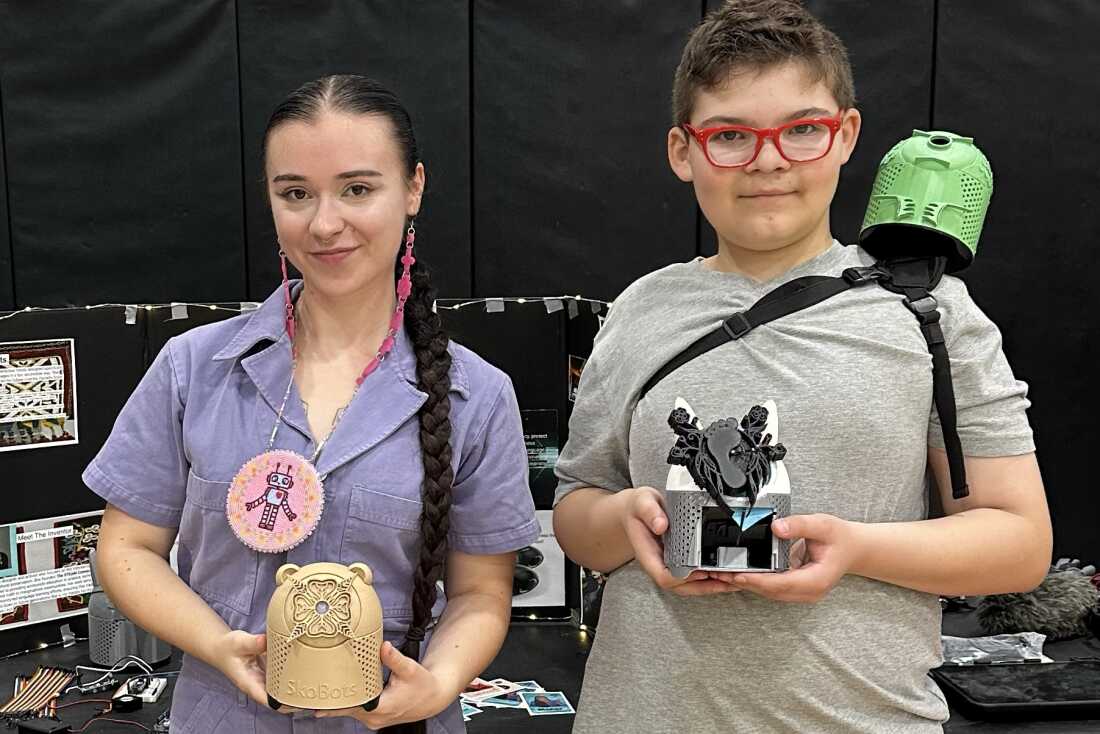
Boyer invented the SkoBot to engage Indigenous children in learning their languages. These robots use AI to speak Indigenous languages. Small enough to sit on a shoulder, they resemble woodland creatures with Native American floral designs.
Boyer’s nonprofit has mentored hundreds of Native American children to build SkoBots. One mentee, 12-year-old Holden Hoy, a member of the Sault Tribe, showcased his creation at his school’s STEAM Museum.
Hoy programmed his SkoBot, named Sabe, meaning Bigfoot, to answer questions in Anishinaabemowin. Sabe emphasizes honesty, a key element in Ojibwe culture. Hoy said, “The language is the culture!”
SkoBots trigger prerecorded audio to avoid AI hallucinations. Boyer stresses AI should not replace real language interactions. Her aim is to spark interest in Indigenous languages and promote ethical AI discussions.
If we’re not learning our language correctly, we shouldn’t learn it at all.— Danielle Boyer
Holden’s mom, Jocelyn Hoy, appreciates her son’s cultural exposure and eagerness to learn. She sees SkoBots as a key to cultural understanding, saying, “The language is the culture!” For generations, this culture forms a core part of people’s identity.
For Holden and other Native youths, preserving their language links them to their heritage, strengthening their cultural identity for future generations.