
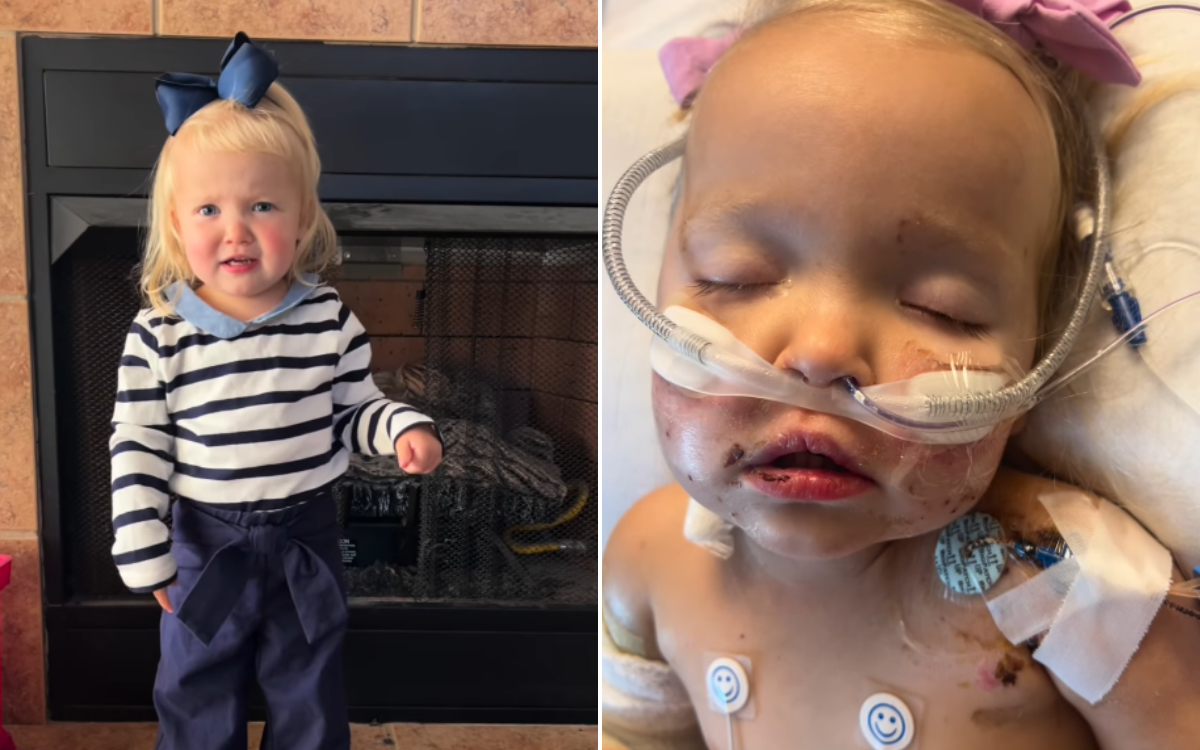
Kory Paige Loden, a mother from Tennessee, faced a sudden nightmare when her daughter, Mady, fell gravely ill. What initially seemed like flu quickly spiraled into a life-threatening situation. This is Mady’s story of survival and the lessons learned along the way.
A Sudden Illness
Two-and-a-half years ago, Mady was a healthy and cheerful 18-month-old. One October night in 2023, she went to bed feeling fine. By morning, things took a drastic turn. Mady appeared lethargic, which seemed consistent with her brother’s recent Flu B diagnosis. As the day progressed, her condition worsened, and alarming symptoms emerged. She became feverish, and her extremities turned blue.
Concerned, Kory consulted her sister-in-law, a pediatrician, who mentioned that fever could cause such symptoms. However, when Mady laid on the shower floor listlessly, it became evident that something was gravely wrong. Immediately, Kory rushed Mady to urgent care, where staff quickly recognized the severity and called for an ambulance to take her to the hospital.
The Unfolding Crisis
In the ambulance, attempts to start an IV on Mady elicited no response, prompting concern from the EMTs. The night’s events soon turned into a blur for Kory, who found herself feeling disconnected from the unfolding crisis. At the hospital, Mady’s condition required her to be airlifted to a children’s hospital.
Kory recalls being asked for verbal consent to restart Mady’s heart if needed during transit. At the children’s hospital, doctors soon decided to put Mady on life support, marking the gravity of her condition. Overwhelmed but supported by her husband and community, Kory leaned on her faith for strength.
Diagnosis and Critical Hours
The critical 48 hours that followed were intense. Doctors had to perform emergency procedures, including poking a hole in her heart due to life support complications. This intervention revealed Mady’s interrupted inferior vena cava—a rare heart condition linked to spleen issues.
The doctors discovered Mady lacked a spleen, making her susceptible to encapsulated bacteria and causing sepsis. The ensuing sepsis led to disseminated intravascular coagulation, further complicating her condition. Her parents, amid confusion and fear, learned that sepsis was the root cause, triggered by strep pneumonia—a common bacterial infection that her body couldn’t combat without a spleen.
Life-Changing Outcomes
As Mady’s blood circulation suffered, her limbs darkened, raising the possibility of amputation. Despite doctors’ efforts to restore blood flow, movement to a hyperbaric chamber was deemed too risky. In December, after nearly two months in the hospital, Mady had her first leg amputated. Efforts to save her remaining leg fell short, leading to another amputation months later.
Mady’s Resilience and Recovery
Today, Mady embodies resilience as a vibrant, bilateral amputee with no memory of her life before the illness. She navigates life with ease, using her prosthetics or moving without them. Kory shares their journey to help other parents recognize signs of sepsis early. The sooner one discovers sepsis, the better the chances for recovery. Mady’s diagnosis came just in time, underscoring the importance of vigilance.
Kory’s story emphasizes the need for awareness about medical conditions like sepsis and the unpredictable nature of health challenges. Her family’s story of hope and recovery serves as a guiding light for others navigating similar paths.