
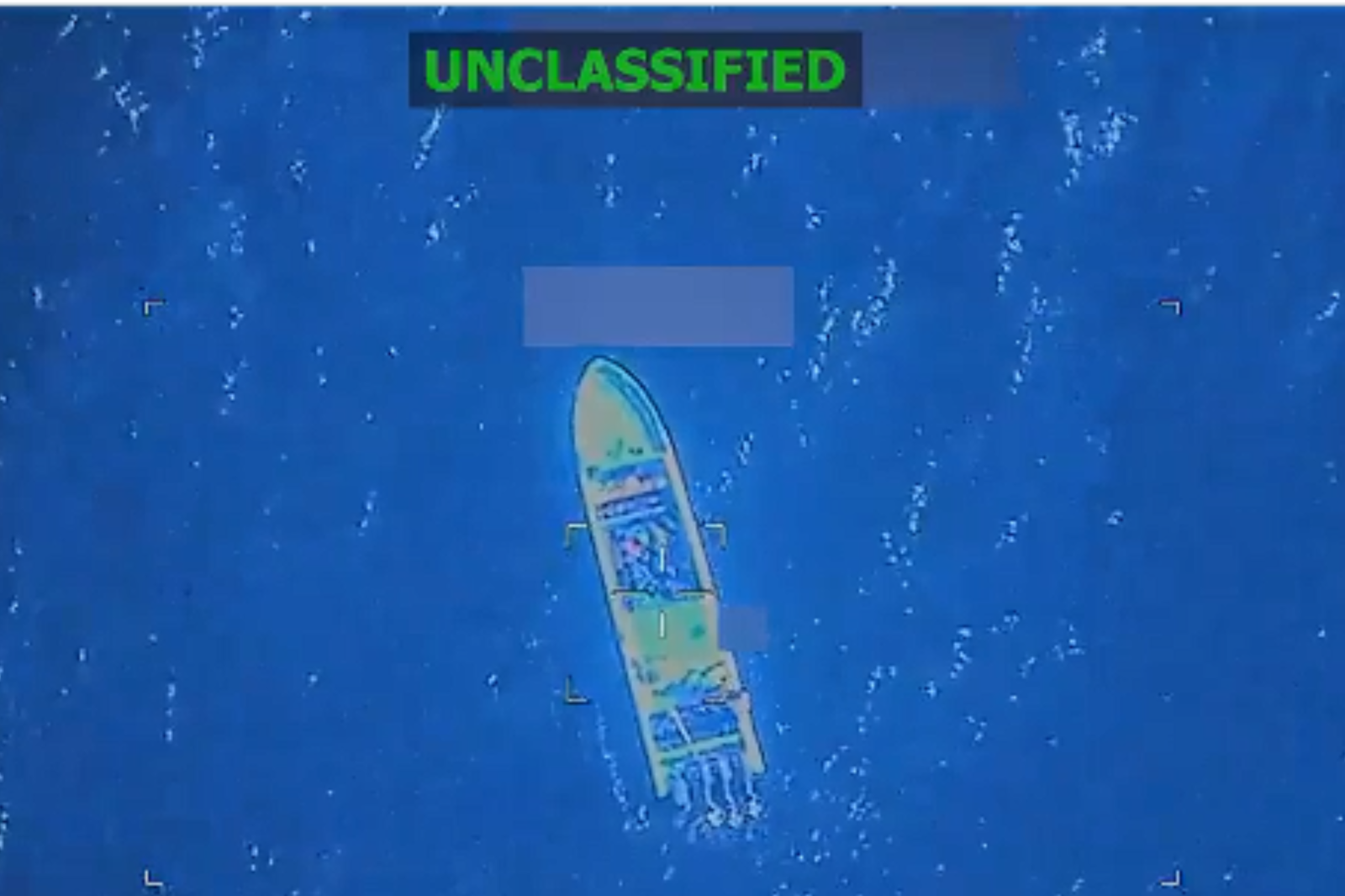
The U.S. military conducted another strike on a boat on Friday, the third such incident in a week. This strike is part of a months-long campaign against suspected drug boats in the eastern Pacific and Caribbean Sea. The U.S. Southern Command (SOUTHCOM), responsible for American military forces in the Caribbean and Latin America, confirmed the attack. The boat was accused of smuggling drugs, and three men labeled as “narco-terrorists” by SOUTHCOM died in the strike, adding to a death toll that has surpassed 200 since early September.
Engaged in Narco-Trafficking Operations
SOUTHCOM described the action as a “lethal kinetic strike on a vessel operated by Designated Terrorist Organizations.” They stated that intelligence confirmed the vessel was using known drug trafficking routes in the Eastern Pacific and was involved in “narco-trafficking operations.” This strike represents the latest measure in the U.S. government’s effort to curb drug trafficking into the country. However, this campaign has faced international criticism, concerns from humanitarian groups, and monitoring by Congress. The Trump administration has yet to provide evidence publicly that these boats carry drugs.
Legality of the Strikes
The recent attack followed a strike that killed two individuals on an alleged drug boat and another that resulted in one death and two survivors. The U.S. government claims a legal stance of “armed conflict” with drug cartels, asserting this is necessary to reduce drug inflows into the country and save American lives. Nevertheless, humanitarian organizations, international experts, and some former officials have criticized the strikes as illegal under international law, arguing that the military should not target civilians without immediate threats.
The American Civil Liberties Union (ACLU) has labeled the Trump administration’s claims against the groups as “unsubstantiated” and “fear-mongering.” Human Rights Watch and Amnesty International describe the strikes as unlawful killings.
Guatemala Denies Involvement
As the U.S. crackdown progresses, Guatemalan President Bernardo Arévalo has rejected claims that his country authorized U.S. strikes against drug smugglers within its borders. He told reporters there is “no agreement” after a report suggested a consent to joint airstrikes during discussions with U.S. Defense Secretary Pete Hegseth. Arévalo did acknowledge Guatemala’s request for U.S. assistance in tackling cartels as part of the anti-trafficking efforts.
Despite the Trump administration’s justification for these actions, experts caution that the campaign has not significantly slowed cocaine traffic, with the drug remaining as accessible as before the strikes began. This conclusion comes from studying street prices, overdose rates, drug seizures at the U.S. border, and drug purity levels, based on findings from The New York Times.