
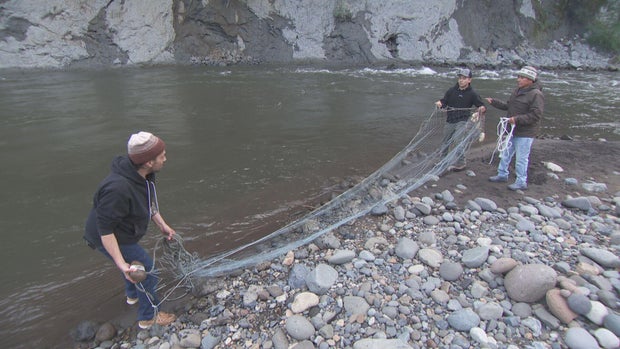
The Muckleshoot tribe views salmon as an integral aspect of their cultural heritage. Descendants of the Duwamish and Upper Puyallup peoples, the tribe’s history in the Seattle area spans thousands of years. Known as the Salmon People, they hold a profound relationship with fish and water. Mike Jerry Jr., 21, emphasized this connection after learning traditional fishing techniques from family members.
On the banks of a river in Western Washington, Michael Jerry Sr. and his brother Cory taught Jerry Jr. how to catch salmon using age-old methods. The aim is to take only what is needed, catching a single salmon with a small net. Cory describes this practice as part of a broader process that includes preserving and smoking the fish, vital traditions passed down through generations. This knowledge ties Jerry Jr. to his ancestral roots, underscoring the importance of maintaining cultural continuity.
Salmon’s Spiritual Significance
The Muckleshoot tribe’s fishing methods are enriched by spiritual beliefs. Oral historian Warren King George describes salmon as relatives returning yearly. The legend of Salmon Boy tells of a sacred promise to protect waterways and habitats in return for salmon’s continued return, celebrated at the First Salmon Ceremony each year with communal feasting and gratitude.
Challenges in Access to Fisheries
Historically, Native American tribes in the Pacific Northwest, including the Muckleshoot, faced legal and physical barriers to fishing. In 1892, a tribal member known as Big John was penalized for fishing outside reservation boundaries. This incident initiated prolonged conflicts over fishing rights.
During the 1960s, the ‘Fish Wars’ highlighted these issues, leading to the Boldt Decision in 1974 that secured half of the harvestable salmon for tribes. Warren King George notes that this struggle transcended fishing, impacting access to all natural resources essential to tribal identity.
Current Environmental Challenges
According to Phil Hamilton of the Muckleshoot Fish Commission, tribal fishers contribute to 2% of the global wild salmon supply. Ensuring this access depends on maintaining robust salmon populations. Hamilton states that environmental concerns are now the main threat, with habitat protection and restoration being crucial focuses.
Despite efforts, habitat loss persists at 5% annually, compelling the tribe to secure water resources vital for salmon. These actions have bolstered salmon numbers since a critical decline in the 1990s, with the population now supporting 500 fishers and over 200 boats. For Hamilton, witnessing the joy and success of their fishers affirms the significance of these conservation efforts.