
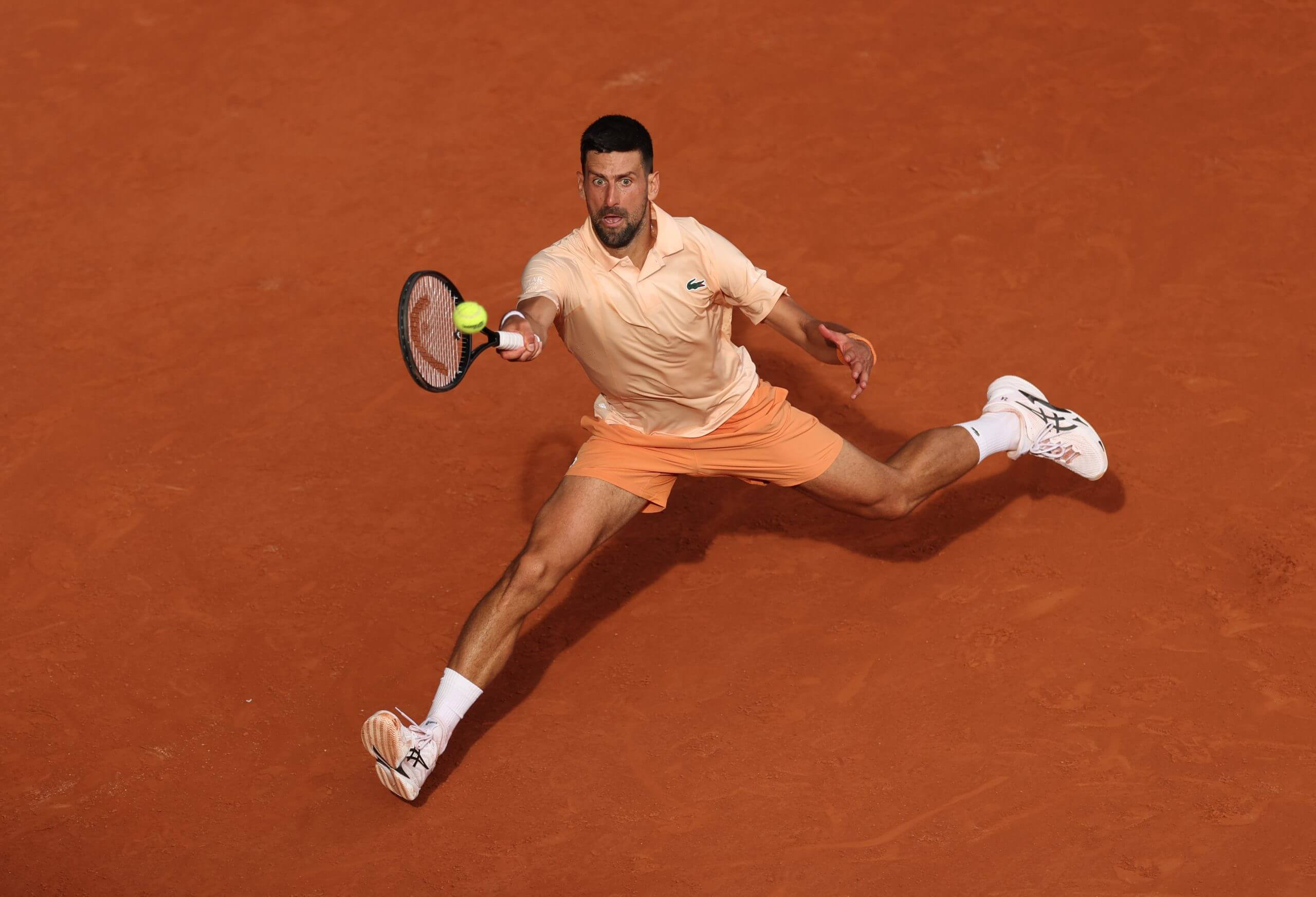
The pursuit of Novak Djokovic for a 25th Grand Slam title faced a setback on Friday night when he was defeated by rising Brazilian talent João Fonseca. In a thrilling match at the French Open, Fonseca made an astonishing comeback from two sets down, claiming victory with scores of 4-6, 4-6, 6-3, 7-5, 7-5. The intense showdown lasted four hours and 53 minutes.
At 39, Djokovic might have seen his best chance slip by. With contenders like Carlos Alcaraz absent due to injury and Jannik Sinner having exited the tournament, Djokovic’s path to surpassing the Grand Slam record he shares with Margaret Court seemed clear. Prior challenges from Sinner and Alcaraz had culminated in Djokovic losing six recent major tournaments to them.
The tennis community watched as temperatures in Paris soared to 90 degrees Fahrenheit, amplifying the drama of the match. Fonseca, marking his debut against Djokovic and first appearance on a Grand Slam’s main court, became only the second player to defeat Djokovic from two sets down. The first instance was by Jürgen Melzer in 2010 at this very tournament.
Djokovic’s journey at Roland Garros started with challenges, nursing a shoulder injury that had seen him on court only once since March 12. As the match progressed into the evening, it became evident that his physical discomfort was affecting his performance. Yet, Wimbledon offers another opportunity as Alcaraz’s wrist injury rules him out, and Sinner requires recovery time.
Fonseca’s upcoming match in the fourth round will see him face either Casper Ruud or Tommy Paul.
Initially, Djokovic dominated with swift drops, exploiting Fonseca’s movement. He effectively used drop-shot-lob combinations, forcing errors from the Brazilian. Even as Fonseca tried similar strategies, Djokovic showcased his skill in net exchanges, capitalizing on volley-to-volley contests. By the second set, Djokovic maintained control, using his dexterity to seal a lead. At this point, Djokovic had masterfully hit 26 winners to Fonseca’s 13, demonstrating his aggressive play style.
Fonseca, however, raised his game. He began targeting corners over the back fence with powerful forehands. As the match extended into its third hour, Djokovic showed signs of strain. Cramp seemed to affect his hand, and heavy breathing marked his longest clay match outside the 2023 Wimbledon final against Alcaraz.
Fonseca, a full 20 years younger, capitalized on Djokovic’s fatigue. He launched seemingly impossible shots, reminiscent of Djokovic’s early dominance. His acrobatic backhand winner highlighted a shift in dynamics. When Djokovic broke Fonseca’s serve, the Brazilian responded with crucial aces, rallying behind vocal crowd support.
Despite facing match points, Fonseca held strong, drawing energy from the Brazilian supporters. His resolve was clear when he saved break points with precision, even encouraging the crowd’s exuberance after clutch plays.
The tense moments culminated with Fonseca serving through intense pressure. Djokovic’s laughter at Fonseca’s brilliant winners hinted at the match’s surreal turn. The Brazilian’s powerful forehands secured a break, taking the match to a deciding fifth set. Djokovic grabbed an early lead but Fonseca swiftly countered. He then reversed roles with clever drop shots and showed remarkable maturity by repeatedly breaking Djokovic’s serve.
“He produced an ace, and then two more, leaving a lasting impression,” observers noted.
This landmark triumph bears similarity to the youthful Roger Federer’s victory over Pete Sampras in 2001 at Wimbledon. Fonseca, already known for consistency after dismantling Andrey Rublev at the previous Australian Open, has now made a significant statement. His victory over Djokovic may well be looked at as a defining moment in his burgeoning career.