
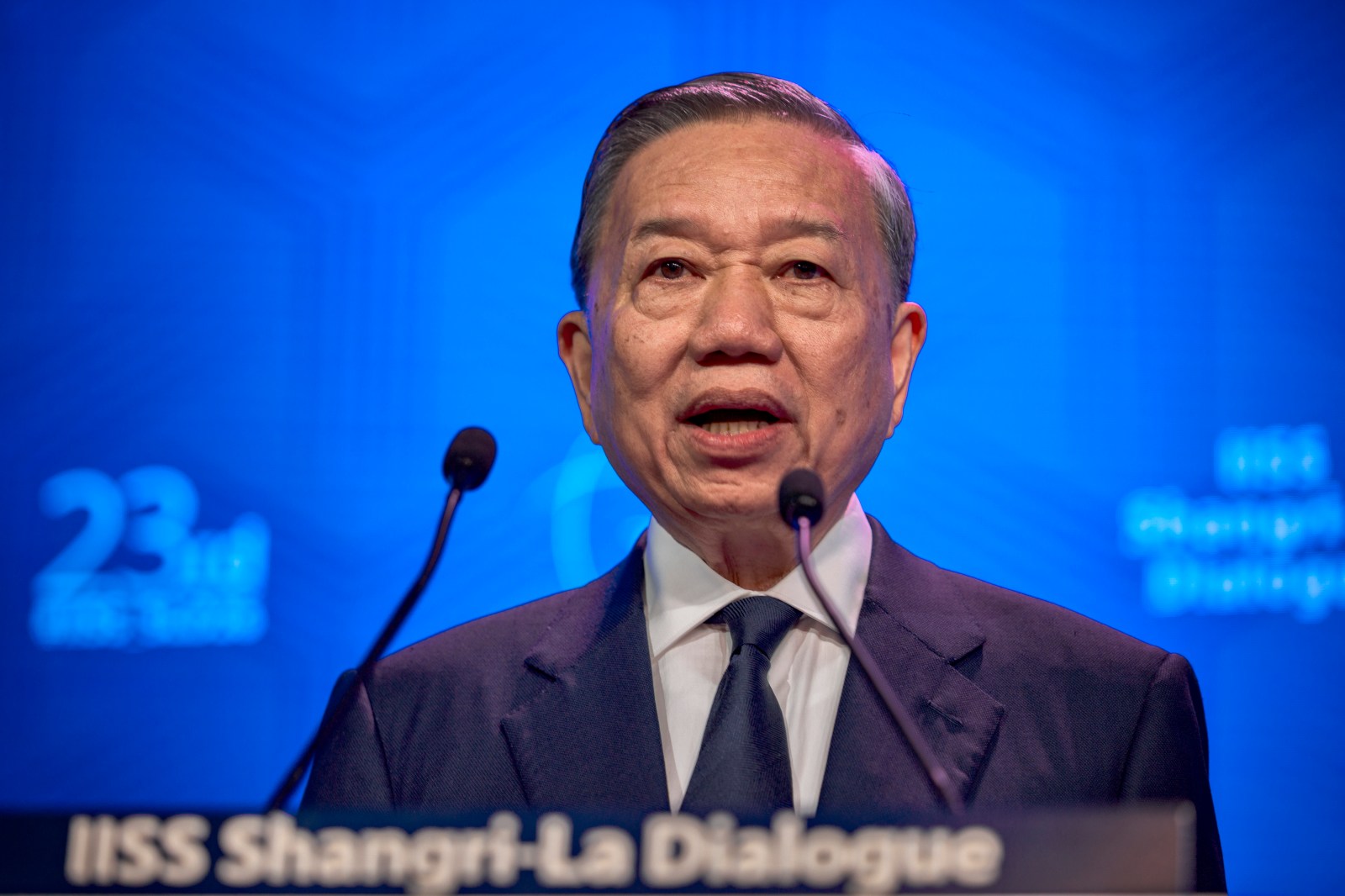
The global order is under strain as powerful nations disregard international law, exploiting the weak when beneficial, stated Vietnamese President To Lam. He highlighted this issue as a significant crisis impacting the international community during his keynote at the Shangri-La Dialogue, Asia’s top defense summit.
To Lam emphasized the necessity for the world to adapt to rapid changes through rules, self-restraint, and dialogue. He cautioned against coercion and threats, though he avoided naming specific countries. According to To, crises arise when international law is selectively interpreted, inconsistently applied, or dominated by the belief that might equals right, leading to the strong exploiting the weak.
Such conditions, he warned, force states, especially small and medium-sized ones, to face pressure to align with powerful nations. These countries become vulnerable to economic, technological, financial, and security coercion.
Vietnam’s recent diplomatic approach, termed ‘bamboo diplomacy,’ has balanced relationships with China, its strong neighbor and key economic partner, and the U.S., with which it has strengthened security ties. While Vietnam seeks stable relations with Beijing, territorial and fishing disputes in the South China Sea continue to create tension.
Additionally, Vietnam, like many Asian neighbors, has experienced the indirect effects of the U.S.-Israeli conflict with Iran. The ensuing three-month disruption of shipping via the Strait of Hormuz—a crucial passage for Vietnam’s oil imports from the Middle East—has complicated energy supply and increased costs.
Another vital issue highlighted by To is a crisis of strategic trust. He described this challenge as ‘silent but deadly,’ where mutual distrust among nations can lead to miscalculations. He noted that dwindling trust can turn defensive actions into perceived provocations, risking escalation of conflicts.
For strategic trust to coexist with competition, it must operate within a rules-based system, ensuring competition is predictable, responsible, and contained, he advised.
A third crisis involves development models such as globalization, supply-chain integration, and trade and investment, which have historically driven prosperity. These models are now under ‘unprecedented strain’ due to rising public debt, slowing economic growth, tariffs, and climate change impacts on livelihoods, To noted.
For many nations, security and development are intertwined. Economic vulnerability can swiftly morph into social and political instability, bearing strategic uncertainties, To warned.