
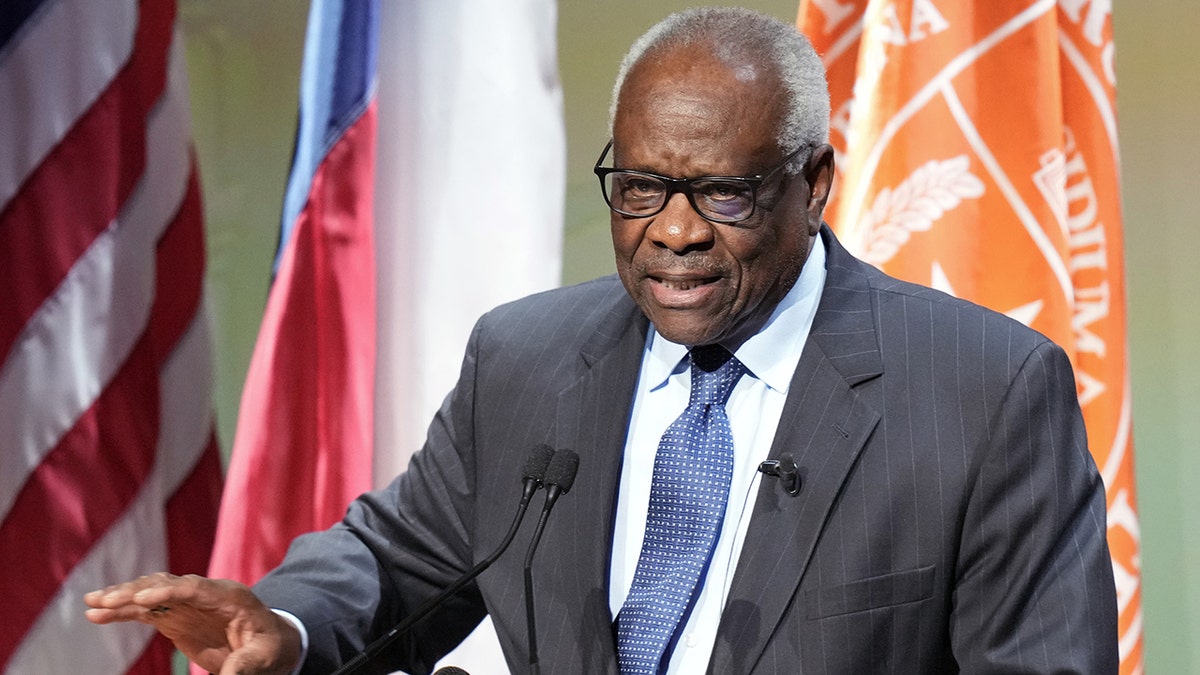
Justice Clarence Thomas has voiced strong criticism against California and Washington, accusing them of compromising federal immigration and trucking safety standards. His comments follow a deadly highway crash in Florida. The Supreme Court’s decision not to hear the related case prompted Thomas’s remarks.
Florida claims that the two states unlawfully issued commercial driver’s licenses (CDLs) to immigrants without legal status, violating federal standards. These standards require commercial drivers to demonstrate English proficiency and lawful immigration status. Florida argues that these actions pose significant road safety risks.
Thomas, supported by Justice Samuel Alito, insists that the Supreme Court is constitutionally bound to address disputes between states. He emphasized, “If this Court does not exercise jurisdiction over a controversy between two States, then the complaining State has no judicial forum in which to seek relief.”
The case highlights a highway accident involving truck driver Harjinder Singh, who lacked the ability to comprehend road signs. Singh acquired CDLs from both California and Washington, raising safety concerns.
“An illegal alien who cannot read English road signs cannot drive an 80,000-pound tractor-trailer,” Thomas asserted.
Federal legislation forbids states from issuing CDLs unless applicants pass a driving test, understand English, and possess valid immigration status.
Florida filed its lawsuit directly with the Supreme Court, invoking the Court’s original jurisdiction over state disputes. Thomas stressed that the Court must exercise this jurisdiction as mandated by the Constitution.
Thomas criticized the discretionary approach the Court adopts in such cases, stating, “This Court has adopted a discretionary approach to its exclusive original jurisdiction based on policy judgments that are in conflict with the policy choices that Congress made in the statutory text.”
He argued that if these disputes were between countries, they might escalate into serious diplomatic tensions and would require international resolution. By joining the Union, states agreed to resolve these conflicts in the Supreme Court.