
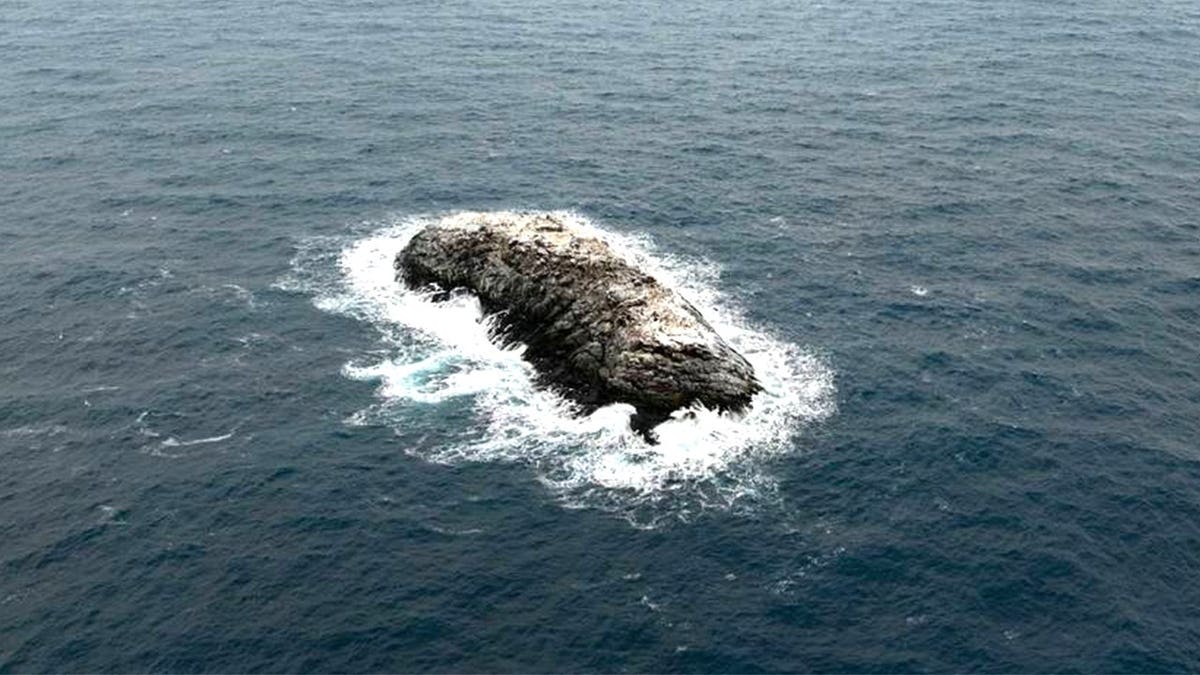
Researchers have identified and mapped an Antarctic “danger zone” previously misidentified as an island. This new discovery was revealed in an April press release by the Alfred Wegener Institute (AWI), a German polar research center based in Bremerhaven.
The island, located in the northwestern Weddell Sea, was found during an expedition aboard the AWI’s icebreaker, Polarstern.
“On our route, the nautical chart showed an area with unexplored dangers to navigation, but it wasn’t clear what it was or where the information came from,” said Simon Dreutter, a bathymetry data engineer at AWI.
Discovery During Difficult Conditions
The research team initially focused on studying the rapid decline of sea ice in the region. However, harsh weather forced them to seek shelter on Joinville Island. Here, they identified a small rocky island, initially resembling a dirty iceberg. This realization came after Dreutter observed the supposed iceberg’s unusual appearance.
Using drone imaging and echo sounding technology, scientists surveyed the island, confirming its size and elevation. The island measures about 426 feet long and 164 feet wide, rising over 50 feet above the water.
Survey and Mapping
Researchers conducted a comprehensive survey, navigating around the island and examining the seabed. This marked the first recorded survey of the region. The team documented the island’s topography and its protruding appearance above the water.
The institute mentioned that the island may have been marked as a danger zone due to resembling surrounding icebergs from above. Additionally, uncharted shoals on the seafloor could have contributed to the confusion. The AWI stated many regions are modeled from low-resolution satellite data, leading to gaps in nautical maps.
Naming and Exploration
With the island not yet officially named, a proposal will be submitted to the Scientific Committee on Antarctic Research (SCAR) for consideration. Despite advancements in mapping, only about a quarter of the Weddell Sea has been fully charted, indicating potential for further discoveries.