
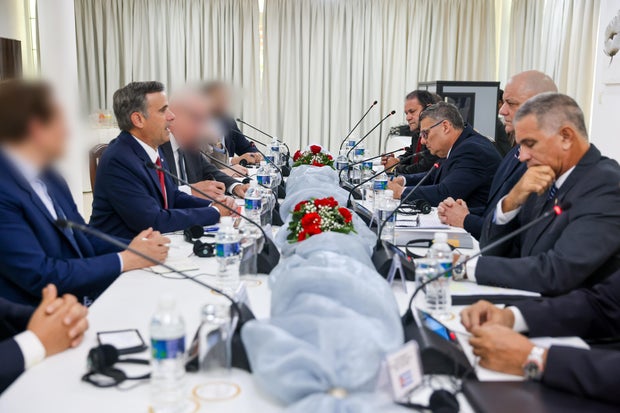
When CIA Director John Ratcliffe traveled to Havana recently, he held a rare meeting with senior Cuban officials. Accompanying him was an operator involved in the mission to capture former Venezuelan leader Nicolás Maduro. Several sources shared this information with CBS News.
Venezuela and Cuba shared a close alliance before Maduro’s arrest. The Cuban government reported that 32 of its military and police officers died during the January operation to capture Maduro. Ratcliffe introduced the paramilitary leader to Cuban officials, identifying him as the person responsible for those deaths in Venezuela, sources indicated. This move possibly served as a strategic message.
The CIA did not provide a statement regarding these events.
Ratcliffe’s visit marked a period of increased pressure on Cuba. The U.S. administration had threatened high tariffs on countries exporting oil to Cuba, exacerbating the island’s fuel shortages. Secretary of State Marco Rubio emphasized the necessity for economic and political reform in Cuba. President Trump suggested a “friendly takeover” of the island, a country challenging U.S. governments since the rise of Cuba’s communist movement in 1959. Following the Maduro operation, Rubio highlighted Cuba’s connections to Venezuela’s intelligence network, calling it “full of Cubans.” He remarked that if he were part of the Cuban government, he would be quite worried.
A CIA official reported that Ratcliffe conveyed a message to Cuba about the U.S. willingness to engage seriously on economic and security issues, contingent on Cuba implementing significant reforms.
One of Ratcliffe’s discussions included Raúl Rodriguez Castro, the grandson of former Cuban President Raúl Castro. Soon after, an indictment against the elder Castro was unsealed, charging him with murder and conspiracy related to the downing of two planes in 1996. The meeting echoed the Cold War era, highlighting long-standing U.S.-Cuban tensions.
Cuban officials might recall historic U.S. attempts to destabilize Fidel Castro’s government, especially post the failed Bay of Pigs invasion and Operation Mongoose, a Kennedy administration initiative to undermine Cuba’s communist regime.
Relations between the U.S. and Cuba remain affected by these past actions. Rubio noted that Cuba has obtained weapons from Russia and China and hosts their intelligence presence. A CIA official stated that Ratcliffe addressed “security issues” with Cuba, stressing that it could no longer serve as a sanctuary for Western Hemisphere adversaries.
Amidst escalating tensions, the U.S. intelligence community considered Cuba’s possible reactions to American military actions, CBS News reported. Also noted was Cuba’s acquisition of attack drones.
Cuban President Miguel Díaz-Canel Bermúdez declared that Cuba posed no threat to the U.S. However, he cautioned that military strikes could lead to severe consequences.