
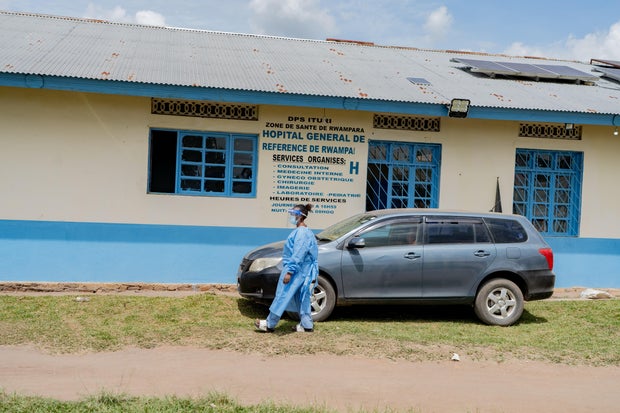
The World Health Organization (WHO) has announced that the Ebola outbreak in Congo and Uganda is a public health emergency of international concern. This announcement follows the identification of more than 250 suspected cases and 80 suspected deaths related to the Ebola virus.
Authorities have warned that the actual extent of the outbreak might be larger than reported. Health workers are intensifying their efforts in screening and contact tracing to contain the virus. Although the outbreak is significant, WHO noted it does not meet the criteria for a pandemic emergency, like COVID-19, and did not recommend closing international borders.
Ebola Cases and Death Reports
As of Saturday, the WHO reported eight laboratory-confirmed cases, 246 suspected cases, and 80 suspected deaths in the eastern province of Ituri, Congo, the outbreak’s epicenter. In Uganda’s Kampala, two more laboratory-confirmed cases, including one death, were reported. Both cases involved individuals who traveled from Congo, with no apparent connection between them.
The Africa CDC has reported 246 suspected cases and 65 deaths in Congo. However, regional health officials mentioned upwards of 300 probable cases during a news conference.
Effects on the Local Population
In Bunia, the capital of Ituri province, residents have expressed fear as burials are frequent. Jean Marc Asimwe, a resident, voiced concerns about daily deaths, which have been ongoing for about a week. Health Minister Samuel-Roger Kamba reported eight confirmed cases, including four deaths. Tests show the presence of the Bundibugyo virus strain, which has been less common in previous outbreaks.
Spread to Uganda and Regional Risk
Uganda confirmed an Ebola case linked to travel from Congo. The affected patient died in Kampala, and the body was returned to Congo. The Africa CDC raised concerns about potential spread due to proximity to Uganda and South Sudan.
Medical group Doctors Without Borders is preparing a large-scale response, highlighting concerns about the outbreak’s rapid spread. Screening at Kampala’s Kibuli Muslim Hospital has increased. Ismail Kigongo, a Uganda resident, shared fears reminiscent of the COVID-19 pandemic.
Preparedness and Challenges
Congo faces logistical challenges in responding to outbreaks due to its vast size and internal conflicts. Though experienced, the affected regions in Ituri are highly volatile. The outbreak has been confirmed in Bunia and other regions like Rwampara and Mongwalu. Testing at the National Institute of Biomedical Research revealed eight positive Bundibugyo strain cases from 13 samples.
Adeline Awekonimungu, a local resident, urged government action to control the outbreak swiftly.
Low Risk to Americans and U.S. Response
The U.S. Centers for Disease Control and Prevention (CDC) rates the risk to Americans as low. Nonetheless, the CDC is collaborating with health officials to prevent further spread. The agency is advising travelers in Congo and Uganda to avoid contact with symptomatic individuals and has measures in place for symptom identification at entry points.
Dr. Craig Spencer, a New York physician who survived Ebola, expressed concerns about the U.S. capacity to respond swiftly to global outbreaks. Budget cuts and reduced international presence may affect response efforts. However, Spencer reassured that the U.S. has robust response capabilities for high-consequence pathogens like Ebola and hantavirus.