
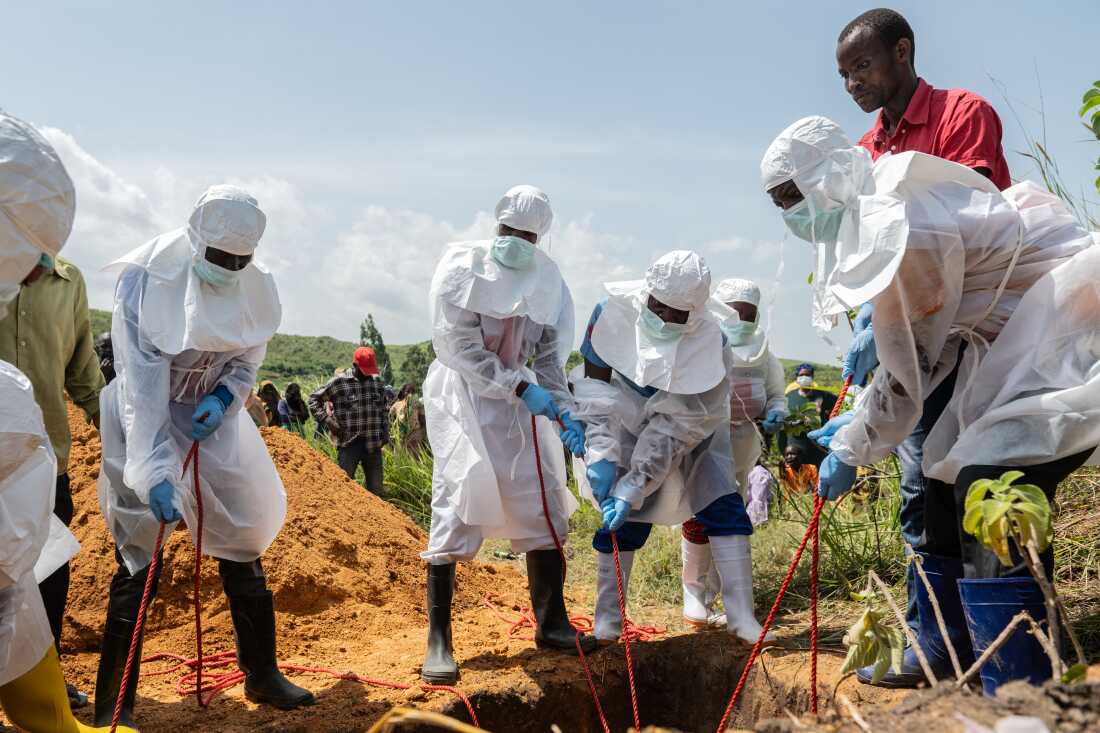
Health workers in the Democratic Republic of Congo are racing to manage an Ebola outbreak suspected to have caused over 200 fatalities, with risks of crossing international borders. Recent data from the Congolese government indicates 867 suspected Ebola cases and 204 deaths since the outbreak declaration on May 15.
The epidemic, spread over an area larger than Florida, has led to five confirmed cases in neighboring Uganda. The World Health Organization escalated its risk level of the disease to ‘very high’ at the national level last Friday. WHO’s health emergency alert and response operations director, Abdirahman Mahamud, emphasized the virus’s potential rapid spread.
Ebola is a viral illness marked by fever, vomiting, and sometimes bleeding, with delayed symptom onset, often leading to fatal outcomes. Rapid response efforts by Congolese health workers, UN teams, and aid organizations were initiated post-outbreak confirmation.
However, Ebola had likely been circulating weeks prior without detection, complicating response measures due to the undetermined number of infections. The initial case emerged in Bunia, Ituri province, involving a nurse, who was buried in Mongbwalu, an area with unexplained deaths in April, including fatalities among health staff. Community panic ensued, fueled by supernatural rumors.
Red Cross reported fatalities among volunteers post-handling of infected bodies. Delayed outbreak recognition partly attributed to the rarer Bundibugyo species of Ebola, differing from Zaire species previously associated with Congo outbreaks.
Aid efforts are underway with Ebola centers established in eastern Congo, yet financial constraints due to U.S. aid reductions hinder progress, as Roger Kamba, Congo’s Health Minister, stresses the need for additional funding.
Congo, among the world’s poorest nations, faces formidable challenges in combating the disease amid armed conflict and poor infrastructure.
Ituri province, the outbreak epicenter, experienced violent group activity, complicating health operations in mining towns like Mongbwalu and Rwampara, characterized by unsanitary conditions.
Community trust remains a significant issue, with mixed reactions towards the outbreak. Gabriela Arenas of IFRC Africa Region noted public apprehension and misinformation. Health clinics faced hostility from residents, with instances of arson against medical tents.
Tensions extend to North and South Kivu provinces, partly controlled by Rwanda-backed M23 rebels, adding another layer of complexity. Worries persist over potential virus spread beyond Congo, given eastern Congo’s economic ties with Uganda, Rwanda, and Burundi.
Uganda is combating its Ebola outbreak after cases introduced by travelers from Congo. The Ugandan health ministry has confirmed additional cases, urging temporary suspension of flights and tightening border controls.