
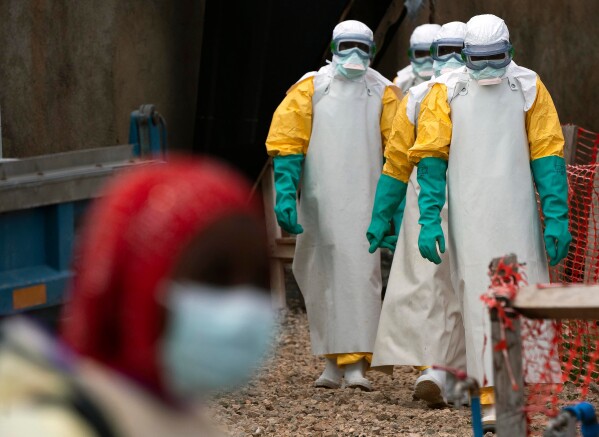
Health authorities report a new Ebola outbreak in the Central African country of Congo, with over 300 suspected cases and at least 88 fatalities. Neighboring Uganda has also reported cases. The World Health Organization (WHO) has declared this situation a public health emergency of international concern.
First identified in 1976, Ebola has primarily affected sub-Saharan Africa, with the most significant outbreaks occurring in West and Central Africa. Different viruses cause Ebola, with the current outbreak caused by the Bundibugyo virus, a rare strain responsible for only two previous outbreaks.
The natural hosts of the Ebola viruses are believed to be fruit bats, although apes and monkeys can also contract the virus, according to the WHO. Humans can become infected through contact with these animals or through direct contact with the body fluids of infected individuals.
Symptoms typically emerge from two days to three weeks after exposure. Initial signs include fever, aches, fatigue, and sore throat. As the disease progresses, it can cause gastrointestinal problems, rashes, seizures, and bleeding. The average fatality rate stands at about 50%, though past outbreaks have varied from 25% to 90%.
Currently, there are approved vaccines and treatments only for the Ebola virus.
2013-2016: The Deadliest Outbreak
The most severe outbreak on record occurred in West Africa a decade ago, with over 28,000 cases and more than 11,000 deaths in Guinea, Liberia, and Sierra Leone. It also extended to other regions, including the United States and Europe, through infected travelers or returning health workers.
Researchers believe the outbreak began when a child came into contact with infected fruit bats in southeastern Guinea.
2018-2020: Congo and Uganda
The second-largest outbreak unfolded in Congo’s North Kivu, South Kivu, and Ituri provinces, with cases also reported in neighboring Uganda. This outbreak totaled over 3,400 cases and more than 2,200 deaths with a 66% fatality rate. Like the 2013-2016 outbreak, it was caused by the Ebola virus.
Congo has experienced over a dozen significant Ebola outbreaks, most recently in late 2025.
2007-2008: Bundibugyo Strain in Uganda
An outbreak in 2007 in western Uganda marked the first occurrence of the Bundibugyo strain, resulting in 131 cases and 42 deaths. This strain appears to have a lower fatality rate than others, but there is still no specific treatment or vaccine for Bundibugyo, according to the U.S. Centers for Disease Control and Prevention (CDC).
Uganda has had multiple Ebola outbreaks over the years.
1976: Initial Outbreaks
The first known Ebola outbreak emerged in 1976 in what is now Sudan and South Sudan. It likely started in a factory where workers had contact with bats. This initial outbreak resulted in 151 deaths and 284 cases as the disease spread to hospitals and among health workers.
Another outbreak in Northern Congo (then Zaire) led scientists to first identify the Ebola virus. This outbreak caused 280 deaths with an extremely high fatality rate. The disease got its name from the Ebola River near where the outbreak began.
The first known Ebola case outside Africa occurred when a British laboratory technician accidentally pricked himself with an infected needle but later recovered. Few cases have since been recorded outside Africa.