
Taiwan announced Thursday that President Lai Ching-te would welcome the chance to discuss with President Donald Trump. Such a meeting would mark a first between the leader of the United States and the island, claimed by China. The timing of these talks remains uncertain, but their implications are significant. They could impact U.S.-China relations and influence a substantial arms deal with Taiwan.
The last direct conversation between U.S. and Taiwan leaders occurred before Washington officially recognized Beijing over Taipei in 1979. China claims Taiwan as territory and maintains the option of force to bring it under control.
Recently, Trump remarked he would engage with Lai, his second such declaration within a week. This assertion challenges early beliefs that his initial mention post-Beijing summit with China’s President Xi Jinping was accidental.
On Wednesday, Taiwan’s foreign ministry quoted Lai’s readiness to express to Trump that China disrupts peace, while assuring Taiwan’s commitment to stability across the Taiwan Strait. The ministry stated, “In addition to being committed to maintaining the stable status quo in the Taiwan Strait, President Lai is also happy to discuss these matters with President Trump.”
Taiwan’s National Security Council Secretary-General Joseph Wu advised lawmakers for discretion, stating progress will be publicly shared. Wu emphasized the potential significance of elevated communications for regional peace, affecting Taiwan and democratic nations.
“China is creating all kinds of problems along the first island chain,” Wu remarked, criticizing any assumptions of Taiwanese fault.
Trump’s contact with Taiwan’s former President Tsai Ing-wen in 2016 disrupted years of U.S. diplomacy. China remains unyielding to U.S. official interactions with Taiwan, dismissing Lai as a “separatist.” The Chinese foreign ministry holds firm in opposing such exchanges.
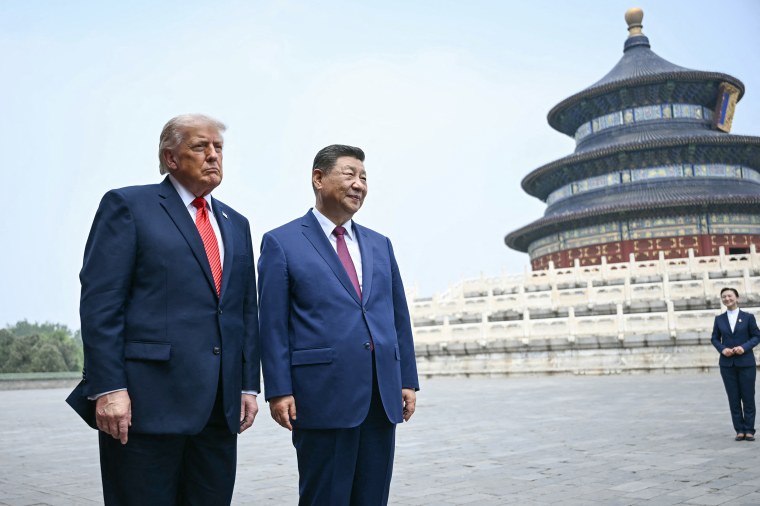
During a recent visit to Beijing, Trump addressed Taiwan, which remained a core topic. A possible U.S. arms package for Taiwan, potentially valued at $14 billion, could soon be considered.
The 1979 Taiwan Relations Act requires the U.S. to supply defensive means to Taiwan, absent formal diplomatic recognition. Taiwan’s Defence Minister Wellington Koo informed reporters of the U.S.’s unchanged policy affirmations. “Given that U.S. policy toward Taiwan remains unchanged, I think we remain cautiously optimistic about arms purchases,” he added.
Beijing has consistently opposed U.S. military assistance to Taiwan, including arms sales. Taiwan’s government disputes China’s sovereignty claims.