
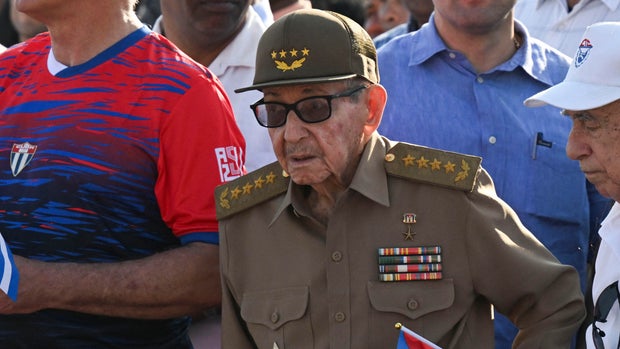
U.S. Secretary of State Marco Rubio addressed the Cuban public in a Spanish-language video, criticizing the nation’s leadership for corruption. Rubio announced a proposed $100 million aid package for food and medicine. This message coincided with the indictment of former Cuban President Raúl Castro and others by a U.S. grand jury in Florida.
Rubio, whose parents emigrated from Cuba before Fidel Castro’s rise to power, focused on the Grupo de Administración Empresarial S.A. (GAESA). He accused this organization of holding $18 billion in assets and controlling a significant portion of the Cuban economy.
“They profit from hotels, construction, banks, stores, and even the remittances sent by your relatives from the U.S. They retain a portion, yet none of GAESA’s profits benefit you,” Rubio stated.
Cuba is experiencing widespread blackouts, attributed to a disrupted power grid after the U.S. halted oil shipments in January. Former Venezuelan leader Nicolás Maduro, removed during a U.S. military operation and facing drug charges, previously supplied oil to Cuba.
Rubio dismissed claims of a U.S. oil “blockade” as the cause of the current energy crisis. Instead, he blamed the blackouts on the mismanagement and corruption of the Cuban leadership.
The proposed $100 million aid, previously offered by the U.S., aims to reach the Cuban people through the Catholic Church or other charities, avoiding control by GAESA. Rubio highlighted a direct approach between Americans and Cubans, bypassing GAESA, for a new bilateral relationship.
“President Trump seeks a new pathway for U.S.-Cuba relations, directly involving you, the Cuban people, rather than GAESA,” Rubio explained.
Rubio also discussed ending Cuba’s 67-year communist regime, urging ordinary citizens to engage in profitable business ventures without GAESA’s dominance.
Coinciding with Rubio’s message, Raúl Castro, at age 94, faced U.S. charges for the 1996 shootdown of humanitarian planes operated by Brothers to the Rescue. Despite stepping down as Communist Party leader in 2021, Castro remains influential. Miguel Díaz-Canel currently presides over Cuba and the Communist Party.