
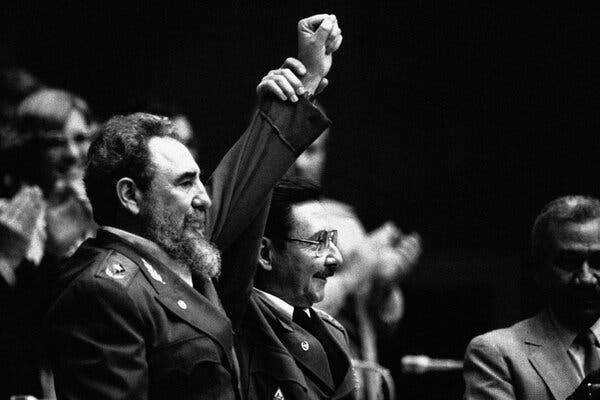
Raúl Castro, at 94, continues to wield significant power in Cuba, particularly over the military, despite not holding any official title. His influence remains notable in ongoing secret negotiations with the U.S., as he played a key role in the discussions with the Trump administration during the current Havana-Washington standoff.
Cuban state media retains a reverent tone when mentioning him as ‘the leader of the Cuban Revolution’, alongside his brother Fidel Castro, who led the monumental 1959 uprising that ended a U.S.-backed dictatorship. Despite frail health, including poor hearing and speech difficulties, Raúl still makes public appearances, the most recent being at a May Day parade on May 1, where he donned his military uniform.
Formerly known for his fondness for vodka, indicative of his studies in Moscow and admiration for the Soviet Union, Raúl has aged well. Alcibiades Hidalgo, his ex-chief of staff who fled to Florida in 2002, affirmed to The New York Times that as long as Raúl remains alive, he will profoundly influence Cuba’s path.
Fidel Castro, Castro’s elder brother who passed away in 2016, was the charismatic figurehead of the revolution, whereas Raúl largely operated from the background. Brian Latell, a former C.I.A. Cuba analyst, noted their distinct personalities, with Fidel as the visionary director and Raúl handling the operational aspects.
Post-revolution, Raúl established Cuba’s Revolutionary Armed Forces, successfully countering the failed Bay of Pigs invasion by the C.I.A. In 1961, when Fidel declared Cuba a Communist state, Raúl took significant steps in organizing the Cuban Communist Party. His leadership as defense minister saw the creation of GAESA, a vast military conglomerate dominating Cuba’s economy with ventures in hospitality, retail, and fuel sectors.
Raúl Castro was once seen as a potential reformer, loosening some strict communist economic regulations. For instance, he permitted Cubans to engage in real estate and vehicle transactions, signaling a shift in policy. His tenure included re-establishing diplomatic ties with the U.S. in 2015 and hosting President Barack Obama in Havana the following year. However, he ensured the Communist Party’s firm grip on political governance and maintained a robust state security structure, preserving the one-party system’s authority.