
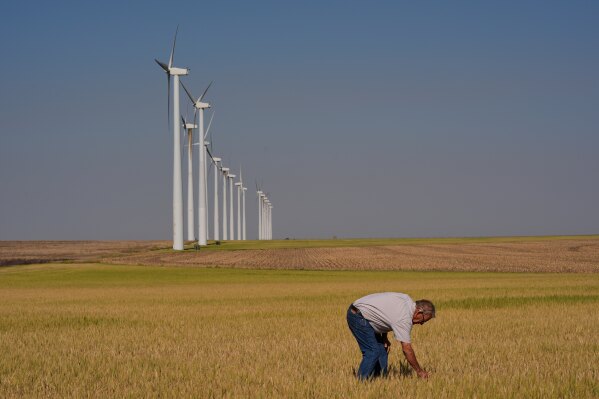
In Montezuma, Kansas, Orville Williams has farmed wheat across his 2,600 acres for decades, seeing both prosperity and hardship. Difficult times in the 1980s and various droughts have challenged him. However, this year presents unique difficulties.
“It’s not going to be a good year,” Williams, 76, stated. Record droughts and rising temperatures have impacted much of the U.S., including the Plains. These conditions have worsened the wheat streak mosaic virus and barley yellow dwarf virus, hurting crop potential. High costs of fertilizer, diesel, and tariffs add further strain.
According to the U.S. Department of Agriculture, wheat production this year will be the lowest since 1972 at 1.56 billion bushels, a 21% drop from last year. Kansas, a vital wheat producer, faces severe challenges, with 58% of its crops rated as poor or very poor by mid-May. Similar conditions were last seen in a 2023 drought.
Kansas State agronomist Romulo Lollato highlights the broader consumer impact, as bread prices rise and international markets shrink. Farmers like Williams consider crop insurance and diversifying crops but anticipate losses. Last year, Williams harvested near 100 bushels per irrigated acre. This year, he expects 30 to 40 bushels on irrigated land and just 10 to 15 on dryland.
Farmers face unpredictable weather and increasing expenses. A stalk of wheat lies in a cracked field as climate change makes growing conditions for wheat more challenging. Extreme weather and global competition, notably from Russia and the EU, have seen U.S. wheat acreage fall, USDA meteorologist Brad Rippey reports.
Wheat remains the third largest U.S. field crop after corn and soybeans, yet farmers struggle with early maturing crops and poor quality due to drought. Only 32.4 million acres of wheat were planted, with 22 million harvested, resulting in 32% abandonment, according to USDA estimates. Except for 2022-2023, few years have seen higher wheat abandonment rates.
Kansas farmer Mike Nickelson highlights the need for rain, crucial for a good yield. Predicted El Nino conditions may bring warmer temperatures this summer, delaying drought relief. “We’re the ones feeding the world but are suffering,” Nickelson said, contemplating the future for his farming family.
The Iranian conflict has spiked fuel costs, with diesel up nearly $2 per gallon, Williams noted. Input costs like seeds and fertilizers have surged. Farmers stockpiled fertilizers but worry about future costs as trade policies evolve.
Ben Palen, a fifth-generation farmer and consultant, notes limited solutions. Crop insurance and limited government aid provide minimal relief. Farmers are hesitant to let fields lie fallow or switch crops due to current conditions.
“This is among the toughest times to be a farmer,” Palen stated about the severe situation in Kansas fields.