
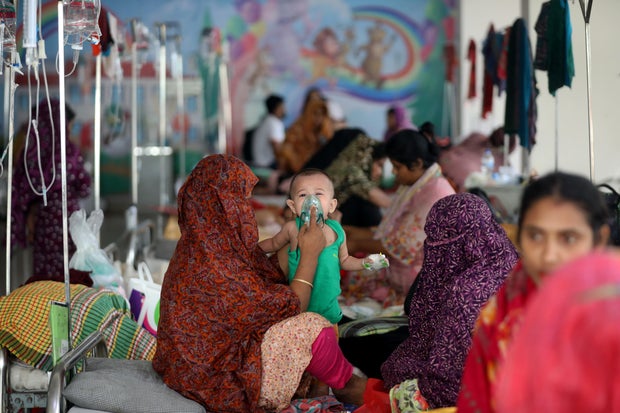
A measles outbreak in Bangladesh has resulted in almost 400 deaths and continues to spread rapidly. Health experts warn of potential risks to the U.S., where measles cases are rising due to declining vaccination rates. Most victims in Bangladesh have been children. The country’s Directorate General of Health Services reports a surge in suspected cases, exceeding 56,000. Hospitals face overwhelming patient numbers, with many receiving care on hospital floors due to a shortage of beds.
Attempts to adjust the vaccine supply last year caused delays, which, combined with partial or missed vaccinations, have led to a critical situation, according to Miguel Mateos Muñoz from UNICEF. He emphasized the importance of two vaccine doses for effectiveness.
Understanding Measles
Measles ranks among the most contagious viruses globally. It spreads easily through droplets from an infected person’s cough or sneeze and remains airborne for hours. There is a 90% infection rate when an unvaccinated individual is exposed. Vulnerable groups include children and the elderly, who face risks of severe complications, including pneumonia, brain swelling, and potentially death. The U.S. Centers for Disease Control and Prevention (CDC) warns that measles can be transmitted before symptoms appear and notes no specific antiviral treatment exists other than supportive care. Complications from measles may lead to long-term health issues.
Spread and Global Implications
In Bangladesh, measles cases span 58 of 64 districts, spreading quickly in densely populated areas and refugee camps. Porous borders with neighboring countries pose additional risks, according to UNICEF’s Muñoz.
Cause for Concern in the U.S.
The CDC cautions that international outbreaks could directly affect the U.S. due to easy transmission across borders. High vaccination rates are crucial to prevent domestic outbreaks. Vaccination rates in the U.S. have fallen below the necessary 95% threshold, placing many children at risk. Recent CDC data indicates 1,842 confirmed measles cases this year, mostly linked to outbreaks, not isolated incidences. By contrast, the U.S. recorded 285 cases in 2024 and 2,288 in 2025, the highest since 1991.
Many U.S. cases involve unvaccinated children or those with unknown vaccination statuses. County-level studies by Johns Hopkins University show declining rates in over 78% of sampled counties.
Implications for Major Events
The upcoming soccer World Cup, hosted by the U.S., Mexico, and Canada, prompts worries about potential measles outbreaks due to international travel. Dr. Céline Gounder expressed concern about measles risks, rather than other diseases.
Efforts to Control the Outbreak
Bangladesh, with assistance from UNICEF and the World Health Organization, has commenced an emergency vaccination campaign. As of early May, 18 million children were vaccinated in an effort to control the outbreak. Muñoz reiterated the importance of restoring overall vaccination rates to prevent future outbreaks and global spread.