
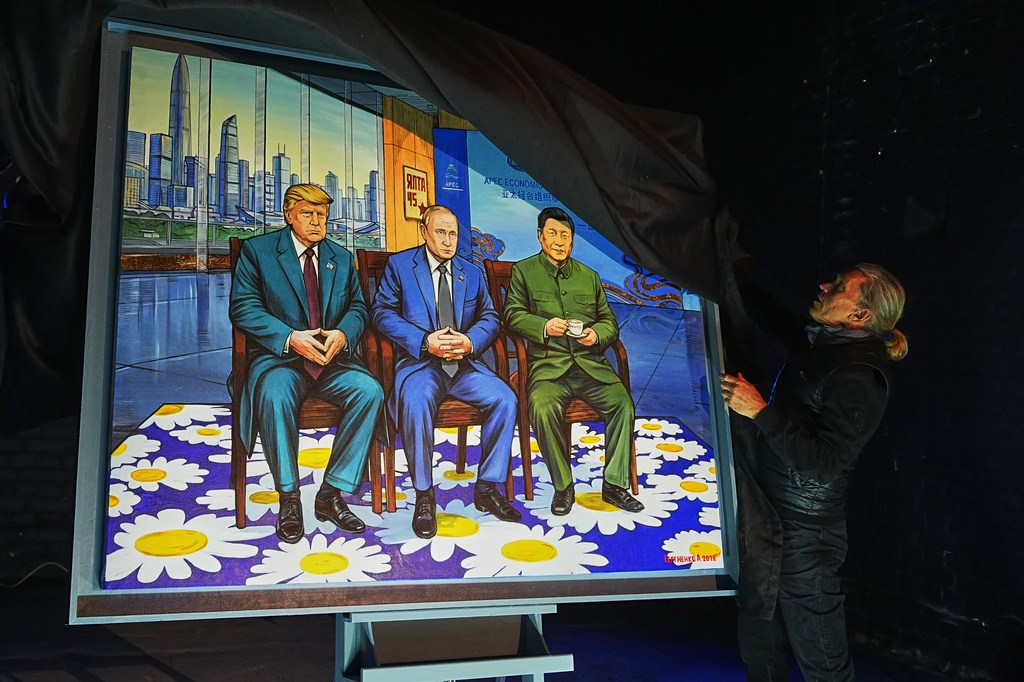
President Donald Trump will travel to Asia on Monday, culminating in an unprecedented meeting with Chinese President Xi Jinping and Russian President Vladimir Putin. These meetings will unite the leaders of the world’s three largest nuclear powers.
The meeting is scheduled for Thursday, November 19, on the sidelines of the Asia-Pacific Economic Cooperation summit in Shenzhen, China. The White House and Kremlin have confirmed plans for this gathering, with nuclear weapons and the war involving Iran among the subjects expected to be discussed.
Less than three weeks after Republicans faced significant losses in the midterm elections, Trump confronts a changed political landscape at home while turning his focus to diplomacy abroad.
However, the trilateral meeting has notable limits. U.S. officials have indicated that Russia’s war in Ukraine is not on the agenda, and Trump does not plan to address the controversy surrounding former Nvidia CEO Jensen Huang and Alice Huang, a former executive at Singapore-based cloud-computing company Megaspeed. This is despite assessments by U.S. intelligence officials that Alice Huang is an asset of Chinese intelligence.
Nuclear Talks and Iran
Trump intends to discuss reducing nuclear arsenals with Xi and Putin. A senior U.S. official characterized the meeting as the start of what the administration hopes to be a productive conversation, rather than one expected to yield an immediate agreement.
The discussions follow the expiration of the New START treaty in February, ending the last agreement limiting U.S. and Russian nuclear arsenals. Trump rejected a Russian proposal to extend the treaty for another year, instead advocating for a new agreement that would include China.
The nuclear stockpiles of the three countries differ significantly. The United States and Russia each have more than 5,000 nuclear warheads, while China’s arsenal is estimated at over 600, according to U.S. assessments cited by the Associated Press. Beijing has shown little interest in joining an arms-control agreement with Washington and Moscow.
Iran is also expected to feature in the discussions. The United States is directly involved in the conflict, while Russia and China maintain close relations with Tehran. Trump plans to raise the war with both leaders, though a breakthrough is not anticipated.
This meeting provides an opportunity for Trump to present himself as a leader capable of bringing major nuclear powers together. However, analysts caution that symbolism may outweigh any immediate diplomatic results.
What’s Not on the Agenda
Russia’s war in Ukraine is not expected to be discussed during the meeting, according to U.S. officials. Washington has pursued a separate diplomatic track involving Kyiv and Moscow, and the administration has clarified that China is not part of those negotiations. Ukrainian President Volodymyr Zelenskyy has not been invited to the gathering.
Leaving Ukraine out of the discussions might attract attention. Zelenskyy has voiced concern about the U.S., Russia, and China discussing issues related to Ukraine without Kyiv’s involvement.
Trump also does not plan to address the controversy surrounding Alice Huang with Xi, U.S. officials have said. Newsweek previously reported that U.S. intelligence officials assessed Huang to be an asset of China’s Ministry of State Security. Allegations about her have not been publicly verified.
The controversy has gained attention due to Huang’s reported relationship with Jensen Huang, who resigned as Nvidia’s CEO. Nvidia has denied any compromise of company secrets. Beijing has dismissed the espionage allegations.
Megaspeed has denied wrongdoing, stating it takes compliance seriously. The company told Reuters that Alice Huang left in August 2025 and no longer has a role there. Attorney General Todd Blanche noted the Justice Department has not concluded whether Alice Huang was a Chinese spy, while the FBI investigates the reports.
U.S. officials have also stated that the administration’s export-control policies are not expected to be part of negotiations with China during this trip.
The Chip Dispute
The administration faces questions about how strictly it should limit the flow of advanced American chips to China. Treasury Secretary Scott Bessent has publicly criticized the Commerce Department’s handling of Megaspeed, saying Treasury, Defense, State, and the U.S. Trade Representative have supported the inclusion of Megaspeed on the Commerce Department’s Entity List. This designation would limit Megaspeed’s access to American technology.
Bessent said, “Commerce has the pen, and you will have to ask them about their internal processes.” He expressed frustration with the alleged leakage of advanced U.S. chips to China.
Axios reported that Bessent confronted Commerce Secretary Howard Lutnick in the White House Situation Room over the delay in adding Megaspeed to the list. The Commerce Department has denied that a confrontation between the two officials occurred. Bessent has not publicly confirmed the reported confrontation.
Elon Musk has also figured in the administration’s internal discussions. Axios reported that Trump consulted Musk during a meeting about suspected diversions of Nvidia chips to China, with Musk supporting tighter controls. Musk is expected to accompany Trump for parts of the Asia trip but will not participate in the trilateral meeting, according to U.S. officials.
Trump will also meet separately with Xi. The two leaders are expected to discuss the implementation of their trade agreement. U.S. officials noted that Trump is dissatisfied with the pace and volume of China’s rare-earth shipments and intends to raise the issue.
Democrats are preparing to take control of the House in January, giving them oversight over the administration’s foreign policy and trade decisions. The midterm losses have raised questions about Trump’s political standing as he seeks to display influence abroad.
The Shenzhen meeting offers Trump a rare chance to sit down with Xi and Putin simultaneously. Whether it leads to progress on nuclear arms, Iran, or other issues remains uncertain, while disputes over China policy are likely to continue as Trump oversees this international pursuit.