
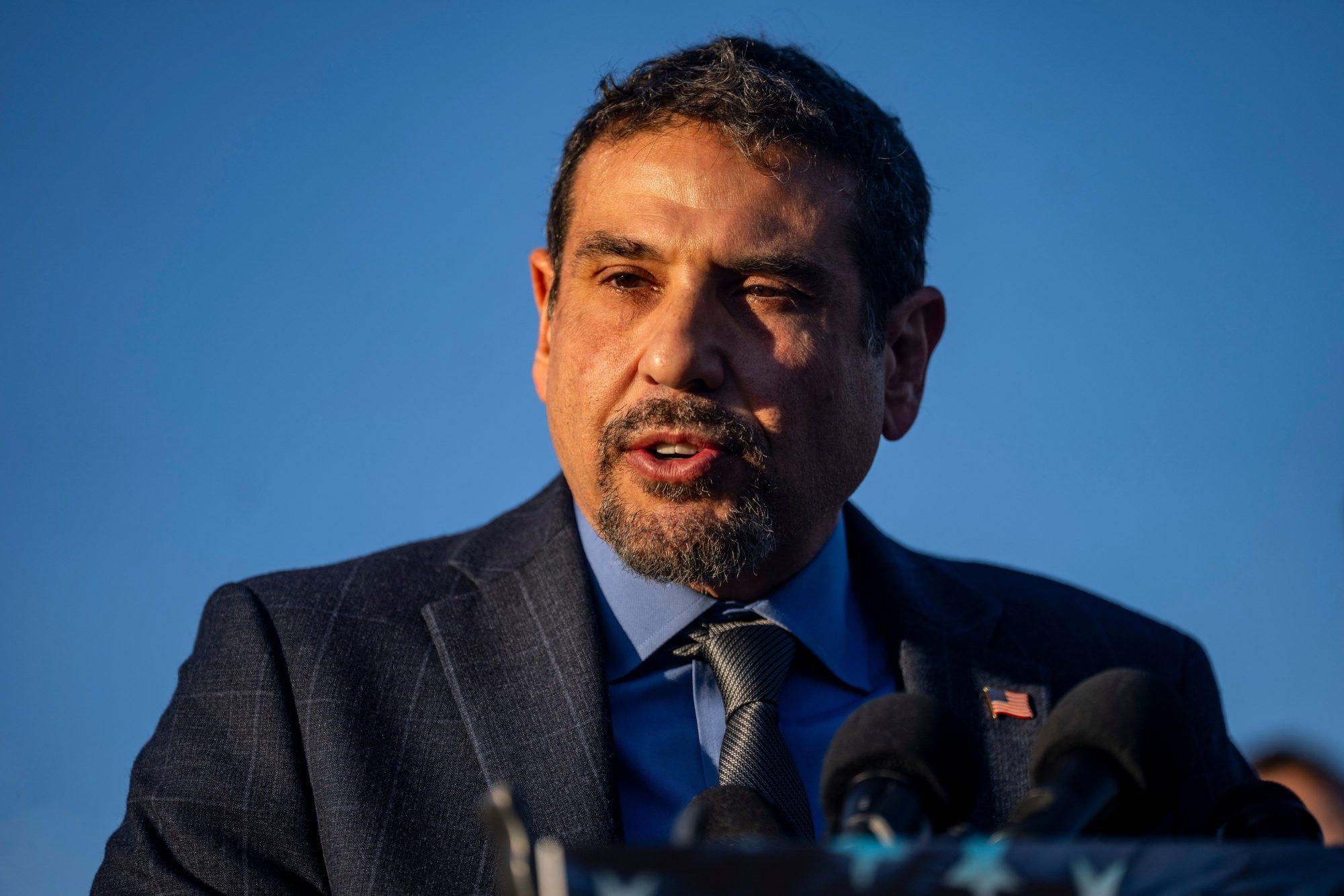
Rep.-elect Adam Hamawy (D-NJ) recently spoke at a news conference in Washington regarding the conflict in Iran. During a CNN interview, he refrained from labeling Iran as an adversary, describing U.S. actions as pushing Iran into conflict. This view contrasts with criticisms of Hamawy echoing pro-Iran sentiments, akin to those of the Iranian regime.
Concerns over Hamawy’s election revolve around the Democratic Party’s internal dynamics, highlighting a shift influenced by the Democratic Socialists of America and other far-left activists. The mainstream party seems reluctant or unable to challenge this faction.
Journalist Jon Levine, among others, attempted to raise awareness about Hamawy’s connections, including his defense witness appearance in the 1995 trial of Omar Abdel-Rahman, dubbed the ‘Blind Sheikh,’ linked to the 1993 World Trade Center bombing. Despite these efforts, many of Hamawy’s primary opponents avoided addressing these issues for fear of being labeled Islamophobic.
This hesitance among Democrats to address contentious histories, such as Hamawy’s, has led to significant electoral outcomes. In multi-candidate fields, there was little effort from the Democratic establishment to unite support against well-funded candidates like Hamawy, evidenced by his primary win with under 29% support.
Support from outside groups and substantial donor funding for DSA-aligned candidates shows a distinct strategic advantage. Hamawy, for instance, benefited from approximately $1.8 million in campaign support. These actions indicate a determined effort to influence the Democratic Party’s future direction, aiming for transformative change rather than maintaining status quo.
Comparable situations arose elsewhere, such as in Michigan with Abdul El-Sayed’s campaign, which enjoyed support from the Senate Majority PAC linked to Chuck Schumer. Despite backing from the establishment, El-Sayed advocated for new Democratic leadership, questioning the current strategies.
The Democratic Party faces a challenge. If the establishment cannot counter the influence of far-left factions and their candidates, it risks redefining its core values and strategic priorities. The Democratic Socialists and allies have made their intentions clear, yet the party establishment appears hesitant to confront them meaningfully.
For analysis and opinions from various columnists, consider subscribing to The Post’s daily opinion newsletter for diverse perspectives on political and social issues.