
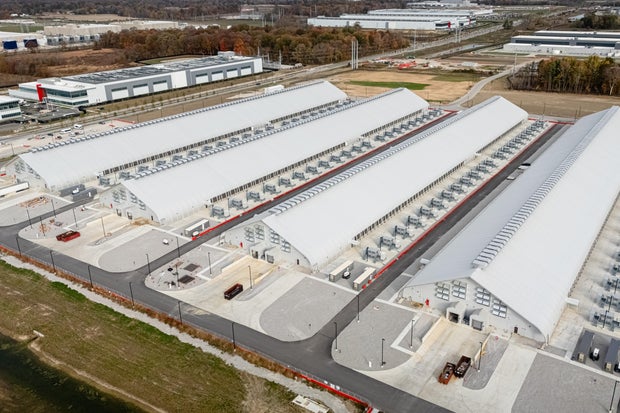
As data centers emerge across the United States, questions about the cost of their energy infrastructure and who bears those expenses have gained prominence. A recent study provides insights into these issues: in 2025, rising energy expenses due to AI data centers predominantly impacted lower-income, rural households. These households faced disproportionate financial burdens compared to the data centers themselves.
Conducted by researchers from Cornell University and published in Nature Energy, the study examined energy demand growth and infrastructure developments across four major U.S. power grids between 2020 and 2025. Using data from 4,000 current and proposed data centers nationwide, the research revealed that the AI boom has driven energy costs up, disproportionately affecting those who gain the least from such technology.
Data centers have unevenly increased wholesale power prices. These prices are set in an open marketplace where electricity is bought in bulk before reaching consumers. Strained power grids saw the highest price hikes. In California’s Southern Bay Area, data centers increased wholesale energy prices by nearly 20% last year. In Dallas-Fort Worth, Texas, prices rose about 17% in 2025. In contrast, New York, with fewer data centers, experienced little change.
“It’s kind of a chicken-and-egg problem,” stated Fengqi You, one of the study’s authors, emphasizing the necessity to build energy infrastructure for data centers.
Higher wholesale prices affected consumers. Residential customers bore significant portions of the costs for transmission infrastructure built for these data centers. Between 2020 and 2025, spending on these projects rose from $2 billion to $34.2 billion. Despite data centers accounting for $8.25 billion in infrastructure costs last year, residential consumers were charged more than $16 billion while data centers paid around $3 billion.
The study highlighted that outdated formulas allocate energy costs based on historical consumption rather than new growth, transferring development costs of power infrastructure onto households. This situation inflated energy bills for rural and lower-income residents, sometimes by 76% more than urban counterparts. Policies governing cost-sharing need reassessment, according to researchers.
A paradox arose where states experiencing the biggest price hikes linked to data centers also recorded the lowest usage of AI technology. For example, states like West Virginia and Ohio faced substantial cost increases but used generative AI less than other states.
The study reported instances of distant regions bearing costs for infrastructure unbeneficial to them. Residents in New Jersey and Pennsylvania contributed to grid updates for data center expansion in Virginia.
“The grid connects communities across states, and cost-sharing rules connect them financially,” explained Fengqi You.
Researchers proposed that data centers reduce energy use during peak demand hours or directly reimburse states for additional energy demands. Regulatory actions concerning data centers were a major focus in November’s midterm elections. You expressed hope that their findings will inform lawmakers’ decisions.
“This is a significant issue linking directly to state and congressional debates. We aim to provide science-based evidence for stakeholders to understand the scenario better and evaluate their options,” said You.