
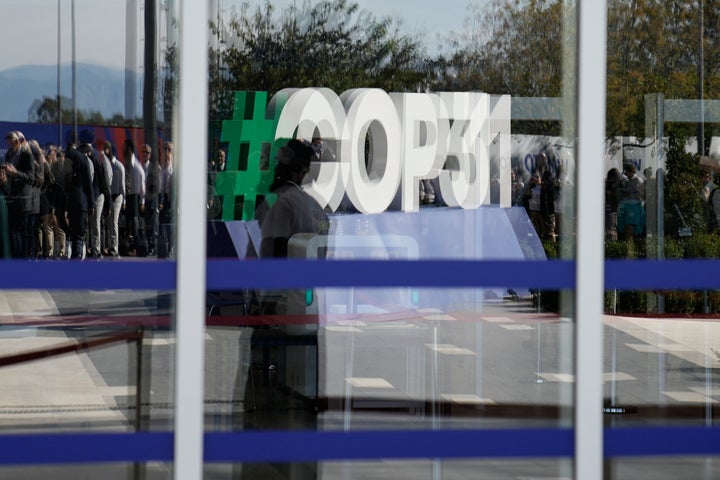
World leaders, delegates, and climate activists have commenced discussions in Antalya, Turkey, focusing on stopping climate change. Rising temperatures and extreme heat waves have become more frequent in Europe and other regions. Climate-related disasters, such as severe flooding in Nepal, emphasize the urgent need for action.
The U.N. climate summit, known as the Conference of the Parties or COP31, coincides with geopolitical tensions. The conflict in Iran has disrupted the Strait of Hormuz, resulting in increased global oil and gas prices. This has prompted many governments to rethink their energy strategies and invest in renewable sources like wind and solar power.
“COP31 must supercharge solutions,” stated U.N. climate chief Simon Stiell during the opening session. Approximately 68,500 participants, along with nearly 25,000 support staff, are expected at this two-week event.
Stiell emphasized the importance of practical solutions, such as decreasing methane emissions, to mitigate global warming. Methane rapidly increases planetary temperatures despite its relatively short atmospheric lifecycle. Renewable energy, chosen over fossil fuels, plays a critical role in reducing these emissions.
The delegates in Antalya are tasked with creating and executing new climate pledges. The objective is to prevent the global temperature from exceeding 1.5 degrees Celsius (2.7 degrees Fahrenheit) above preindustrial levels, a critical target set by the 2015 Paris Agreement. Achieving this goal has proven challenging, as cutting greenhouse gas emissions remains problematic globally.
“This is the first COP where it is clear beyond a reasonable doubt that the world will overshoot the 1.5-degree target,” said Turkish Environment Minister Murat Kurum. “We will not look away, and we will not lower our ambition.”
As the COP31 president, Kurum prioritized transforming existing commitments into tangible actions. His “Action Agenda” aims to cut methane emissions and develop climate-resilient urban areas. The agenda also targets expanding renewable electricity use from 21% to 35% by 2035.
“Success begins when our decisions reach that last mile,” Kurum noted. “If we are to share a future, we must share the responsibility for it.”
Delegates will also debate support for poorer nations struggling to cope with climate-related challenges. This includes adapting to extreme weather and shifting away from fossil fuels. Although eloquent speeches highlight ambition, negotiations reveal disagreements over funding for adaptation and recovery initiatives.
Meena Raman from the Malaysia-based Third World Network commented, “Countries that did the least to cause this crisis shouldn’t have to borrow their way through it.”
Central to these debates are developing countries advocating for financing pledged in previous climate agreements. Veterans like Iskander Erzini Vernoit, advising African negotiators, observed these discussions: “After years of disappointment, developing countries want to know clearly how rich countries plan to provide the funds needed to tackle climate change.”
The last two summits, COP30 in Brazil and COP29 in Azerbaijan, concluded without substantial progress in reducing emissions. Despite agreements at COP28 to reduce fossil fuel dependence, implementation remains contentious.
The United States, the second-largest global polluter, remains absent from COP31. President Donald Trump’s decision to withdraw America from climate dialogues continues to impact international efforts. Despite this, past COPs have produced critical progress.
“No single COP is a silver bullet that can stop climate change overnight,” Stiell remarked, “But every recent COP has made essential progress. COP31 in Antalya will, too.”
This year, Turkey and Australia collaboratively host the summit, with Turkey serving as the official host and Australia steering negotiations. Criticism persists over both nations’ dependency on coal.