
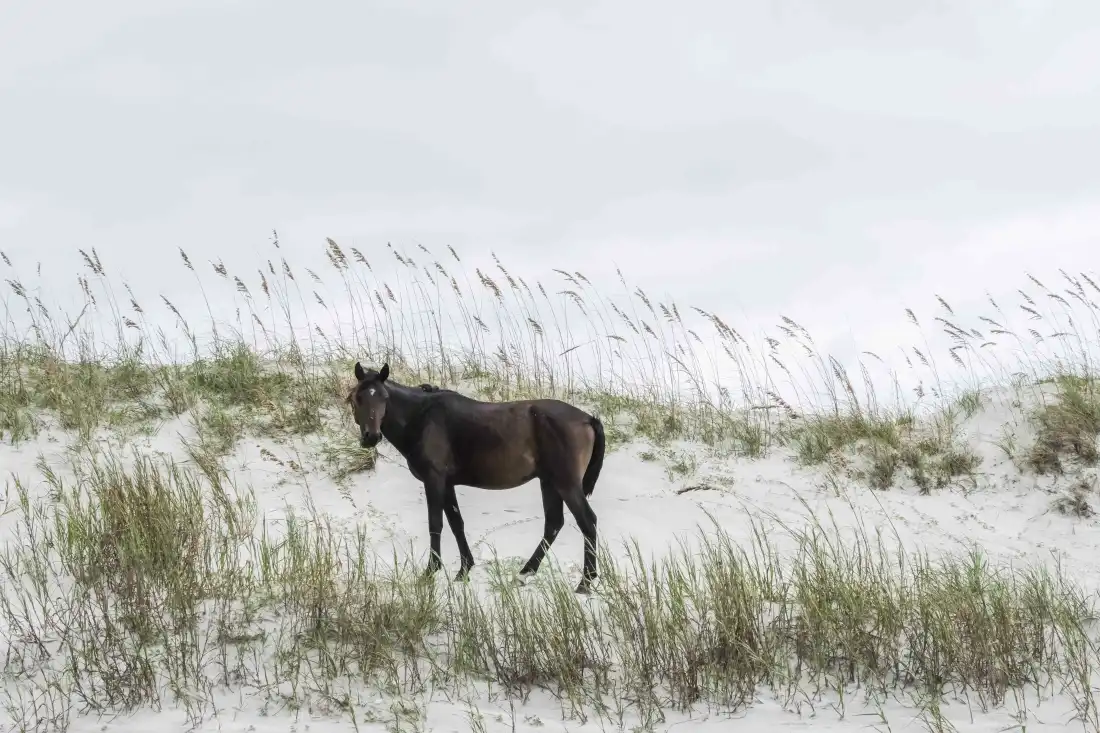
Wild horses and other animals wander freely on Cumberland Island, Georgia. This barrier island, managed by the National Park Service since 1972, features diverse ecosystems such as salt marshes and maritime forests. The island is only accessible by ferry and includes federally protected wilderness areas.
The island also holds historical relics and ruins from Native American cultures, Spanish missions, and plantations. Homes built by Thomas Carnegie, a Gilded Age industrialist, are among these historic sites. Descendants of the Carnegie family, who still maintain property on the island, are involved in a proposed land swap with the park service. This proposal aims to allow new construction while consolidating private ownership on the west side of the island.
Proposal and Reactions
Park superintendent Melissa Trenchik explained that the plan intends to enable better interpretation of the island’s cultural and natural resources. Development would be limited to eight new homes with conservation restrictions, each not exceeding 35 feet in height. However, some critics argue these developments could effectively transform the area into a private enclave.
“We’re swapping for McMansions,” said Joseph Manning from Defenders of Wildlife, expressing concern that the proposal could benefit a select few.
Carnegie descendants, including Barclay McFadden, argue their family has been responsible custodians of the island. They emphasize their historical ties and intent to keep the island’s legacy intact for future generations.
Historical and Cultural Significance
Jamie Ferguson, a Carnegie descendant, sees value in greater visitor access to historical sites such as The Chimneys. This site contains remnants of brick chimneys from a former plantation where enslaved workers lived, predating the Carnegie era. He stresses the importance of preserving both the island’s natural and cultural history.
Opposition and Environmental Concerns
Naturalist Carol Ruckdeschel, who resides on the island, opposes the land swap due to fears of increased development. She highlights that these changes could disrupt the island’s primitive wilderness and ecological balance.
Ruckdeschel, active in conservation efforts, continues to survey the island’s environment, emphasizing the need for preservation over increased human activity. The plan to raise daily visitation has also stirred concerns among conservationists like her.
“This plan to me is a real affront to the American people, but it’s also an insult to the Park Service,” Ruckdeschel stated, advocating for the island’s natural state to remain untouched.
As debates continue, stakeholders grapple with their responsibilities towards the island’s preservation and historical acknowledgment.