
Democrats face a significant challenge as they prepare to lead the House and Senate in January. Their agenda includes executing robust oversight of Trump and his administration while requiring the president’s endorsement to move forward with legislative goals. Senate Minority Leader Chuck Schumer, D-N.Y., emphasized their commitment to delivering results for Americans, irrespective of presidential approval.
House Minority Leader Hakeem Jeffries, D-N.Y., slated to become the next speaker, highlighted Democrats’ dual focus. He cited the passage of the bipartisan 21st Century Road to Housing Act, an initiative spearheaded by Rep. Maxine Waters, D-Calif., and Sen. Elizabeth Warren, D-Mass., as proof of their ability to simultaneously counteract extremism and work in the nation’s best interest. Jeffries assured that aggressive opposition to the administration would continue alongside efforts to advance beneficial legislation.
Former Rep. Val Demings, D-Fla., pointed out the impact of redistricting on voter representation and voiced voters’ frustration over political machinations. She stressed the importance of tackling affordability as the main agenda item, suggesting that cost reduction should be prioritized over investigations.
Rep. Robert Garcia, D-Calif., on the threshold of leading the House Oversight Committee, signaled a warning to Republicans to prepare for scrutiny. His comment reflects the Democrats’ intention to hold the administration accountable.
International Reactions
The midterm results elicited reactions globally. In Iran, the election outcome was perceived as a denouncement of U.S. actions, with Tehran attributing high gas prices to the political climate. The Iranian negotiator, Mohammad Bagher Ghalibaf, expressed satisfaction with the electoral decision, warning of repercussions if the U.S. government disregards public sentiment.
Responses varied from cautious optimism in Ukraine to concerns in Europe about existing tensions with Washington.
Women Make History
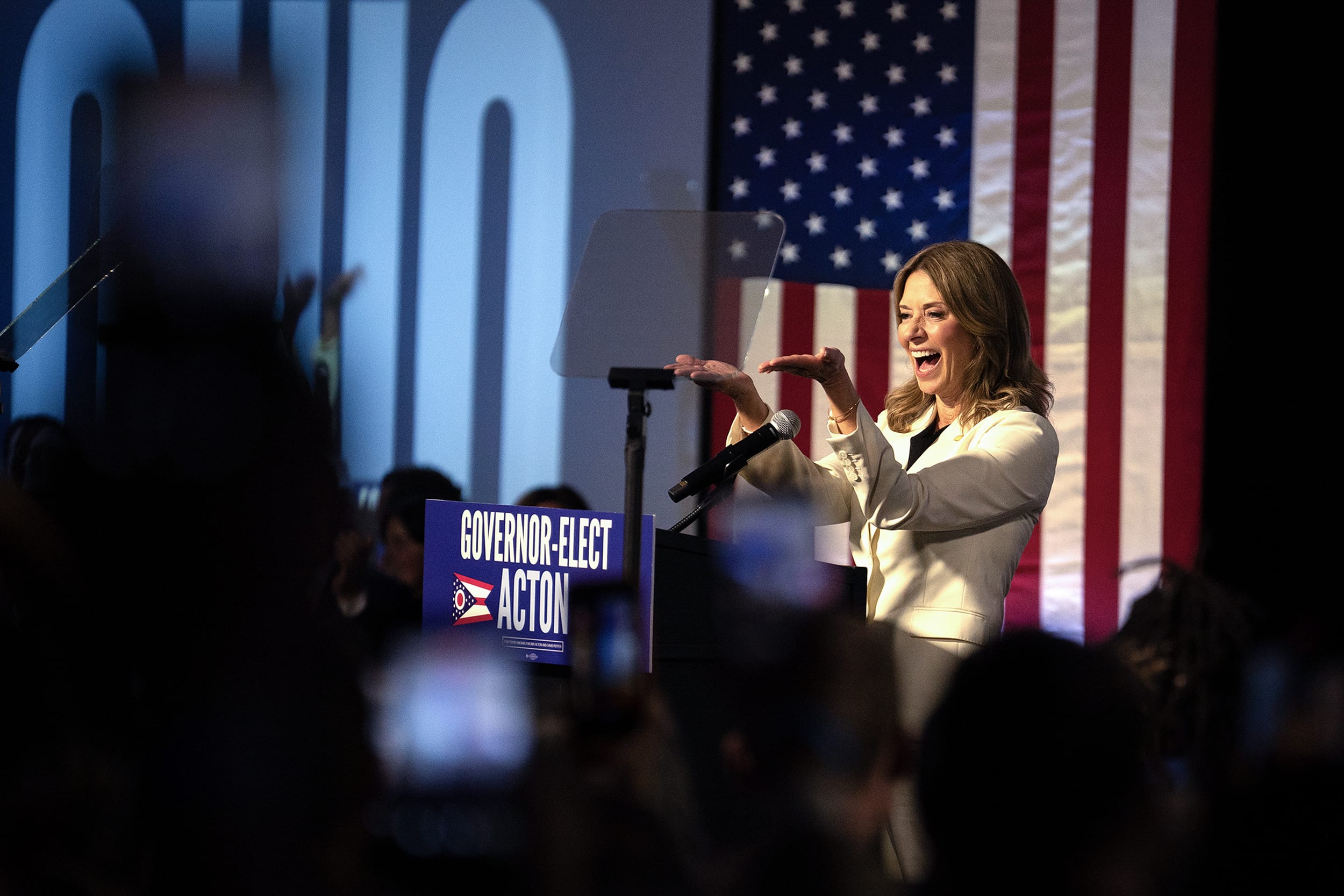
A record number of female governors were elected during recent elections. Voters in 15 states chose female leaders, with projections showing at least eight Democratic women winning gubernatorial races alongside Republican women such as Arkansas’s Sarah Huckabee Sanders and Tennessee’s Marsha Blackburn.
Significant Democratic Wins
Nevada’s Democratic Attorney General Aaron Ford ousted Republican Gov. Joe Lombardo in the gubernatorial race. Ford’s victory crowns him as the state’s first Black governor. The campaign framed Lombardo’s and Trump’s economic policies as detrimental, focusing criticism on proposed tax cuts and spending plans that threaten economically disadvantaged Nevadans.
In Michigan, Abdul El-Sayed triumphed over Republican Mike Rogers to secure a Senate seat, marking a progressive win in a key state.
Midterm Election Reflections
The recent midterms limited Trump’s influence by granting Democrats control over Congress. The Democratic surge reached into historically Republican territories, with voters penalizing Trump’s economic strategies amid inflation and interest rate concerns.
The future implications of this political shift and the post-Trump era remain to be seen, inviting contemplation about its broader impact.
Republican Reckoning
Recognizing vulnerabilities even before final counts, Republicans faced unexpected losses across battleground and traditionally Republican states, resulting in Democrats potentially obtaining their largest congressional majority in two decades. This outcome triggered internal reflection and accountability challenges within the Republican Party.
Trump’s involvement in midterm narratives invoked voter resistance to his policies and party, culminating in Democrats’ comprehensive congressional takeover. The electorate’s message was unambiguous: more oversight is required, with a call to prioritize affordability and corruption management.