
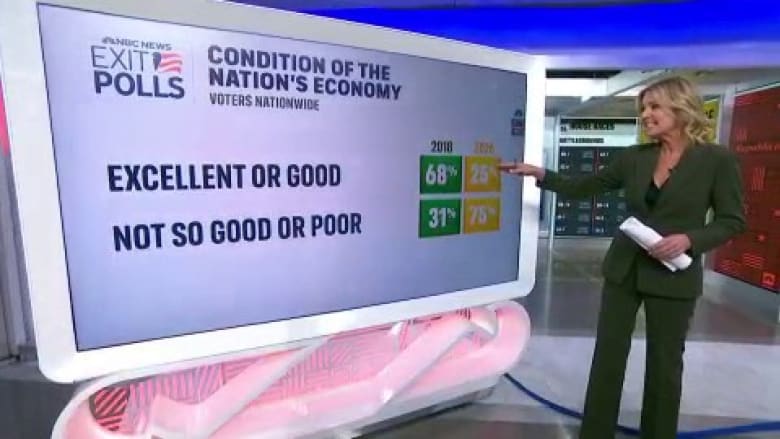
The current state of the U.S. economy is causing dissatisfaction among voters compared to the sentiments during Trump’s first term. In 2018, 68% of voters viewed the economy as excellent or good during the midterms. This year, NBC News’ Exit Polls reveal only 25% of voters hold such positive views, while a significant 75% express dissatisfaction, labeling the economy as not so good or poor.
Furthermore, personal financial situations seem to have worsened. In 2018, 85% felt their family’s finances had improved or remained the same over the prior two years. Now, 82% say their financial situation has worsened or stagnated compared to two years ago.
Inflation has increased consumer prices more rapidly than wages, with a 3.7% inflation rate surpassing the 3% wage growth over the last year. Families spent $1,988 more on food and housing in 2025 than in 2024, posing challenges for many as they struggle to keep up or financially move forward.
Six in ten voters blame Trump’s policies for unusually high prices, and nearly two-thirds say tariffs from Trump’s economic policy have harmed the national economy. Voter concerns at the ballot box focus heavily on economic stress and financial management.
Polls capture diverse voter perspectives across various locations:
Texas Voter Opinions:
Cindy Bonilla Candanedo, a newly registered citizen, casts her votes for Democratic state candidates in Texas. Her voting motivations include immigration issues that have affected hospital visits by the Latino community, public school funding, and improved healthcare.
Beth Burgess, historically voting Republican, now chooses mixed-party candidates, expressing frustration over the lack of actionable results from Washington.
Charlie Beal prioritizes affordable living costs, wary of the political maneuvers under the current Texas administration, particularly in aspects concerning immigration enforcement.
Curtis Lorn, voting predominantly Republican, expects economic conditions to stabilize within a year and holds Trump accountable for recent economic downturns.
Indiana Early Voting Indicates Positive Democratic Trends:
In Hamilton County, results show Democratic nominee J.D. Ford leading GOP Rep. Victoria Spartz by a considerable margin in early voting, a promising sign for Democrats in this bellwether county as they aim to shift power.
Alaska’s Historic Early Voting Activity:
Alaska has surpassed its early voting record, with more than 105,423 ballots received, a key development in the U.S. Senate race featuring Democrat Mary Peltola against Republican Dan S. Sullivan.
Partisan Views and the Influence of AI:
Voters express increasing negative views of the Republican Party since 2022, while opinions on artificial intelligence show a predominant belief in its potential societal harm. Younger voters largely view AI skeptically, with concerns about its impact on job markets and local communities.
The majority resist new data centers in their communities, indicating bipartisan opposition to such constructions.
Comparative Opinions on Economic Philosophies:
Polling highlights a preference for capitalism among the general electorate, with younger voters showing more favorable views of socialism than capitalism. These economic perspectives vary distinctly by age demographics.
Corruption and Political Integrity:
Allegations concerning election misconduct surface in Alaska with Sen. Dan S. Sullivan accusing electoral manipulation via candidacy strategy, complicating the ranked choice voting process.
Trump’s Diminished Approval Favoring Democratic Strategy:
Trump’s disapproval rating rests at 62% according to exit polls, impacting the midterms as a pivotal factor among voters opposed to his administration’s policies, particularly in areas affecting the economy.