
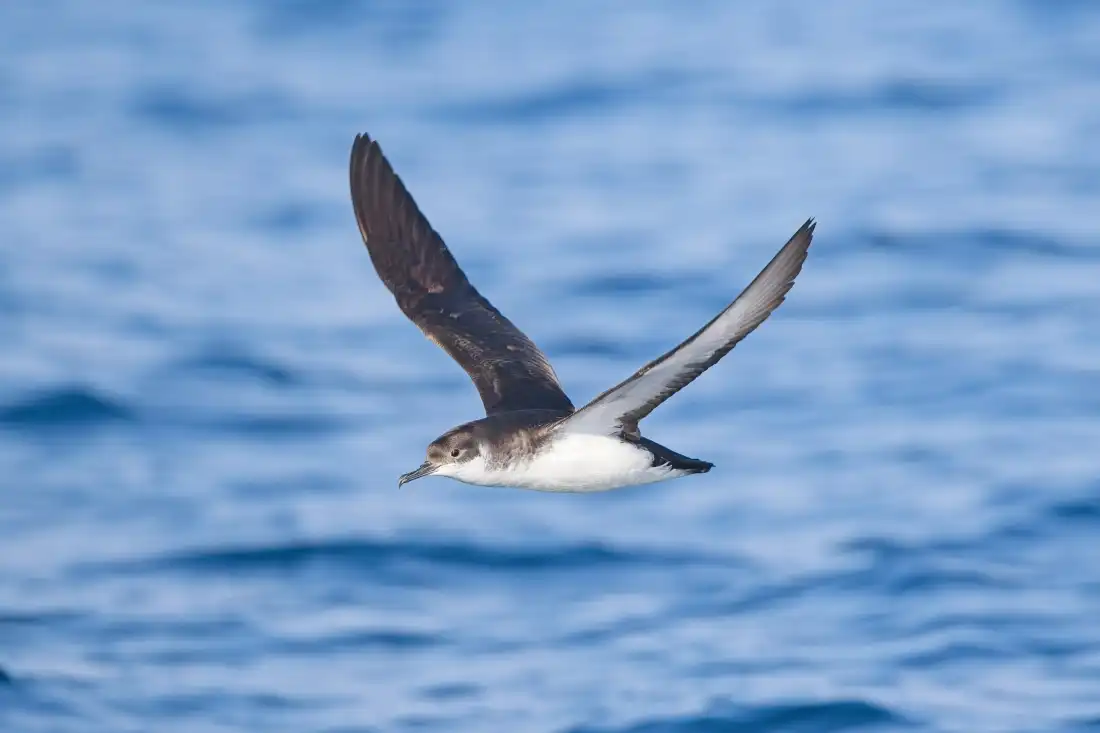
Manx shearwaters race back to their nests after spending weeks at sea. New findings indicate that these birds may experience jet lag during their travels. Research, published in the journal Science, reveals that these seabirds become disoriented during long flights across the Atlantic Ocean. This disorientation results from their internal clocks not aligning with the sun’s position.
These birds are primarily found in the British Isles and resemble seagulls, though they are closely related to albatrosses. According to Patrick Lewin, a behavioral ecologist at the University of Oxford, Manx shearwaters mate for life. During breeding, a couple lays one egg and takes turns incubating it. While one partner incubates, the other hunts for food at sea.
Manx shearwaters hunt in the North Atlantic, traveling hundreds of miles in search of fish and squid. Once sated, they return swiftly to their colony, completing long journeys in mere days. This behavior prompted curiosity about whether these birds feel jet lag, similar to humans.
Lewin, along with his colleagues, used 20 years of GPS data to investigate the flight patterns of Manx shearwaters. This data helped reveal whether the birds experienced jet lag. The birds use the sun for navigation, requiring an accurate sense of time. The sun rises in the east, is slightly south at midday, and sets in the west.
If their internal clocks were misaligned, shearwaters would misnavigate. Lewin observed that these birds occasionally veered off course during their return. The maximum deviation of seven degrees affected the birds by only around three miles over a 600-mile journey.
Alice Boyle, a biologist at Western University in Ontario, Canada, found the research intriguing. She emphasized the importance of such GPS-based studies in understanding animal navigation. This research provides insights into how wild birds navigate remote regions.