
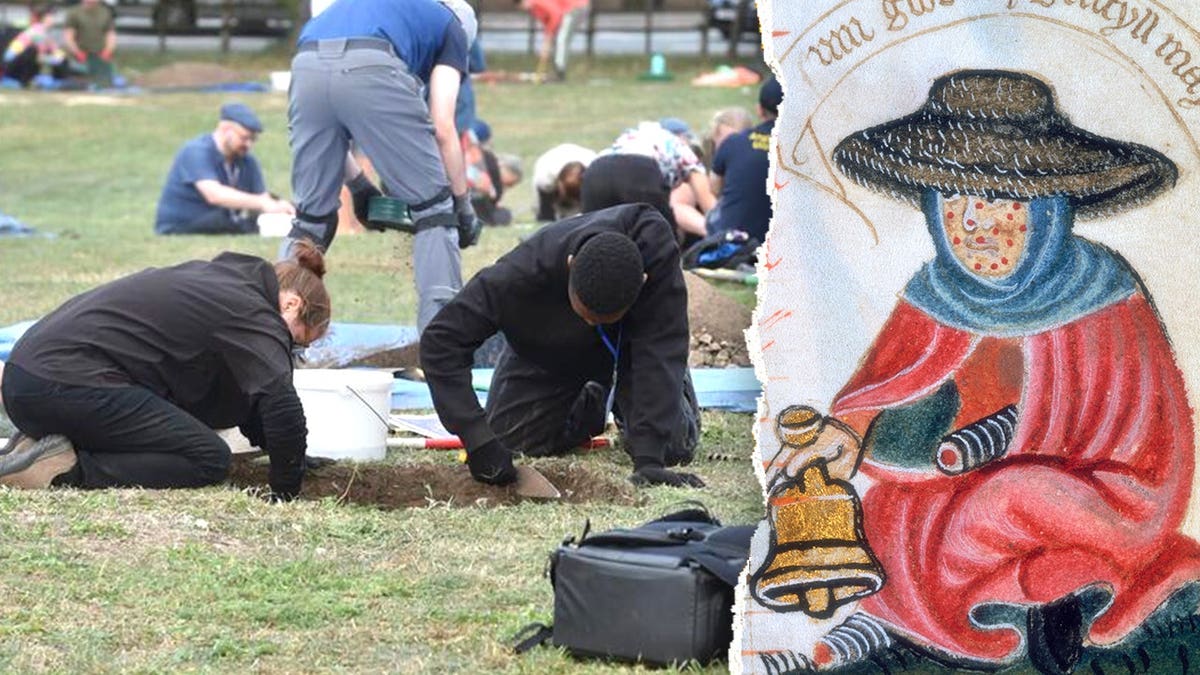
Archaeologists in England have made a significant discovery at one of the country’s oldest medieval leprosy hospitals. These findings come after centuries since the disease affected many communities across Britain. The recent excavation took place at South Common in Lincoln, a historic city about 140 miles north of London.
The site was once the location of the Hospital of the Holy Innocents, established between the late 11th and early 12th centuries. During a three-day excavation, experts from the British TV program ‘Time Team’ found remnants of medieval walls and possible patient living quarters.
The hospital was operational for nearly 500 years, accommodating up to 20 leprosy patients at a time. This recent work adds to an excavation last year when volunteers uncovered walls, building surfaces, and artifacts connected to the hospital. Now, researchers have identified traces of small, square features that likely served as individual quarters or enclosed yards for patients. These structures had not been explored before.
Archaeologists noted that the findings give insight into the lives of leprosy patients in the Middle Ages, highlighting who could afford treatment. Professor Carenza Lewis of the University of Lincoln explained that access to the hospital required resources, somewhat akin to securing a place in a modern private care home.
Documents suggest the hospital housed up to 20 patients in separate structures with small yards. ‘They had curtilages, indicating separate little buildings with small yards,’ Lewis said, referencing enclosed plots of land.
Leprosy, or Hansen’s disease, is a chronic bacterial condition affecting the skin, nerves, and eyes. If untreated, it can cause severe disfigurement but is curable with antibiotics, and it still exists today. The Holy Innocents Hospital was a shelter for those suffering from this condition.
This excavation forms part of a three-year research project by Anglia Ruskin University to discover more about the people linked to the medieval hospital. Tim Taylor, creator of ‘Time Team,’ expressed hope that the site would uncover more about Lincoln’s rich archaeological history.
The findings came shortly after another significant discovery in York, England, where a sinkhole exposed remains of one of northern England’s largest medieval hospitals, believed to be St. Leonard’s Hospital, dating to the 12th or 13th century.