
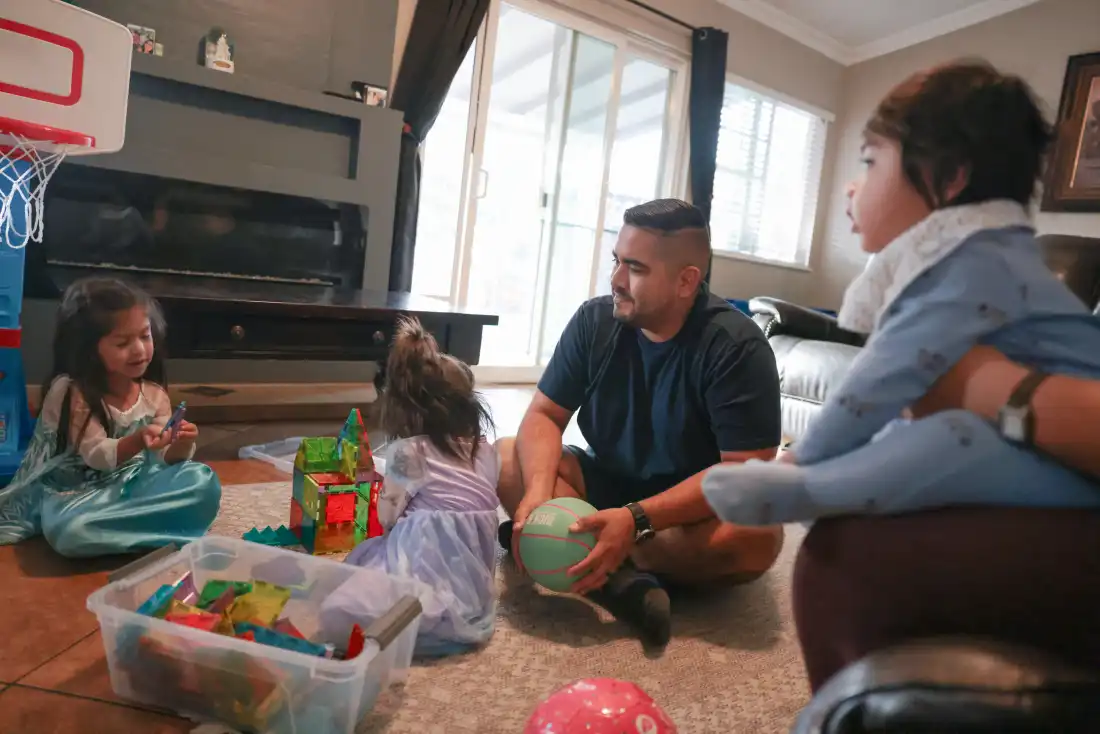
Karlo Campana spends time playing Magnatiles with his daughters, Gianna and Giselle, while his five-month-old son Gianluca observes. He is part of the increasing number of California men benefiting from the state’s paid bonding leave program.
On a recent Saturday, Campana engaged in a mini-game of basketball with his two older children at their home in Southern California. His infant son watched from a nearby bouncy chair. Campana took paid time off after Gianluca’s birth, similar to the time he took for his daughters. This leave, distinct from maternity or disability leave, is often termed ‘bonding leave’ as it facilitates adjusting to new family dynamics.
Campana, who works at an advertising agency, emphasized the importance of disconnecting from work concerns and financial stress during this period. He stated, “My wife isn’t doing it alone. She feels supported.” He humorously noted that even after baby number three, diaper changes remained challenging. Yet, he cherished these moments of bonding during the early stages of his children’s lives.
Across various states offering paid family leave, fathers increasingly take leave to bond with newborns. In California, men constitute roughly half of bonding claim applications, and last year, they even surpassed women in numbers in both Colorado and Washington.
Molly Weston Williamson, policy director at Paid Leave for All, explained the societal shift in understanding gender roles. She noted increased consciousness and recent improvements to these programs as contributing factors. California’s program provides up to eight weeks of paid bonding leave within a year, alongside six to eight weeks of paid disability leave for mothers post-birth.
Initially hesitant to take paternity leave due to traditional gender norms, Campana remarked feeling a sense of guilt. He stated, “Dads might feel they need to be providers through earnings.” Reflecting on his father’s multiple jobs, he now prioritizes presence in his children’s lives.
Paternity leave offers benefits beyond individual bonding. Research indicates positive outcomes for families, including improved health and reduced postpartum depression and infant mortality. Now, employees in California and other states can recoup up to 90% of their regular salary during leave, making it more accessible.
While gender norms evolve, Williamson pointed out data limitations in understanding the full picture. Questions about employment eligibility and the choices women make remain.
The California Employment Development Department, which manages the program, noted the increase in male bonding claims without pinpointing definitive reasons. Yet, the trend coincides with economic strains on parents. Initiatives such as expanding in vitro fertilization and investment accounts for newborns aim to encourage family growth.
Professor Jeremy Pope from Brigham Young University highlighted affordability concerns among families. He remarked on widespread anxiety over child-rearing costs, advocating for measures to ease financial burdens.
A recent Pew Research Center survey found that 84% of full-time working parents favored paid leave, although only 50% had access.
This analysis stems from NPR’s health reporting partnership, alongside LAist and KFF Health News.