
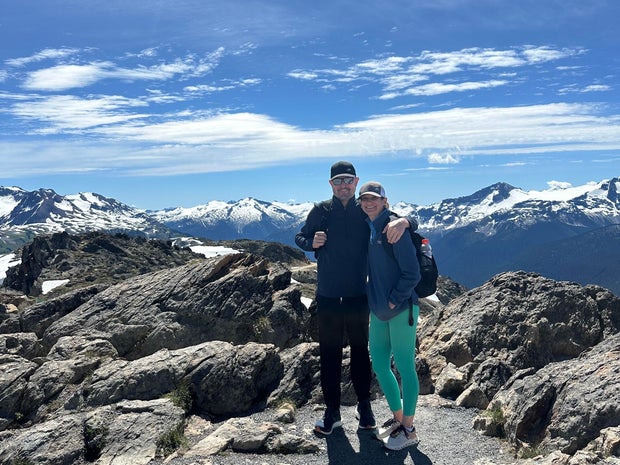
Ryan Goepel had always been aware that he did not manage his gout as effectively as he should have. This condition is often influenced by dietary and lifestyle factors, with flare-ups causing significant pain. When Goepel, a Florida father of three, experienced knee pain during a trip in September 2024, he believed it was another flare-up. However, when the discomfort persisted, he visited his doctor.
“She said, ‘Stop whatever you’re doing, and go straight to the hospital.’ And I’m like, ‘What do you mean?'” Goepel recalled. “She says, ‘Just go. You have no immune system. I don’t know what’s wrong. Just go.'”
Upon arriving at a sports medicine hospital, further blood work revealed alarming results. An oncologist discussed the findings, revealing that Goepel had acute myeloid leukemia (AML). His condition was dire, with organs close to failure, prompting health professionals to suggest hospice care.
Despite the grim prognosis, Goepel’s girlfriend was hopeful. She advocated for a second opinion, leading Goepel to Sylvester Comprehensive Cancer Center in Miami. A biopsy confirmed AML, known for a five-year survival rate of about 30%, as stated by the Cleveland Clinic. Complicating matters was the disease’s genetic makeup, which rendered the standard chemotherapy ineffective. Nonetheless, Goepel was eligible for a clinical trial overseen by Dr. Justin Watts.
The trial tested the efficacy of two medications usually prescribed to older AML patients. Given the genetic similarities of Goepel’s case to that of much older patients, he was considered suitable for the study.
Goepel recounted his approach to the situation, saying:
“My girlfriend gave me a journal that first day, like, ‘Maybe it’d be good for you to write,’ and I didn’t know what to write, and I just wrote, ‘I’m not done yet.'”
Within one day of joining the trial, Goepel began treatment, which included a pill every day for 28 days and a week-long daily infusion. Remarkably, his cancer responded almost immediately, reaching remission in two weeks.
The trial achieved noteworthy outcomes. As reported in Haematologica, 25 of the 36 participants experienced cancer reduction or disappearance during the 28-day regimen, with 19 achieving complete remission, including Goepel. Typically, only 44% of adverse-risk AML patients see such results with standard care.
Dr. Mihir A. Shukla, not directly involved with the trial, highlighted the implications of these findings. He noted that the research might prompt changes in longstanding treatment methodologies.
Following the trial, Goepel required a bone marrow transplant, a crucial procedure for rebuilding the immune system and possibly curing leukemia. Both his sisters were ideal matches, and he underwent transplantation in November 2024. Luck played a role in the timely coordination of these events.
Post-transplant, Goepel faced several weeks in the hospital, followed by isolation at home. While he did encounter complications like rotavirus and pneumonia, treatments were successful. As verified by tests, the transplant was successful.
Currently, Goepel remains cancer-free two years after diagnosis. Dr. Watts acknowledged the unlikely odds of Goepel living had the standard treatment been pursued.
Research focusing on treatments for adverse-risk AML continues. Goepel will regularly review his health status with his medical team to ensure sustained remission.
Since remission, Goepel’s life regained balance. He married his girlfriend on the anniversary of his remission in November 2025. Resuming travel and understanding what life post-cancer entails, he articulated his perspective:
“It’s not so much normal, because you kind of lose sense of what normal is, but just kind of not living in fear that it’s coming back… Just kind of enjoy life again.”