
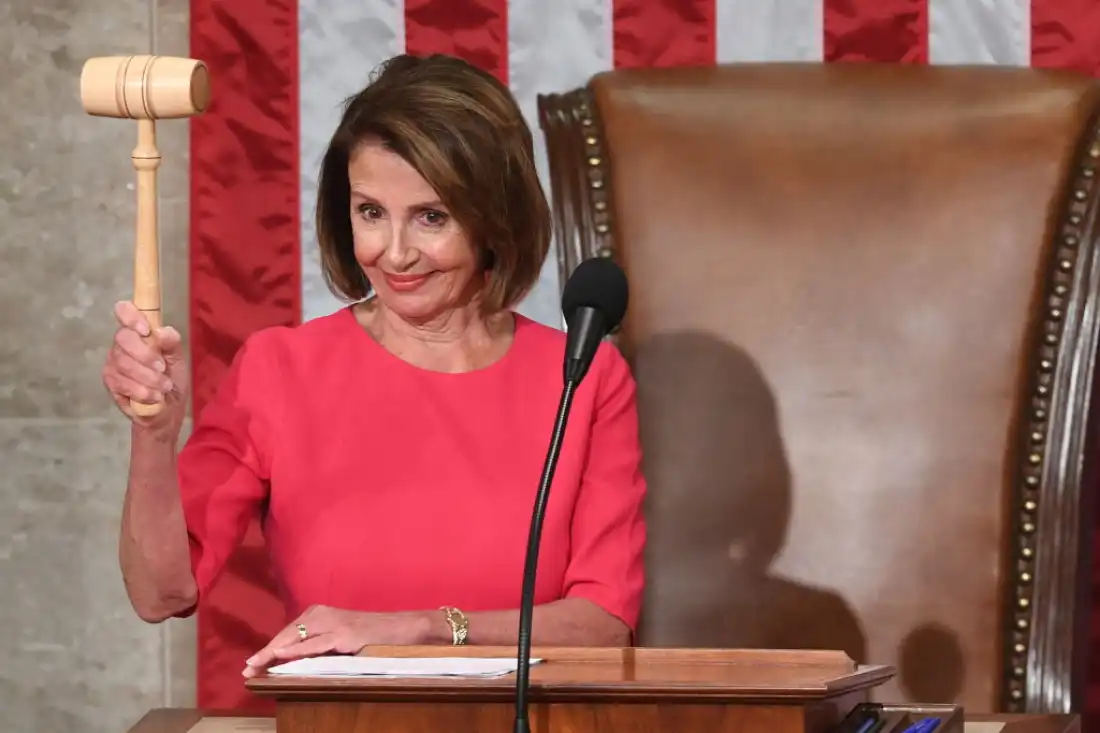
Nancy Pelosi, the new Speaker of the U.S. House of Representatives, held the gavel during the opening of the 116th Congress on January 3, 2019. Given recent events in American politics, it’s surprising that the 2020s have yet to see a significant midterm election. This stands in contrast to previous decades, which have each had midterms that profoundly influenced Congress and national politics.
Historically, impactful midterms signal shifts in power both in statehouses and on a national level. Midterms generally feature lower voter turnout compared to presidential elections. When the presidency isn’t at stake, many voters lose interest. However, midterm voters still elect as many congressional and state legislative members as in presidential years and influence the outcome of two-thirds of gubernatorial races.
Significant midterms often occur during a president’s second term, when their popularity tends to decline. Although a president is not up for election, their political influence remains. Opponents of the president see midterms as a chance for change, while supporters might be less engaged. This dynamic is expected to make upcoming midterms crucial.
The Role of Midterm Elections
The 2020s will have three presidential cycles but only two midterms. The 2022 midterms saw the Democrats retaining control of the Senate, with the House shifting slightly to Republicans. This change ended Nancy Pelosi’s term as Speaker.
Historically, pivotal midterms have included the elections following the 1929 Wall Street Crash. The subsequent economic downturn ended Republican dominance in Washington. The 1930 midterms cost Republicans eight Senate seats and 52 House seats. By early 1931, Democrats controlled the House.
Republicans maintained nominal control of the Senate but faced opposition from a coalition of Democrats and progressive Republicans. The Democratic majority established during this period persisted through World War II.
Midcentury Changes and Their Impacts
In 1946, the Republican resurgence ended the Democratic hegemony that began with Franklin Roosevelt. Despite dwindling numbers in the House and Senate throughout the 1950s, Republicans regained a majority in both houses in 1946.
Midterms have served as checks on presidential power in the years since. Dwight Eisenhower’s popular presidency in the 1950s couldn’t prevent a Democratic majority from forming in the Senate by 1958. This majority later played a key role in passing landmark civil rights legislation. Concurrently, Democrats enacted significant social programs like Medicare and Medicaid under the “Great Society” initiative.
Later 20th Century Shifts
By the mid-1960s, political power shifted again. Lyndon Johnson’s 1964 election victory was offset by Democratic losses in the 1966 midterms, partly due to the Vietnam War. Republicans gained ground in the House and began focusing on winning southern state elections. This change set the stage for Richard Nixon’s 1968 presidential run.
The 1974 midterms saw major Republican losses following the Watergate scandal. Economic issues, particularly those related to the 1973 oil embargo, further contributed to their decline.
The Rise and Fall of Political Power in the 1980s
Ronald Reagan dominated the 1980s after defeating Jimmy Carter and winning re-election in 1984. Initial Republican majorities in Congress were diminished by the 1982 midterms. By his second term, Democrats had gained strength and overturned several of Reagan’s legislative efforts.
Midterms in the 21st Century
The pattern continued into the new century. George W. Bush made gains following the 2001 terror attacks but faced significant losses by 2006. This allowed Nancy Pelosi to become the first female Speaker.
Barack Obama faced challenges from the onset, with Republicans gaining traction during the recession. The Affordable Care Act further impacted political dynamics. Changes in control of the House and Senate reflected ongoing shifts in political power, including Donald Trump’s eventual presidency in 2016.
The once-a-decade trend of impactful midterms may see its next chapter on November 3. Current polls suggest potential Democratic gains, highlighting concerns over issues such as energy prices. Midterms expose the weaknesses of the party in power, and perceived failures can lead to significant electoral changes.