
A Japanese spacecraft launched toward Mars on Tuesday, marking a significant effort to explore its enigmatic moons and retrieve samples. This groundbreaking five-year mission results from a collaboration among five global space agencies, aiming to deploy both a robotic probe and a rover on Phobos, Mars’ larger nearby moon.
The Japan Aerospace Exploration Agency (JAXA) spearheads this mission, which took off before dawn from Tanegashima Island, Japan’s principal spaceport. While NASA has successfully landed nine spacecraft on Mars over the past half-century, and China accomplished a landing in 2021, no mission has yet explored Phobos or its companion moon, Deimos. Nor has any team returned samples from Mars or its moons back to Earth. If successful, the mission plans to return rock, soil, and dust samples from Phobos by 2031.
“There’s a lot of adrenaline and a lot of excitement,” said NASA astrophysicist Tom Statler, involved with the mission.
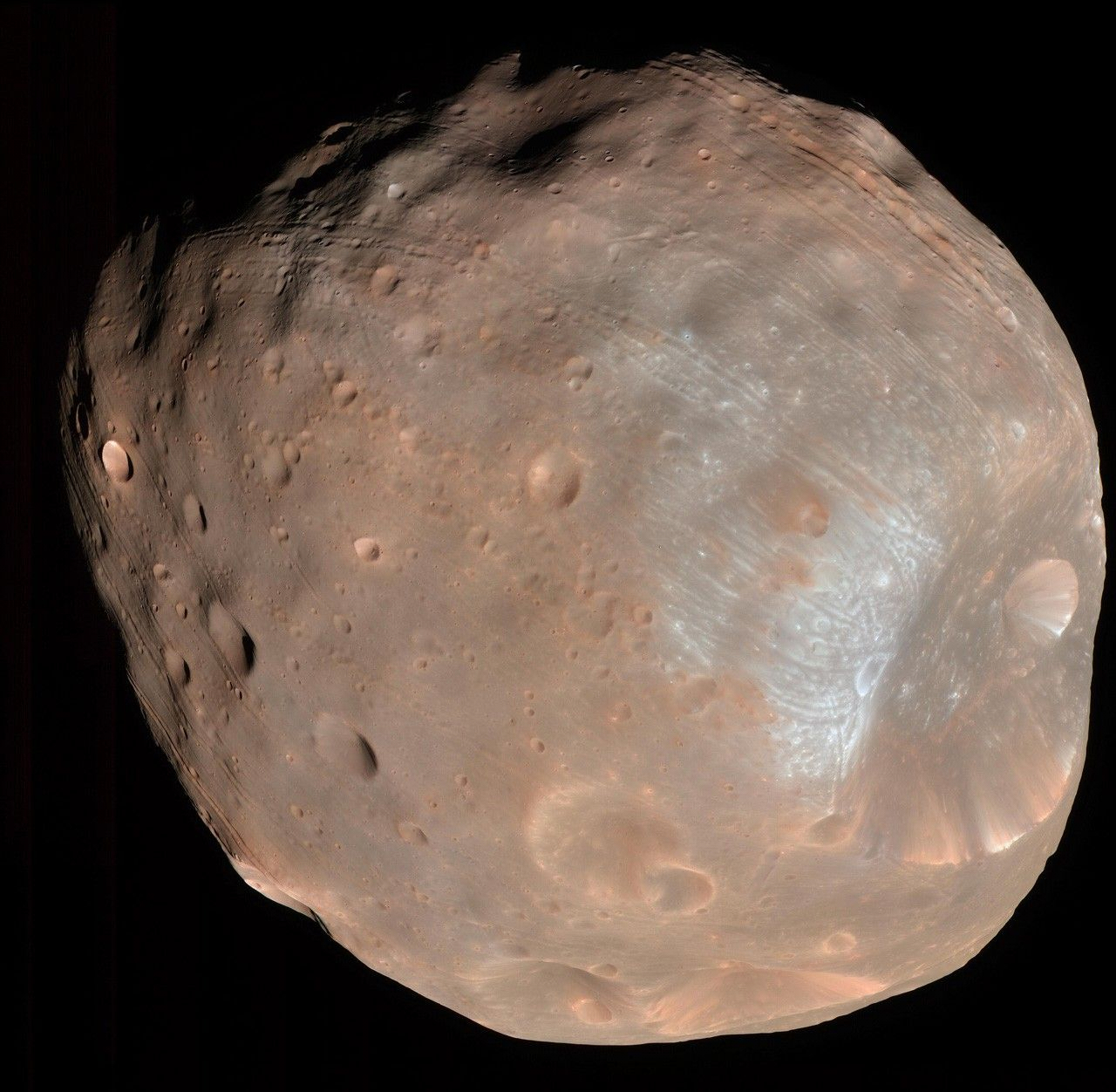
Japan has a strong track record, having conducted two prior asteroid sample returns. A NASA/JPL-Caltech/University of Arizona image taken on March 23, 2008, shows Phobos, one of Mars’ moons. Phobos appears as a lumpy, potato-shaped object about 14 miles or 22 kilometers in diameter. Studying Phobos can offer insights into the origins of Mars’ moons and other moons in our solar system.
Dubbed the Martian Moons Exploration (MMX) mission, this $578 million project includes a robust 5-ton spacecraft due to reach Mars by the following summer. The spacecraft will synch with Phobos’ orbit, then deploy the French-German rover named Idefix, after a character in the Asterix comics. This microwave oven-sized, four-wheeled vehicle will independently land on Phobos, enduring its low gravity environment, and can right itself if necessary. However, challenges such as soft soil or rocks could impede its function.
Julien Baroukh from the French Space Agency adds that once the solar panels open, the rover can’t return to its original stance, moving painstakingly at 1 millimeter per second. Idefix will scout Phobos over 100 days to ensure the main spacecraft, outfitted with a four-legged lander, lands safely. By late 2028 or 2029, the lander aims to collect samples in a brief two-hour period, drilling and vacuuming up at least 10 grams of material before returning to space.
During a series of flybys, the mission will also study Deimos. The goal is to leave the Mars vicinity by 2030, heading back to Earth by 2031 for sample delivery in the Australian desert. Named after the sons of the Greek god of war, Phobos (fear) and Deimos (dread), the mission faces many potential pitfalls. Past missions to Phobos have been unsuccessful, including multiple Russian attempts and even previous JAXA efforts. NASA also experienced setbacks in its pursuit of Martian life clues.
Examining Mars’ moons might shed light on their formation: possibly resulting from an ancient impact between Mars and a space object or captured asteroids. Scientists believe these samples might reveal more about planetary and moon formation and the potential origins of life.
The findings from this mission could influence future Mars endeavors, including manned missions. “It’s a unique opportunity,” noted Markus Grebenstein from Germany’s space agency, who leads the rover project. Japan is not alone in these ambitions. China plans a similar mission in 2028, while NASA deliberates over retrieving samples collected by its Perseverance rover. Both Japan and China anticipate 2031 returns.
Financially, Japan devotes $350 million to this mission. Other contributions include NASA’s $87 million, the French Space Agency’s $68 million, the German Space Agency’s $56 million, and nearly $17 million from the European Space Agency.