
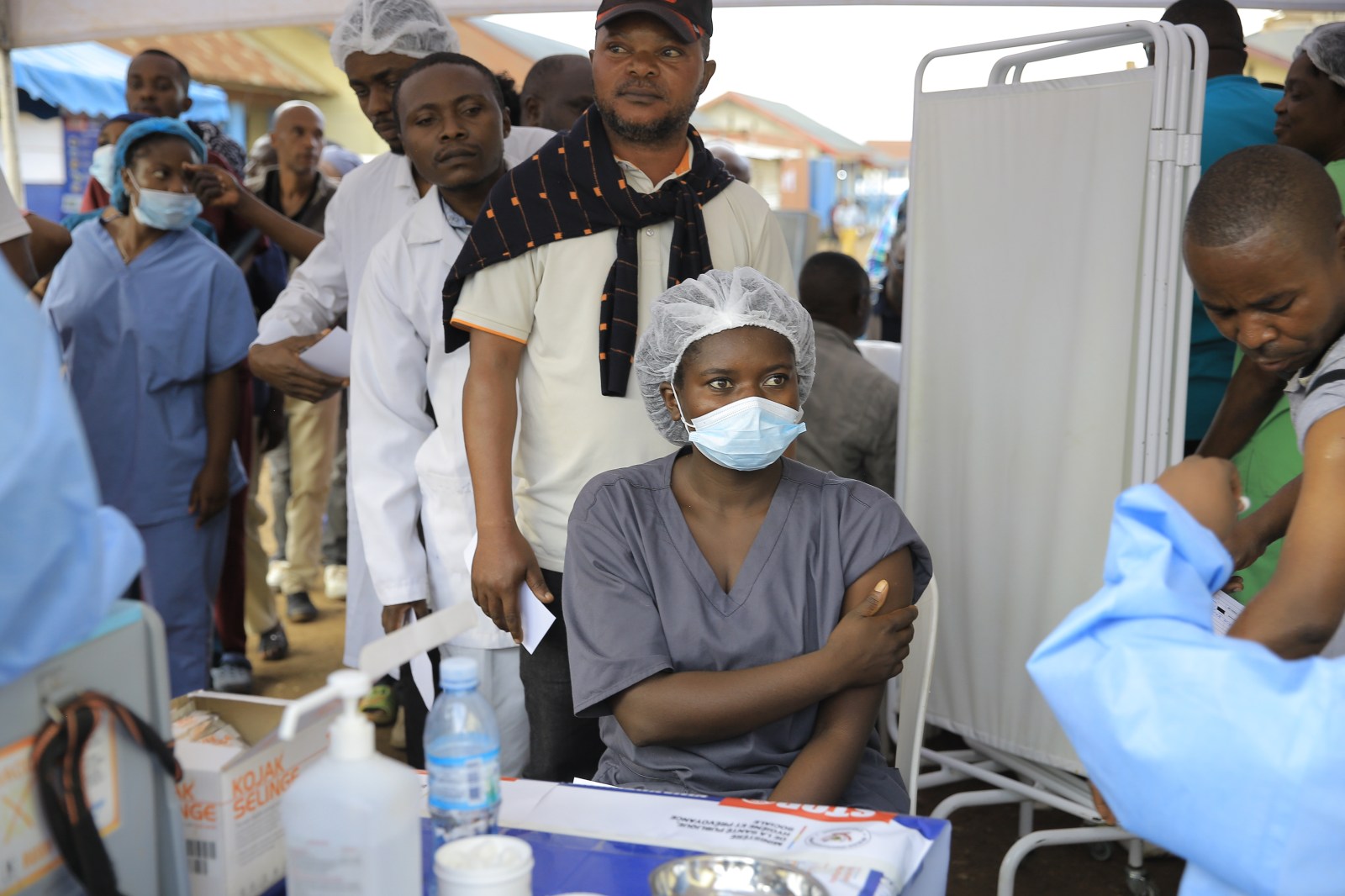
Nigeria has announced its first Ebola case in its capital, Abuja, as health authorities across Africa confront the spread of the virus. The outbreak, originating in Uganda, has resulted in nine confirmed infections in Kenya and over 9,000 in the Democratic Republic of the Congo (DRC). The Nigerian patient, who arrived from Uganda, tested positive at a private hospital in Abuja. Health Minister Muhammad Pate mentioned the tracing of 44 contacts linked to this patient.
Kenya, on the other hand, has confirmed its ninth case, maintaining that all instances belong to a single cluster, with no evidence of wider transmission. While Kenya’s cases remain contained, the outbreak highlights the virus’s potential to cross borders. The Centers for Disease Control and Prevention (CDC) emphasized this is the second-largest Ebola outbreak recorded.
The outbreak is attributed to the Bundibugyo virus, recently identified in the DRC and Uganda. Currently, there is no approved vaccine or specific treatment for Bundibugyo virus disease, although supportive care can enhance survival rates.
As for the United States, the CDC confirmed that no cases associated with this outbreak have been reported, noting the risk of the virus spreading to the U.S. remains minimal.
A WHO spokesperson stressed the importance of international cooperation to prevent further spread, suggesting preparedness measures in countries near the DRC. The WHO is aiding Kenya’s Ministry of Health with supplies worth approximately $70,000 USD, including protective gear and testing materials.
The organization advises against restricting travel or trade with the DRC, Uganda, or Kenya based on the current information.
Nigeria’s Response to Ebola
Nigeria’s confirmation of its first Ebola case adds pressure to the regional response as efforts continue to contain the outbreak stretching across multiple nations. The Nigerian case originated from Uganda, with authorities actively tracing contacts.
While Uganda had cleared previous infections, this recent development in Nigeria adds complexity to containment efforts, though the origin of infection for this case is not established.
Kenya’s Current Situation
In Kenya, the ninth confirmed case remains within a known cluster. Health officials report that no transmission has occurred beyond these contacts. The initial Kenyan patient had traveled from the DRC through Uganda and tested positive days after arriving in Nairobi.
After the first patient, related infections surfaced among family members and healthcare workers. Kenyan officials have quarantined 134 contacts, with expectations for the quarantine to end on October 25.
Global Advisory and Precautions
The U.S. State Department adjusted Kenya’s travel advisory to Level 3 due to health risks, including Ebola. The WHO acknowledged efforts in Kenya since May to prevent further spread from the DRC and Uganda.
Respective measures in Kenya include rapid contact identification, quarantine procedures, and testing.
Ebola’s Mortality Rate and Health Risks
Ebola, a severe disease often resulting in fatality, averages a 50 percent case-fatality rate across outbreaks, with variability between 25 percent to 90 percent. Early care, such as rehydration and symptom management, can increase survival chances.
For the ongoing DRC outbreak, a case-fatality rate of 48.3 percent has been recorded.
Understanding Ebola’s Incubation
The incubation period for Bundibugyo virus disease ranges from two to 21 days. Infected individuals aren’t infectious until symptoms emerge, which typically begin between eight to 10 days after exposure.
Initial symptoms may include fever, fatigue, muscle pain, headache, and sore throat, progressing to more severe gastrointestinal and hemorrhagic symptoms. Transmission occurs through direct contact with infected bodily fluids or contaminated surfaces.
Ongoing Situation in Congo
The DRC’s outbreak, labeled the second-largest on record, has rapidly intensified, reaching significant case numbers far faster than the previous 2018 outbreak. Presently, over 9,066 confirmed cases and 4,381 deaths have been reported, affecting numerous health zones.
Though some areas show declining cases, others maintain or increase in transmission rates, especially in North Kivu.
International Spread and Risks
The outbreak already extends beyond DRC borders. Kenya confirmed a case involving a traveler from the DRC, and Uganda noted both imported and local transmissions. Health officials stress ongoing monitoring to prevent expansion beyond identified clusters.
The CDC remains confident that the risk to the U.S. stays low, urging continued vigilance and preparedness across affected regions.