
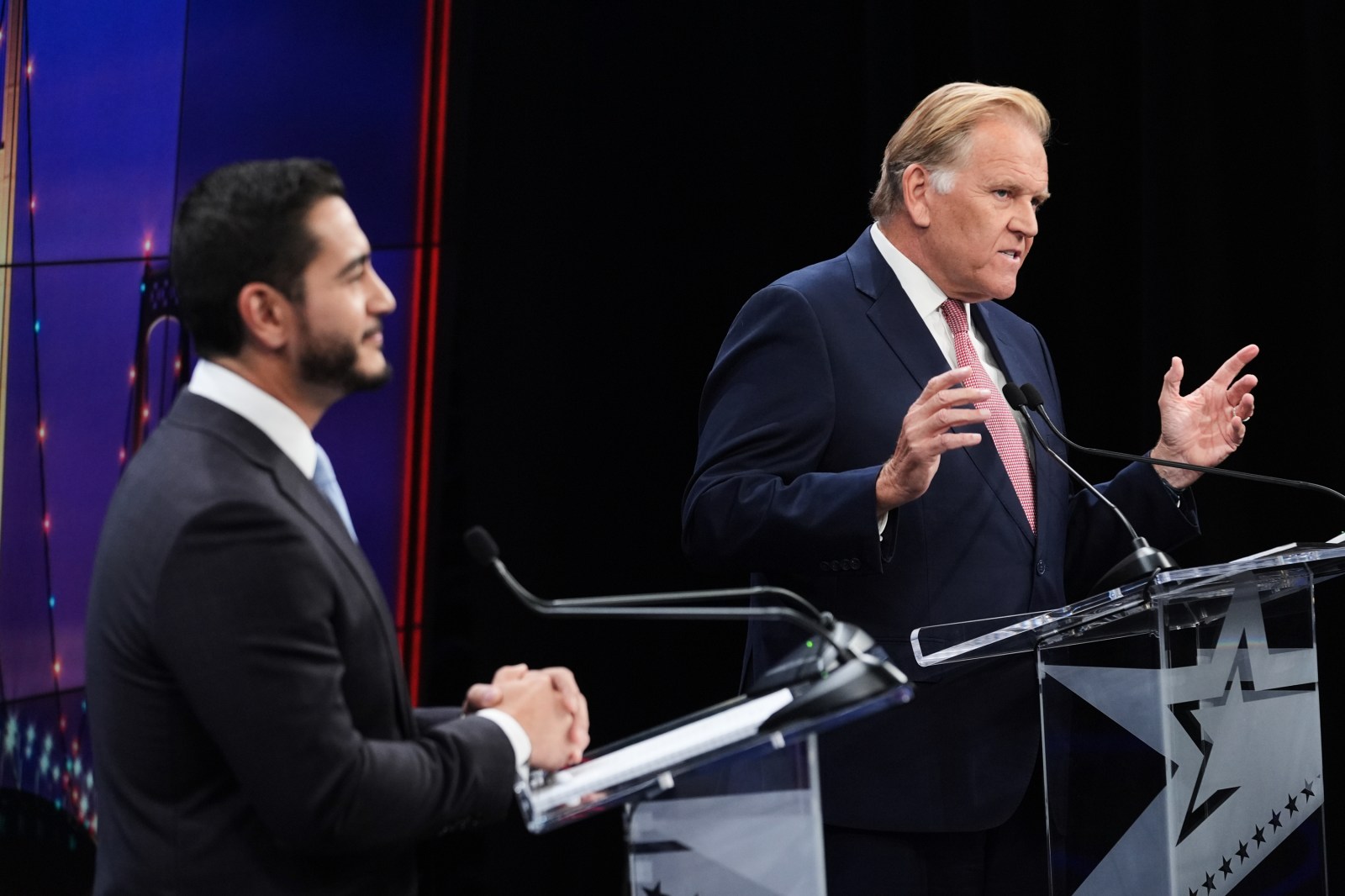
Michigan’s Senate race saw a tense debate on Thursday night between Republican Mike Rogers and Democrat Abdul El-Sayed. The candidates engaged in heated exchanges over crucial topics like healthcare, tariffs, immigration, and foreign policy.
The First Debate: An Overview
The debate, held in Grand Rapids and hosted by NewsNation and WOOD-TV, was marked by frequent interruptions and personal attacks. Moderator Rick Albin intervened multiple times as the candidates continued their arguments even during commercial breaks.
Rogers portrayed El-Sayed as a left-wing progressive with expensive and extreme policies, while El-Sayed linked Rogers to corporate interests and foreign conflicts. The debate was the first of a two-part series before Election Day, highlighting one of the nation’s tightest Senate races.
Key Exchanges
The candidates spent the night exchanging campaign attacks rather than delving into policy details. Rogers’ criticism of Trump’s trade war with Canada led to a sharp exchange. El-Sayed accused Rogers of changing his stance due to political motivations.
Healthcare was another point of contention. Rogers opposed Medicare for All, claiming it would be too costly. El-Sayed countered, stating his plan would allow families to keep their private insurance while ensuring health coverage for everyone.
Personal attacks were frequent. Rogers questioned El-Sayed’s use of the title “doctor,” while El-Sayed criticized Rogers’ wealth and campaign contributions.
No Clear Winner
There is no official winner in political debates; partisan lenses often color voter perceptions. Rogers focused on depicting El-Sayed as too liberal, specifically targeting his healthcare and tax proposals. El-Sayed emphasized issues like gas, grocery prices, and healthcare access instead of personal attacks.
Polls and Race Developments
Recent polls indicate a tight race with El-Sayed slightly ahead. For instance, a Quantus Insights poll showed El-Sayed leading by a narrow margin. However, various polls present mixed results, underscoring Michigan as a significant battleground in the 2026 midterms.
The race attracts national attention as Rogers, a former congressman, aims to secure a Republican Senate victory not seen in Michigan since 1994. El-Sayed, emerging from a contentious Democratic primary, works to appeal to both party supporters and independent voters.
Importance of Michigan’s Senate Race
The battle for this open Senate seat, previously held by Democratic Senator Gary Peters, is crucial for both parties. Republicans view it as a chance to gain a Senate seat, while Democrats aim to see if El-Sayed’s progressive platform can succeed in a state Trump won in 2024.
The candidates will meet again for a second debate on October 21. Given the intensity of the first debate, future engagements between Rogers and El-Sayed may continue to be contentious.