
In a strategic move on the front lines in Donetsk, Ukraine’s military has transformed armored personnel carriers (APCs) into improvised explosive devices. Brigadier General Andriy Biletsky of the Third Army Corps revealed this tactic, describing the conversion of Soviet BTR-60s into robotic kamikaze complexes to breach enemy defenses.
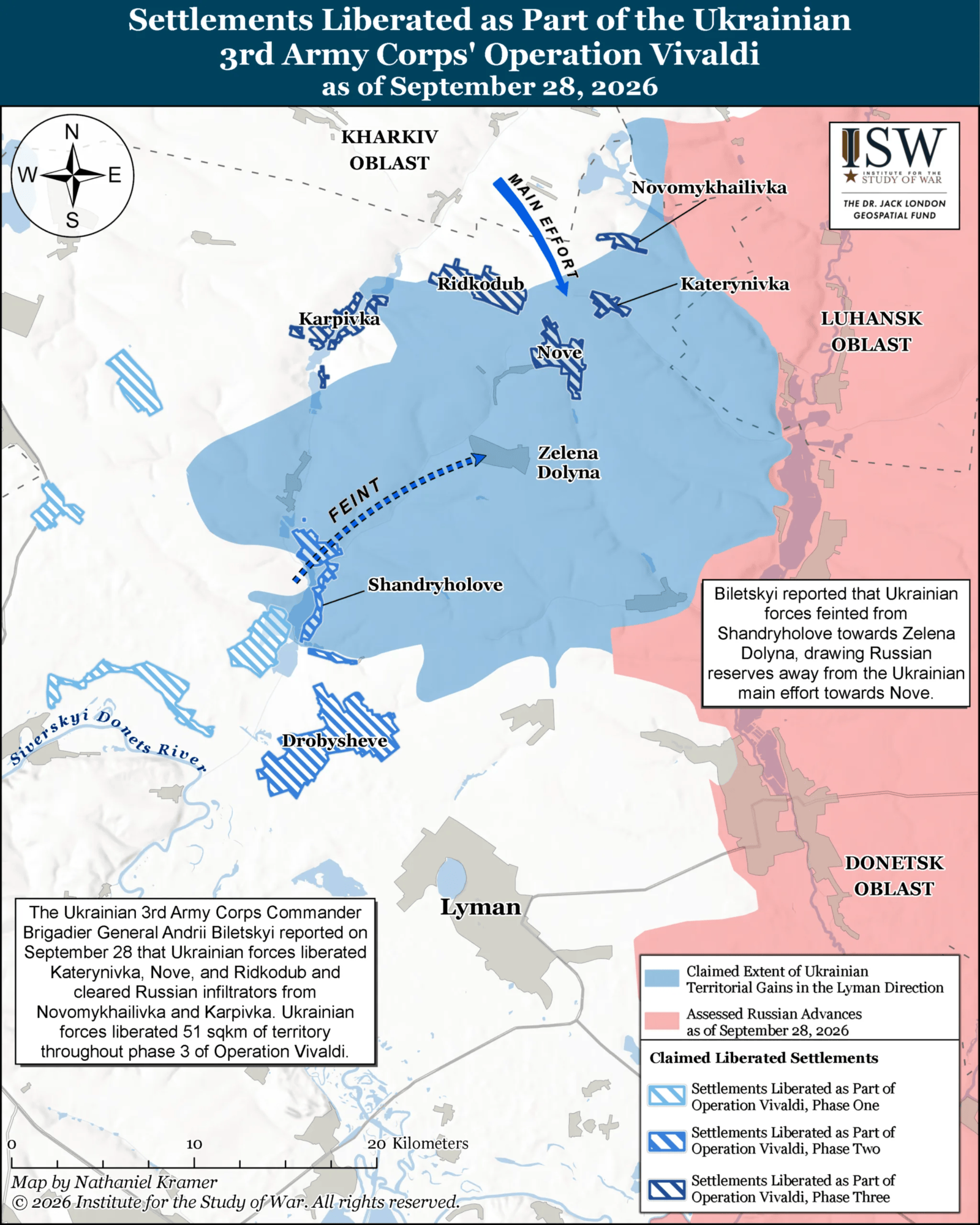
The use of these APCs has facilitated progress in the Lyman sector, as shown by a map during Ukraine’s counteroffensive. During Operation Vivaldi, Ukraine has successfully used unmanned vehicles and drones to prevent Russian advances on the ‘Fortress Belt’ of fortified cities crucial to maintaining control over the Donbas region. Newsweek has reached out to the Russian defense ministry for comments.
Role of BTR-60 Armored Personnel Carriers
Details of Operation Vivaldi were shared by Biletsky, highlighting tactical maneuvers used by Ukrainian troops. Distraction tactics were employed from Shandryholove, northwest of Lyman, aimed towards Zelena Dolyna, misleading Russian forces away from Ukraine’s primary target, Nove, on the Russian northern flank. Biletsky explained how Russian forces were misled into believing the main assault was directed elsewhere, leading them to waste reserves on unnecessary counterattacks.
Key to this success was the conversion of BTR-60 APCs, which are originally intended for transporting troops. Transformed into vehicle-borne improvised explosive devices (VBIEDs), these carriers enabled Ukrainian forces to penetrate Russian defenses and dismantle strong fortifications efficiently.
Biletsky stated, ‘They were used to demolish the enemy’s strongest fortifications.’ Russian forces surrendered in full units, including officers, pilots, and artillery members.
The operation liberated 19 square miles in its third phase, achieving a total reclamation of 67 square miles over its duration. Analysts credit Ukraine’s triumph to the element of surprise. Strict operational security and counter-drone measures impaired Russian operational awareness.
In September, Major Maksym Zhorin, deputy commander of the 3rd Army Corps, mentioned a ‘protective drone’ system employed for veiling Ukrainian advances through electronic warfare tactics.
Response from Russian Sources
Despite reported success, Russian military bloggers have yet to acknowledge Operation Vivaldi’s achievements. They claim Russian forces have maintained their positions and Ukrainian troops have not disrupted the Russian salient north of Lyman.
Ukrainian military observer Yuriy Butusov remarked on Wednesday that pro-Moscow blogs are distributing modified footage and incorrect details to mask Russian losses. Nevertheless, other Russian sources have raised criticism toward Moscow’s defense ministry for not confronting the reality of Operation Vivaldi or identifying the accurate front line.
The Institute for the Study of War (ISW) reported on Wednesday that Ukrainian forces hold control over both Nove and Shandryholove, with the nearest Russian positions residing no less than 10 miles from Shandryholove and 5 miles from Nove.