
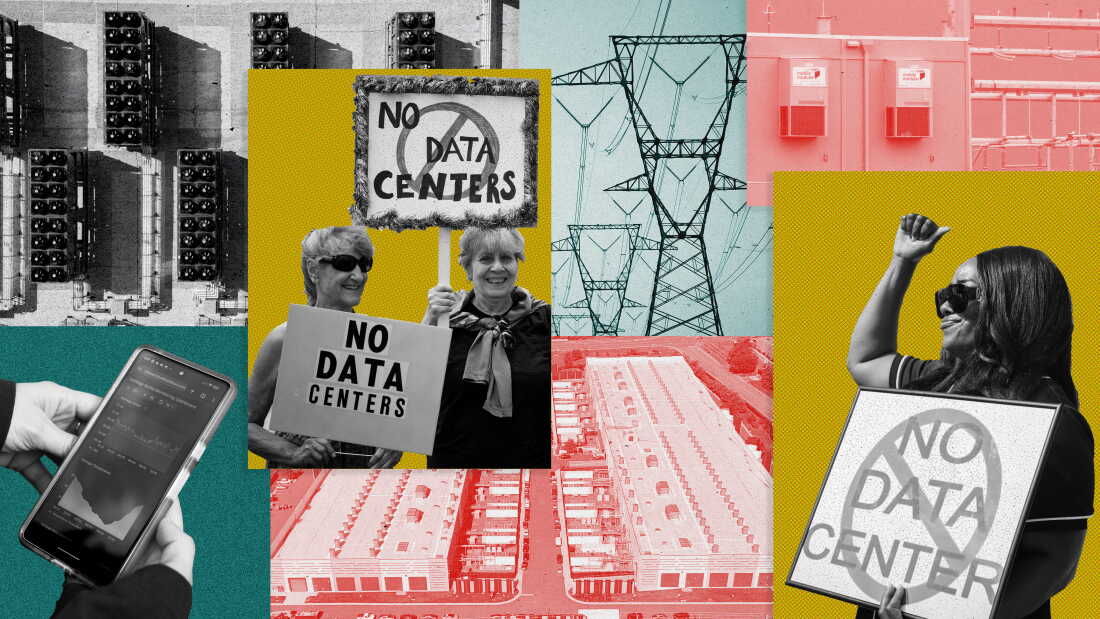
Data centers have sparked intense debates across the United States. This issue transcends political boundaries, uniting diverse groups against local representatives. Concerns range from job loss due to artificial intelligence to the fear of losing technological control.
Distrust Fuels the Debate
Data centers have dramatically transformed community politics, explains Darrell West from the Brookings Institution. Many fear AI could threaten jobs or humanity itself. West sees it as a grassroots movement involving ordinary Americans from both major parties.
NPR explored the situation, interviewing activists, politicians, developers, and residents. The findings reveal a complex situation. Data centers boost local economies by lowering land taxes and creating jobs. Yet, the secrecy of deals stirs suspicion.
“Data centers have upended politics as we know it.” — Darrell West, Brookings Institution
The Economist and YouGov survey revealed that about two-thirds of Americans oppose new data center construction in their communities.
Local Politics Take Center Stage
In Loudoun County, Virginia, Democrats find themselves at odds over data centers. Juli Briskman and Phyllis Randall, both on the Board of Supervisors, represent opposing views. Briskman opposes rapid data center expansion, citing increased community support. Randall supports them for tax reasons but acknowledges their potential drawbacks.
Briskman challenges Randall in the upcoming election, reflecting the broader issue. Residents like Kasey Hatch note noise issues from nearby data centers. Hatch, who works in tech, surprisingly agrees with her politically opposite cousin on this matter.
Nusheen Farahani, another Loudoun County resident, joins cross-party groups opposing data centers. Similar grassroots efforts appear nationwide, from Minnesota to Indiana. These groups feel government sides with data center developers, leaving citizens without a voice.
Economic Impact and Community Concerns
Data centers have existed long before the recent AI boom. They bring economic benefits like private investment, construction jobs, and tax revenue. In Loudoun County, they generated $1.2 billion in property tax revenue, reducing local taxes significantly.
Despite these benefits, residents worry about high electricity and water usage. Previously, governments enticed data centers with tax incentives. Now, developers must prove their benefits to communities. Virginia Governor Abigail Spanberger signed an order to restrict data center growth, reflecting changing attitudes.
Secrecy and Backlash
The industry’s lack of transparency has contributed to backlash. Nondisclosure agreements (NDAs) signed by local officials and developers have fueled public distrust. For instance, in Virginia, 25 out of 31 localities with data centers had signed NDAs.
“It’s paying the price for an early lack of transparency.” — Dan Diorio, Data Center Coalition
The mayor of Bessemer, Alabama, faces political challenges after signing NDAs. Similar issues arose in DeForest, Wisconsin, where a grassroots campaign halted a $12 billion data center project due to secret negotiations.
A National Concern
In Loudoun County, supervisors paused new data center applications. The region serves as a national example in this debate, says Briskman. Across the state border, Frederick County, Maryland, witnesses similar unease, with signs opposing data centers appearing in communities.
Steve Black, a local opponent, highlights the conflict between developers and citizens. He has fought data center expansion through legal actions and public campaigns. Political science expert Kathy Cramer links this discontent to broader societal issues.
“Data centers have become a way to channel discontent about bigger societal issues.” — Kathy Cramer, University of Wisconsin-Madison
Black’s commitment to this cause transcends political affiliations. He supports candidates based on their stance on data centers, regardless of party.