
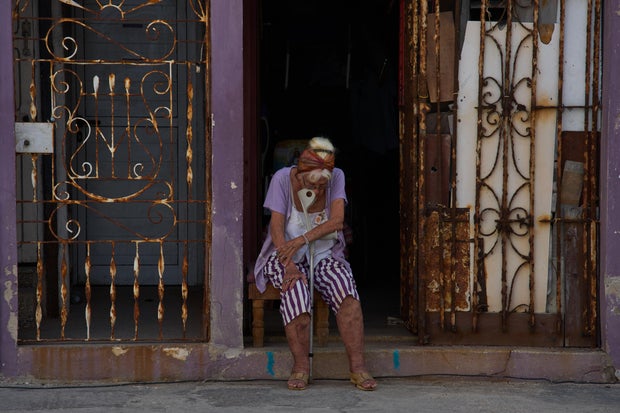
On Friday, Cuba experienced another power grid collapse, marking at least the sixth occurrence since January when President Trump halted fuel shipments to the island. The Ministry of Energy and Mines shared the news of the islandwide blackout on its official X account, stating that service-restoration protocols were being activated.
Mercedes Rodriguez, a 60-year-old worker in Havana, expressed the community’s frustration. “No one can stand these constant blackouts,” she said. “There isn’t enough food, water, or electricity. You have no idea.” Her dissatisfaction mirrors the struggles many Cubans face during these frequent outages.
Cuban officials reported a transmission line failure in the western region, impacting areas as far as Matanzas province. Consequently, the eastern part of the island became disconnected. The official newspaper Granma mentioned that “unstable” weather conditions further complicated the grid’s situation.
By evening, power returned for 5% of Havana’s approximately 862,000 customers. Small micro-islands for power distribution were being established in provinces like Camagüey, Pinar del Río, and Granma. Emergency facilities and hospitals saw some power restoration.
Abilén Marrero, a homemaker, shared her frustration too. “Maybe it’ll come back this afternoon or tomorrow. There’s no way to know. We just have to wait,” she remarked as she waited in Havana.
The frequent power outages, exacerbated by a serious economic crisis and U.S. energy blockade, strain daily life and essential services in Cuba.
The economic crisis and U.S. energy blockade have intensified outages over the past two years, aiming to pressure Cuba towards political change. A January executive order from President Trump restricted Cuba’s fuel imports, vital for running thermoelectric power plants and maintaining aging infrastructure. Since then, only a Russian tanker has delivered fuel in March.
Recent nationwide blackouts, like those in August and July, worsen the situation. Even when functioning, Cuba’s power grid suffers from extended outages, sometimes lasting over 30 hours. Cuban Ambassador to the UN, Ernesto Soberón Guzman, called these outages a “collective punishment.” The embargo has triggered transportation issues, reduced work hours, and flight cancellations, impacting public health significantly.
Basic activities, including cooking, water supply, internet, and telephone services, experience disruptions. The Trump administration has explored military options for potential intervention in Cuba, though officials noted that this does not signify immediate action plans. Secretary of State Marco Rubio emphasized a preference for diplomatic means to encourage governmental transition and economic reform, yet progress remains stalled.
President Trump has mentioned the U.S. intervention in Venezuela, resulting in a leadership change, as a potential model for Cuba.