
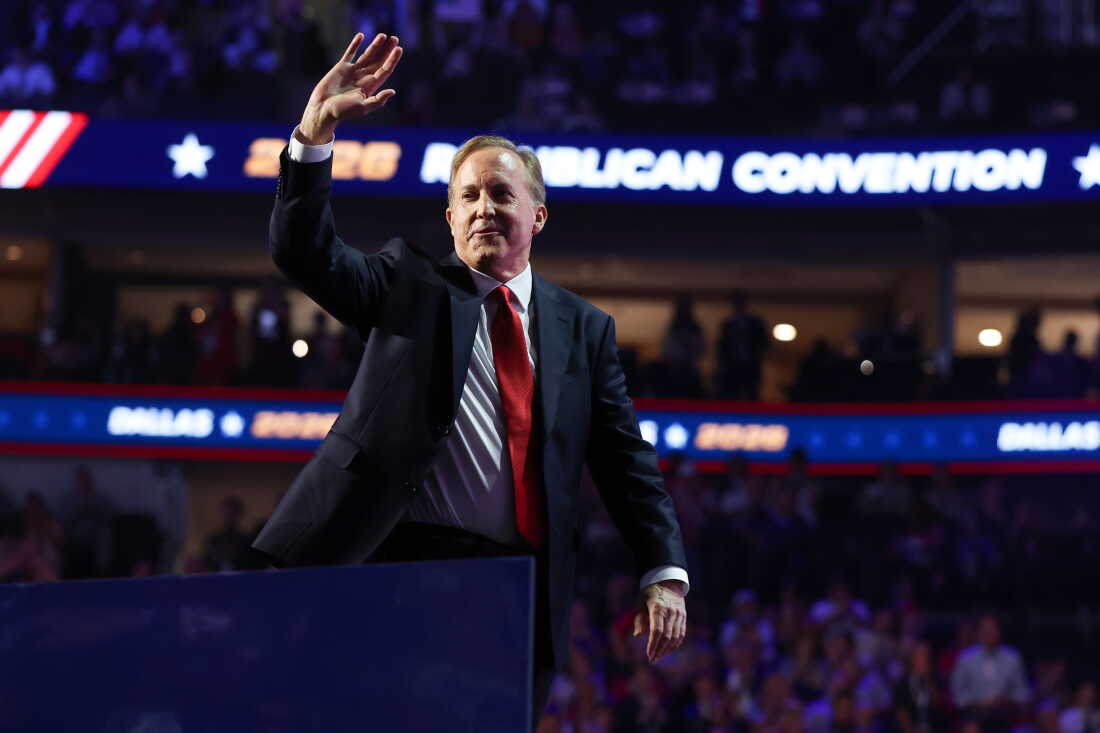
At the recent Republican convention in Dallas, Texas Senate nominee Ken Paxton, who is also the state attorney general, made clear his need for financial support. Over the months, Paxton’s campaign suffered from being outspent, especially during a challenging primary and as Democratic nominee James Talarico invested millions to make himself known to voters. However, the landscape shifted with a substantial financial boost from Republican super PACs and dark money groups. This included contributions from President Trump’s MAGA Inc. and the Texas PAC, associated with Senate Republicans.
In September alone, pro-Paxton ad reservations reached over $94 million, effectively overshadowing the approximately $20 million supporting Talarico in the same period. According to AdImpact, this Republican investment outstripped the entire ad spending by Democrats in Texas during this election cycle. At the Dallas convention, Paxton urged for prayers, votes, and support against Talarico, who he described as both well-funded and radical.
Talarico has managed to gather large sums through viral media appearances and fundraising efforts. By the campaign finance deadline in June, Talarico held significantly more cash than Paxton. Yet, the arrival of funds from super PACs and dark money groups dramatically shifted the balance. These groups can raise unlimited amounts and, since Labor Day, have been augmenting Republican efforts nationwide.
Heading into the last weeks of the 2026 midterms, Republicans hold a pronounced advantage in ad spending. NPR’s analysis of AdImpact data reveals that Republican candidates and allies plan to spend over $557 million compared to Democrats’ $343 million across the nine most competitive Senate contests this fall. Republicans have secured higher ad spending in all but one of these races, Georgia. This edge further extends when considering House election spending.
“The cavalry has come,” said Scott Jennings, a seasoned Republican strategist. “Republicans now have the resources to engage in real debates and contrasts,” he added.
In recent weeks, over $150 million in ad reservations have been committed by MAGA Inc. and two Trump-aligned entities: No Going Back PAC and Safety and Affordability PAC. This funding supports ads across various platforms, aimed at countering Democratic candidates in Senate and House races. Despite the possibility of negative campaigning, Jennings believes these resources could secure Republican victories amidst unfavorable conditions for the GOP.
Notably, the funds are not concentrated merely in traditional swing districts but also in areas that strongly favored Trump in 2024. Key Senate races stressing Republican ad allocation include contests in Alaska, Texas, North Carolina, and Ohio. In the House, significant spending has been directed to Texas’ 15th Congressional District, Kentucky’s 6th District, and Alabama’s 2nd District, all of which had clear support for Trump in the past elections.
Republicans face a challenging political climate. Historically, the sitting president’s party often loses ground in midterms. The current president is unpopular, associated with trade disputes and a controversial war with Iran, which has surged gas prices—a major voter concern over living costs this year. Despite these challenges, Trump’s fundraising capabilities remain robust. He recently mentioned having nearly $1 billion for the super PAC, planning to allocate $400-500 million towards the midterms.
Democratic strategist Jesse Ferguson points out that the current financial disparity was expected. As the out-of-power party and with Trump being highly transactional, Democrats faced inevitable financial challenges in comparison to Republicans.
The Republican ad spending advantage illustrates the strategic allocation of resources, though the situation remains dynamic. Presently, Texas has no booked ads from October onwards, while Ohio’s Senate race has over $116 million lined up for remaining campaigns. Importantly, while outside Republican groups have more funds, individual campaigns benefit from cheaper ad rates compared to super PACs, potentially maximizing their financial impact.
Ferguson stresses that while money is influential, it cannot always alter voter sentiments. “Money can’t change the weather, but it can serve as a shield,” Ferguson remarked. The fundamental voter concerns persist, which is why Republicans are tapping into vast resources to defend Senate seats and secure House districts, even in traditionally safer areas redrawn by Republican lawmakers.