
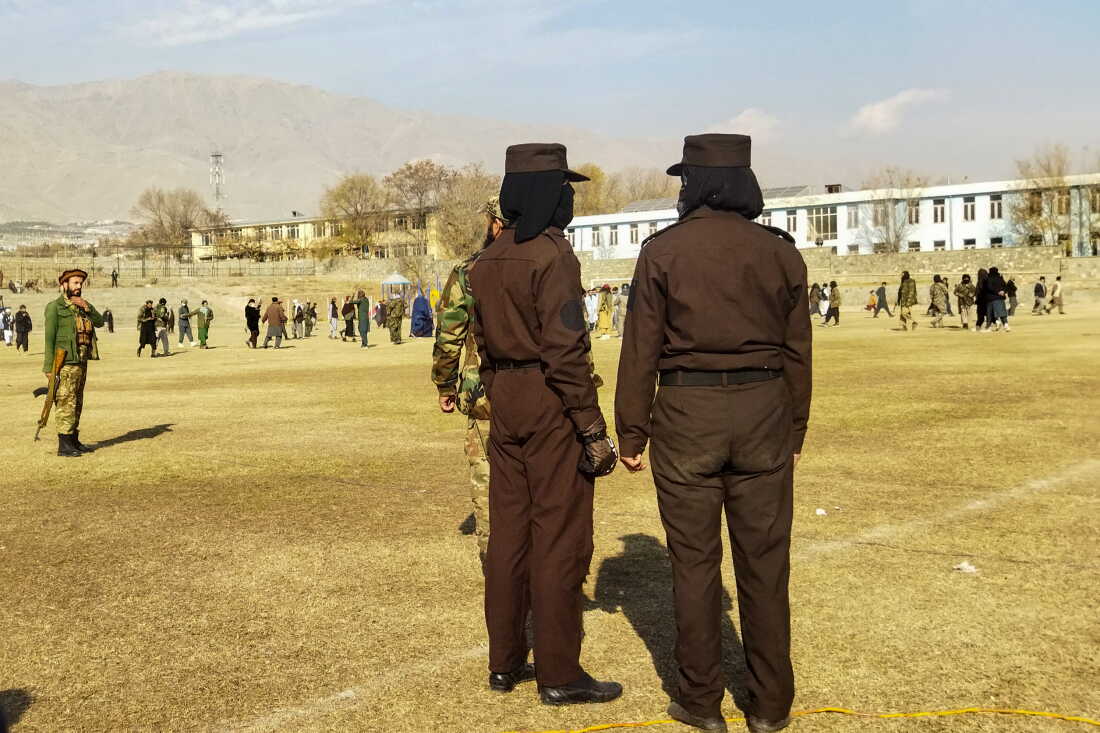
Taliban security forces conducted a public flogging of 27 individuals at a football stadium in Charikar, Parwan province, on December 8, 2022. A large crowd witnessed the event. This incident underscores the Taliban’s stance on corporal punishment, which includes flogging and stoning for offenses such as facilitating female education or engaging in extramarital relationships.
In March 2024, NPR reported a statement from the Taliban’s supreme leader, Hibatullah Akhundzada, confirming the use of such punishments. The statement cited the intent to publicly flog and stone women for perceived crimes. This pronouncement aligns with the Taliban’s growing use of public and violent punishments.
A report by the Afghanistan Human Rights and Democracy Organization (AHRDO) documented 2,745 instances of corporal punishment from February to April, based on Taliban records. Similarly, a U.N. report from March 2026 noted 1,110 cases of flogging in the previous year, more than in all previous years combined. These figures were compiled from the Taliban’s Supreme Court’s public records and press releases.
There are concerns that many cases go unreported, especially those involving on-the-spot floggings by Taliban authorities, such as for dress code violations. Activists like MA, fearing retaliation from the Taliban, have shared videos of such punishments occurring discreetly, particularly on social media. NPR could not independently verify these videos.
“A very important element of how they see justice,” says Shaharzad Akbar, of the Afghan human rights group Rawadari. Flogging is a key facet of the Taliban’s idea of justice, law, and social control.
Amnesty International’s Samira Hamidi notes that these punishments serve as both punishment and intimidation. Legal experts argue that such actions contravene Afghanistan’s commitments to international law, including conventions against torture and discrimination, stressing that these punishments cannot be viewed as lawful.
Impact on Women and Marginalized Groups
The AHRDO report highlights the disproportionate impact on women and marginalized groups like the LGBT community. Women face harsh restrictions on movement, dress, and public participation. These punishments further enforce gender-based discrimination.
Since taking power, the Taliban have issued decrees restricting women from higher education, employment, and public life. This has dismantled the Afghan legal system, leaving women without legal recourse.
Without women judges or lawyers, accused women face a lack of defense opportunities. Taliban actions since 2021 have removed hundreds of women from legal roles, impacting fair trial rights.
Examples from the AHRDO report reveal severe cases of arbitrary punishment, such as a woman arrested for her attire and flogged, or women charged after seeking justice for domestic abuse. In another case, a woman with an intellectual disability was imprisoned and whipped after a rape accusation against a Taliban member was disregarded.
Public Flogging’s Broader Consequences
Public floggings not only punish but also socially isolate victims. Many women face stigmatization and struggle to reintegrate into their communities due to reputational damage. Medical aid for injuries is often inaccessible.
Concerns extend to the spectators of these events, questioning the moral impact on those who witness such violence. Hamidi expresses worry about the normalization of violence, weakening trust in justice, and the psychological toll on communities.
The future impact of the Taliban’s rule is unpredictable, but as observed by Akbar, breaking free from the cycle of trauma imposed by such public punishments is crucial for Afghanistan’s future.