
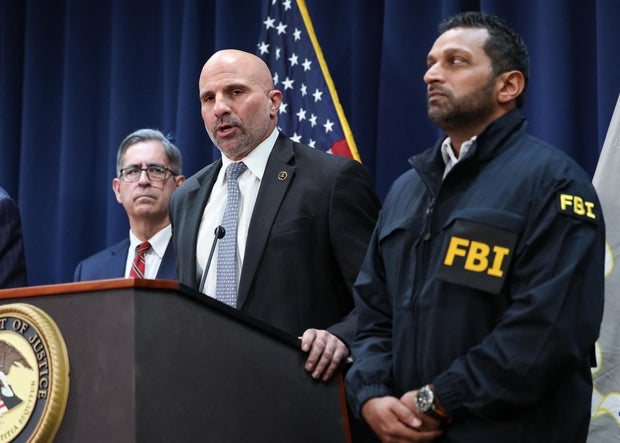
The FBI is employing artificial intelligence (AI) to enhance its ability to identify threats and combat crime, particularly focusing on transnational criminal organizations and drug cartels. Deputy Director Christopher Raia shared this development with CBS News. The announcement follows the release of data showing a notable decrease in violent crime rates across the US.
Raia, a veteran with 23 years at the FBI, noted that AI has significantly reduced the response time from receiving a tip to taking action. Previously, this process took weeks; now, it happens in hours or even minutes. He stated, “We’ve incorporated AI, and now the most urgent tips rise to the top, allowing us timely field action.”
Data from the FBI’s annual crime report indicated a considerable decline in violent crime. The US murder rate dropped to a 20-year low in 2025, while overall violent crime recorded its largest one-year decrease on record. The report highlighted a 7.2% reduction in aggravated assaults, a 7.6% fall in rapes, and an 18.5% drop in robberies.
Raia attributed this decline to multiple factors, including improved state and local law enforcement, enhanced border security, and renewed focus on violent crime. He emphasized that AI has enabled the FBI to work more efficiently without being bogged down by the overwhelming volume of data.
“We were sitting on enormous risk,” Raia said, referring to the influx of tips from around the globe. “We didn’t have the manpower to analyze it all.” The National Threat Operations Center leverages AI to prioritize the most pressing threats, thereby optimizing resource allocation.
A notable example of AI’s effectiveness occurred in March when Zachary Charles Newell, from Newport, North Carolina, was sentenced to two years in federal prison for posting online threats against a preschool. AI flagged this threat, facilitating a quick arrest.
Raia addressed concerns about AI potentially infringing on civil liberties, assuring transparency and oversight. “Somebody has to police the police,” he acknowledged. The FBI has submitted over 50,000 pages of documentation for review to ensure citizens’ rights remain protected.
Privacy advocates have raised issues about rights violations connected to technologies like automated license plate readers, supplied by companies like Flock Safety, to thousands of law enforcement agencies. Raia defended their use, citing their crucial role in investigations.
Raia also discussed initiatives from the Trump administration targeting drug cartels and gangs, including the Homeland Security Task Force founded in January 2025. This task force encourages collaboration between the FBI and agencies like Homeland Security Investigations, the Drug Enforcement Administration, and others. Recently, 81 suspected gang members in Puerto Rico faced charges under this initiative.